
Fulfilment near Felixstowe: why port proximity matters
If your bulky stock arrives by container, the leg between the Port of Felixstowe and your warehouse is one of the few costs you can genuinely design out.
The leg nobody budgets for
If you import bulky goods, you have a good idea what the ocean freight costs. You have a rate from your forwarder, you have watched it move, and you have probably had a bad year because of it. What most brands have a much vaguer idea of is what happens between the container being released at the port and the goods being on a shelf.
That leg — the drayage run from the quay to the warehouse, plus the unload — is a real cost and a real source of risk. It is also, unlike ocean freight, something you can change with a decision rather than a negotiation. Where your 3PL sits relative to your port of entry is a choice you make once and pay for on every container thereafter.
Why Felixstowe matters for bulky goods specifically
Felixstowe is the UK's principal container port, and for brands importing furniture, garden goods, outdoor structures, and machinery, it is very often where the box lands. That is not a strategic choice you are making — it is where the deep-sea services go.
The consequence is that your goods start their UK life on the Suffolk coast. Every mile between there and your storage location is a mile you pay for on a per-container basis, in a vehicle that can carry exactly one container.
This hits bulky-goods brands harder than it hits anyone else, for a reason worth being precise about. A container of small, dense product represents a lot of sale value per road mile. A container of pergolas or rattan sets represents a lot of air. The freight cost per container is the same either way, but the number of containers you need to move a given amount of revenue is much higher. Bulky importers simply run more boxes, so the cost of the drayage leg compounds faster.
Where SIMPLEE UK sits
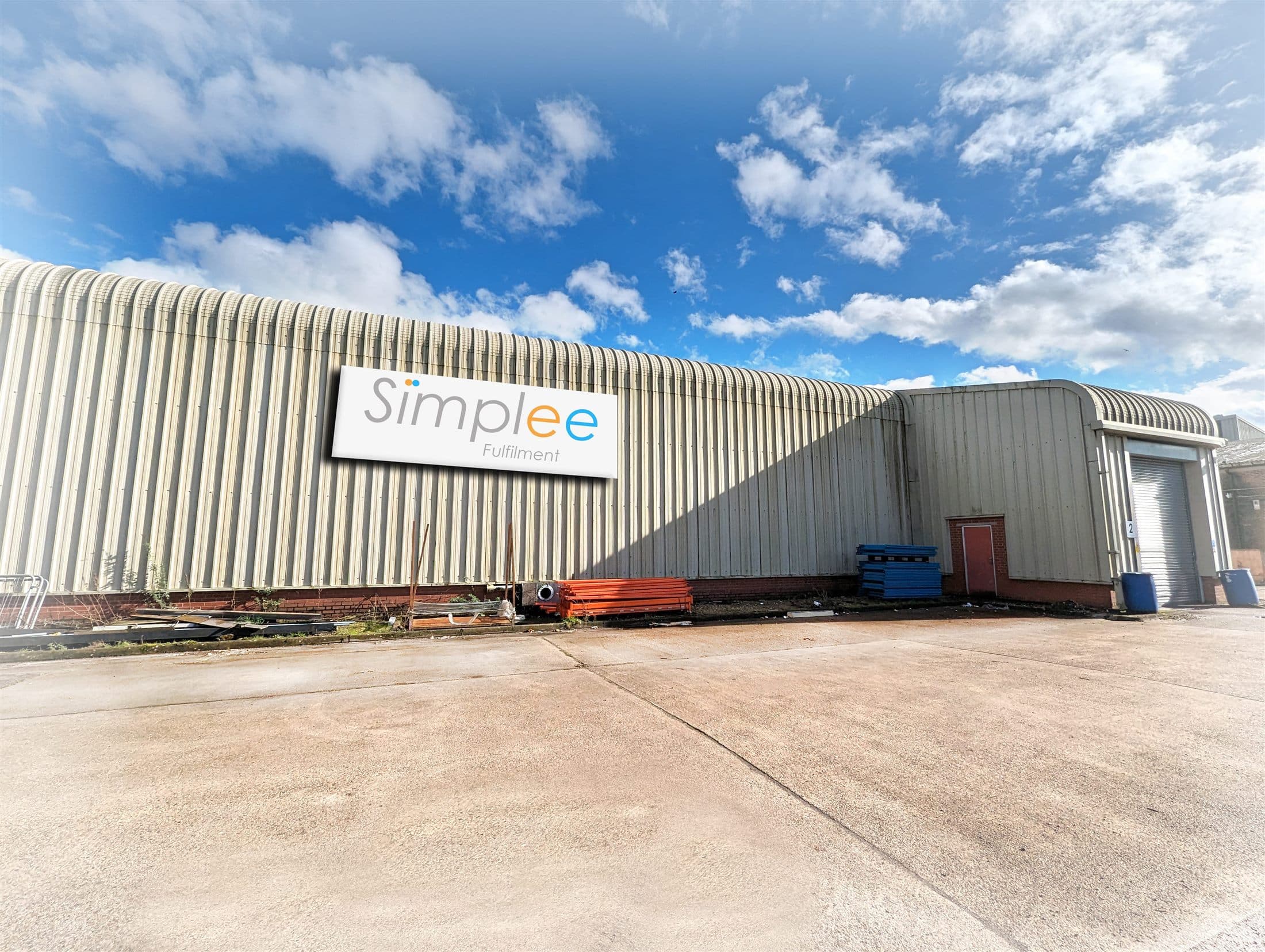
Our operation runs from Stafford Park, Liston, near Sudbury in Suffolk — within 35 miles of the Port of Felixstowe. That is the same county the container lands in, and it means the run from port to warehouse is a short drayage leg rather than a cross-country haul.
We are a UKWA-accredited member with 120,000 sq ft of capacity, including a new 50,000 sq ft warehouse, and we are set up specifically for the goods that make port proximity worth caring about: big, heavy, awkward, out-of-gauge stock that fills a box fast and does not fit a standard network.
The location is not a marketing point on its own. Plenty of warehouses sit near ports. What makes it useful is the combination — a short leg from the quay, and a facility on the other end that can actually take what comes out of the box.
What container devanning into storage actually involves
- Arrival and unloading, planned around the container rather than squeezed between other work.
- Inventory checks against what you were told was loaded — not a count of boxes, a check of contents.
- Discrepancy reporting, recorded while the claim against the supplier or the carrier is still live.
- Put-away, which for out-of-gauge goods means deciding per item whether it is stacked and wrapped onto pallets, racked, put into stillages, or moved into a floor-serviced storage area.
- A record in Team Simplee of what arrived, what condition it was in, and where it now is.
Why short drayage reduces risk, not just cost
The cost saving from a short leg is easy to understand. The risk reduction is the part brands notice later.
The first is demurrage and detention exposure. The clock on a container runs whether or not you are ready for it. When the warehouse is close, a container released in the morning can be unloaded and returned inside the same day, which keeps the free time comfortable rather than tight. When the warehouse is hours away in each direction, the same release becomes a scheduling problem, and scheduling problems become charges.
The second is that a short leg is a short leg for damage too. Out-of-gauge goods do not enjoy road miles. A container of tall, awkward, top-heavy product that has already crossed an ocean has done its shifting; every additional hour of road transport is another hour of the load working against its own packaging.
The third is responsiveness. When something is wrong in a container, being close to the port means the conversation with your agent happens the same day, with photographs, while the container is still accessible. Distance turns that into next week's problem.
When port proximity does not matter
It is worth being straight about this, because the argument is not universal.
If your stock is manufactured in the UK or arrives by road from Europe, Felixstowe is irrelevant to you and you should choose your 3PL on other grounds entirely. If you import small, dense, high-value goods, the drayage leg is a small percentage of a large number and it will not move your economics. If your outbound profile is thousands of small parcels going to consumers nationwide, your priority is proximity to the network, not the port.
And there is a genuine trade-off to weigh. East Anglia is not the geographic centre of the UK. If most of your customers are in the North West, an inbound saving can be partially offset on outbound. Whether that trade works depends on the ratio — how many containers you bring in versus how many outbound movements you make, and whether those outbound movements are pallets and two-person deliveries or a high volume of small parcels.
For an import-heavy bulky-goods brand, the ratio usually favours the port. The inbound is frequent, expensive, and concentrated. The outbound is lower in volume and consolidated onto pallets or booked two-person jobs, where an extra hour of trunking matters far less. For a small-parcel brand with UK-made stock, it usually does not. Do the arithmetic on your own numbers rather than accepting either version of the argument.
Questions worth asking any port-adjacent 3PL
Ask whether they can take a container direct from your shipping agent, or whether you are expected to arrange the leg yourself. Those are very different services and the difference is your admin time.
Ask what happens to out-of-gauge items on unload. A warehouse that is close to the port but only equipped for standard pallets will simply hand your problem back to you at the door.
Ask what the inbound record looks like. If nobody is checking contents and reporting discrepancies at goods-in, being near the port has bought you speed and no accuracy.
Ask what happens when a container arrives early, or three arrive at once. The honest answer involves overflow capacity and a plan, not a promise.
Working out whether this fits you
Start with two numbers: how many containers you land a year, and what proportion of them come through Felixstowe. If the answers are "a lot" and "most", the location of your warehouse is worth revisiting, and the saving is repeatable rather than one-off.
Then look at what comes out of those containers. If it is genuinely bulky, awkward, or out of gauge, the shortlist of warehouses that can handle it near the port is shorter than the shortlist of warehouses near the port, and that is the constraint that will actually decide it.
If you would like us to look at your inbound profile, send container volumes, product dimensions, and where your customers are. We will tell you whether the geography works for you or not. Call +44 1787 378154 or email sales@simpleeuk.com.
Related SIMPLEE UK services
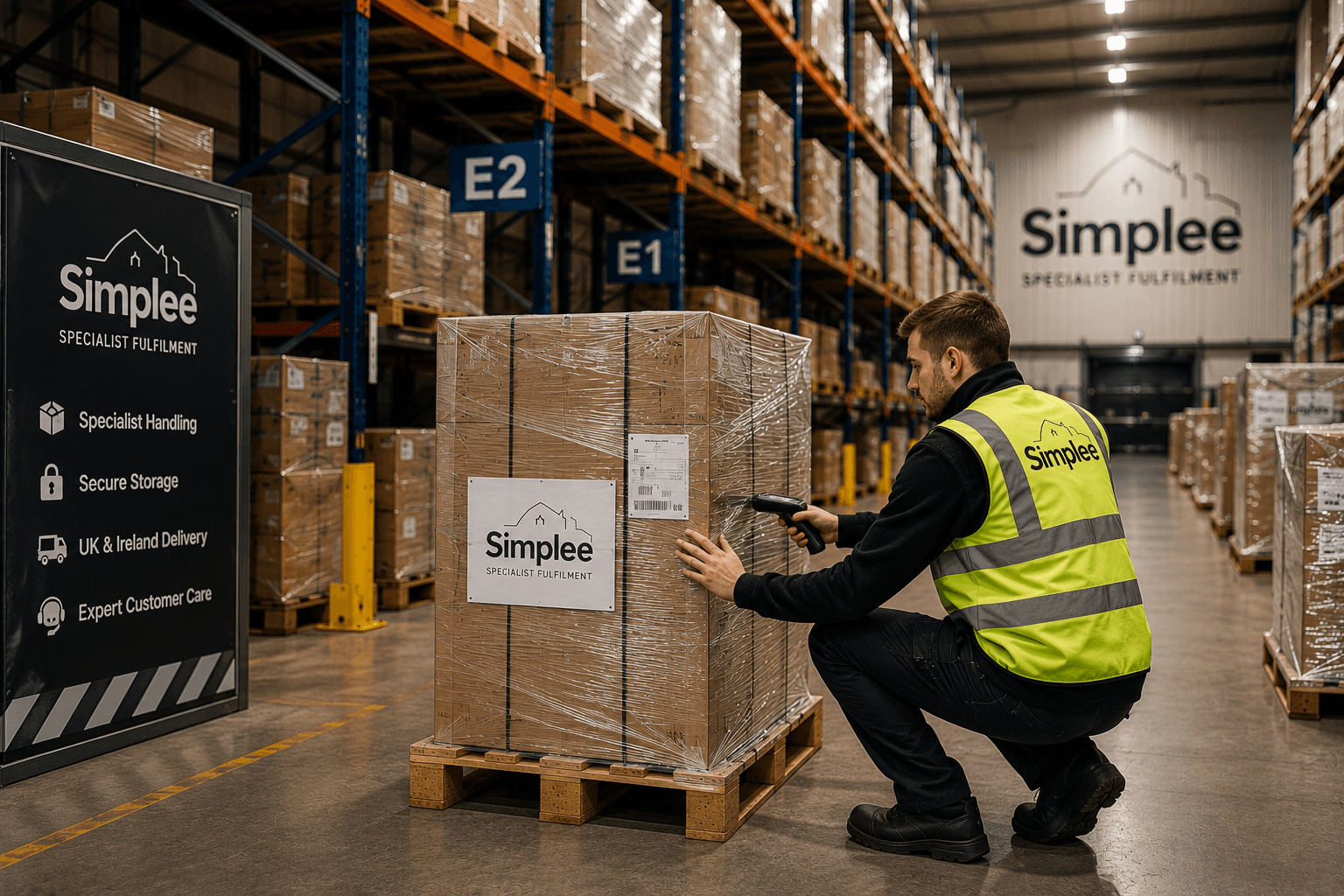
Warehouse fulfilment for bulky & out-of-gauge goods
Inbound shipping, receiving, picking, packing, dispatch, and two-person delivery support for furniture, garden goods, and other awkward stock.
- Inward shipping coordination
- Inventory checks and discrepancy reporting
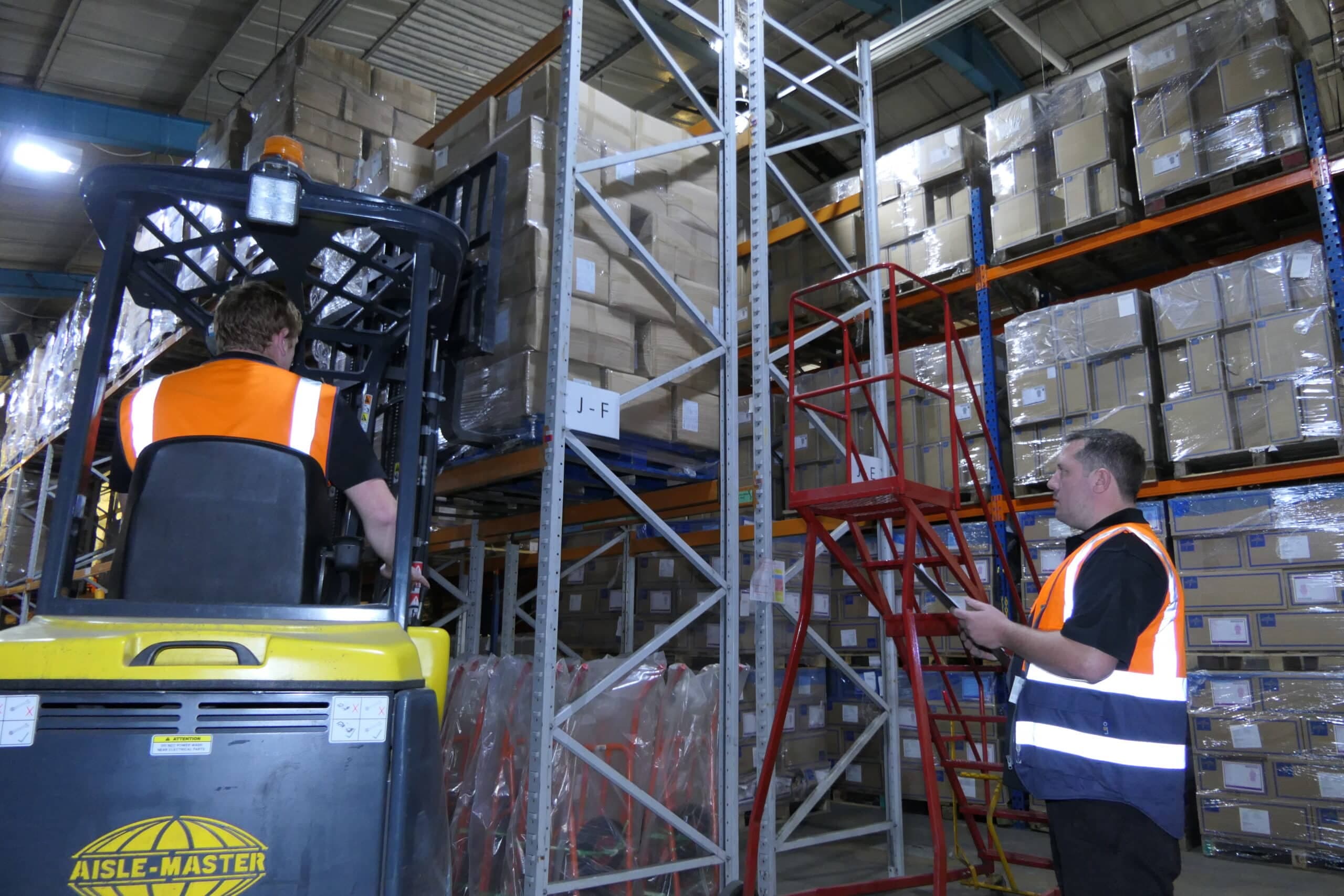
Pallet storage & out-of-gauge pallet solutions
Pallet storage for standard, oversize, stackable, racked, and outdoor stock profiles.
- Out-of-gauge pallet solutions
- Outdoor and racked storage options
White-label fulfilment for freight partners
White-label storage and fulfilment partnerships for freight businesses supporting bulky and out-of-gauge goods.
- White-labelled storage service
- Additional revenue opportunities
Related posts
3PL in Suffolk and East Anglia: why it works for bulky goods
Why East Anglia makes sense as a national distribution base for big, awkward stock — port access, land, and the practical realities of moving oversized goods.
Read articleHow much does 3PL cost for bulky goods?
Why bulky-goods 3PL cannot be priced from a rate card, what actually drives the number, and how to compare quotes fairly.
Read article