
How much does 3PL cost for bulky goods?
Why bulky-goods 3PL cannot be priced from a rate card, what actually drives the number, and how to compare quotes fairly.
There is no honest answer to this question that comes in the form of a single number, and you should be wary of anyone who gives you one. Bulky-goods 3PL is priced from your stock profile, not from a rate card, because two brands storing the same number of pallets can generate completely different amounts of work.
That is not a dodge. It is the actual mechanism. Once you understand what the price is built from, you can predict roughly where your own operation will sit, ask a 3PL better questions, and compare two quotes that look nothing like each other. That is what this post is for.
Why bulky goods break the standard rate card
Small-parcel fulfilment is priced easily because it is repetitive. Items are broadly similar, they fit on shelves, one person picks them, and a courier takes them away in a van that is already coming. The variables are small enough that a published price per order is close enough to the truth.
None of that holds for a corner sofa, a swim spa, a six-metre pergola kit, or a pallet of cast-iron chimineas. The stock does not fit standard racking. It may need two people, a forklift, or a side-loader to move. It may not fit through a standard courier network at all. And the volume it consumes has very little relationship to how many SKUs you have.
So the number that matters is the cost of your specific operation. Working that out means understanding the handful of things that genuinely move it.
The five cost centres in any bulky-goods quote
For a small-parcel brand, storage and pick-and-pack dominate. For bulky goods, goods in, dispatch, and value-add are often the larger share. That is the single most useful thing to know when you look at a quote: if it does not describe those parts in detail, it has not been built around your product.
- Goods in. Unloading the container or trailer, checking the inventory against the paperwork, reporting discrepancies, and putting the stock away.
- Storage. Holding the goods, usually measured by the space and the length of time it occupies.
- Pick and pack. Retrieving the item for an order, preparing it for its journey, and generating the label.
- Dispatch. Getting the item onto the right vehicle, whether that is a pallet network, a courier, or a two-person crew.
- Value-add. Everything else your product needs: repackaging, spares, returns inspection, installation, customer service.
Cubic volume, not pallet count
The biggest mistake brands make when estimating their own cost is counting pallets. A pallet is a footprint, not a volume. Two pallets with identical footprints can occupy wildly different amounts of warehouse if one is a metre tall and the other is three metres tall and cannot be stacked.
What a warehouse actually sells you is cubic space over time, plus the labour to move things in and out of it. So the questions that determine your storage cost are about shape, not quantity. Can the item be stacked, and how high? Can it go in racking, or does it need floor space? Does its shape waste the space around it — a cantilever parasol or a rolled item leaves dead air that nobody else can use? Is it robust enough for outdoor storage, which uses a cheaper class of space entirely?
A brand with fewer, denser, stackable pallets can easily cost less to store than a brand with more pallets of tall, fragile, oddly-shaped stock. If you want to sanity-check your own position, work out how tall your stock is and whether it stacks. That tells you more than a pallet count ever will.
Handling time is the cost you cannot see
Storage is visible. Handling is where the real variation hides, and it is driven almost entirely by how much human time and equipment your product demands per touch.
A carton one person can lift and carry is one unit of handling. A three-metre boxed item that needs two people to lift, a forklift to position, and a walk to the far end of the building is many multiples of that — for the same single line on an order. Multiply that across a season and it dwarfs whatever you thought you were arguing about on the storage rate.
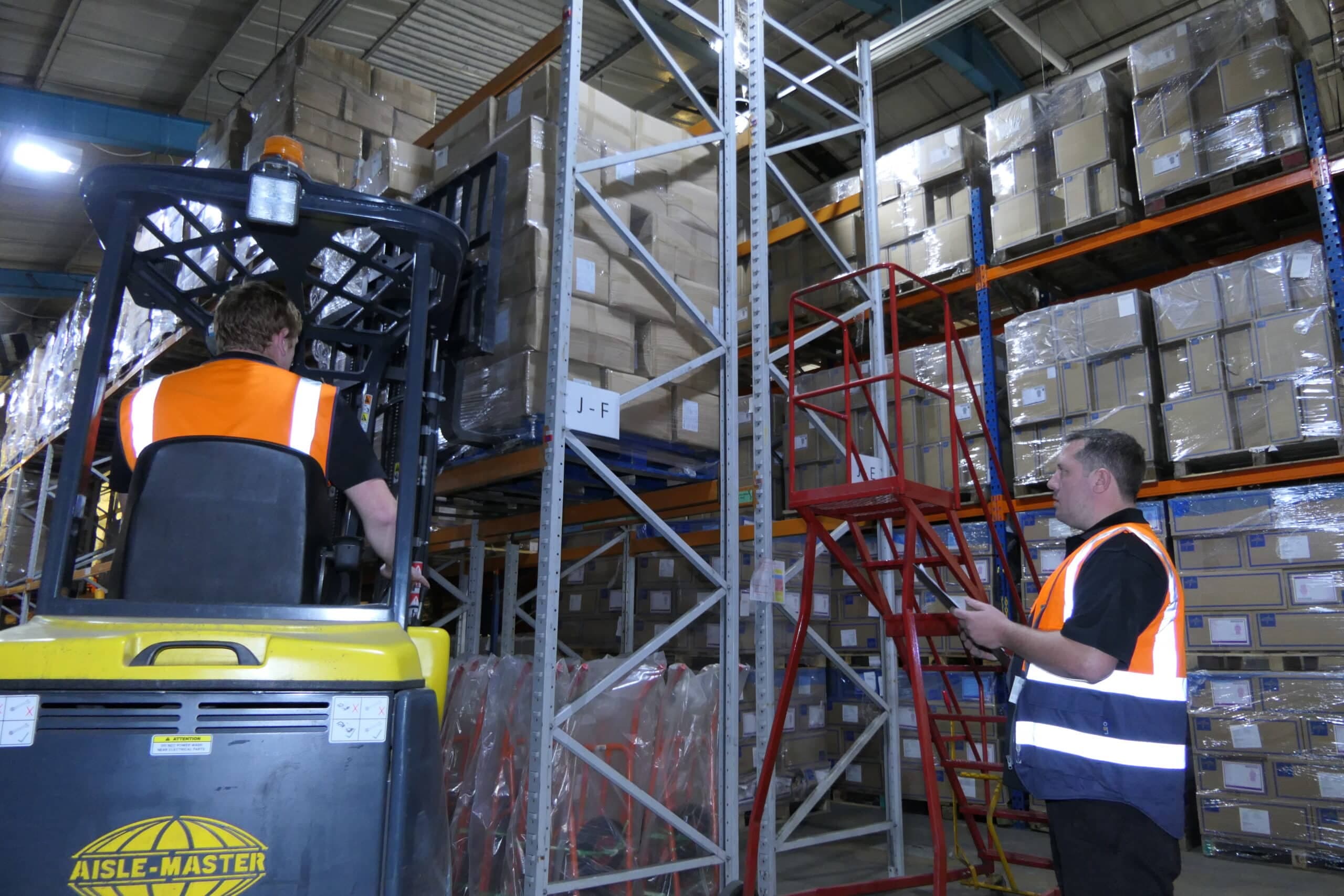
Handling time goes up when items need two people, when they need mechanical equipment, when they need repackaging or protection before dispatch, when the packaging arrives damaged and has to be dealt with, and when picking one item means moving three others first. It goes down when stock is consistently packaged, clearly labelled, palletised sensibly on arrival, and stored in a location that reflects how often it actually moves.
Some of that is in your control before your goods ever reach a warehouse. Inbound packaging quality is a cost lever, not just a quality issue.
Delivery: where bulky economics really diverge
For most bulky brands, the outbound leg is the largest single cost in the whole operation, and it is the one least like standard e-commerce.
Standard couriers price against size and weight limits. Cross those limits and you are not paying a surcharge — you are in a different service entirely. Your realistic options become a pallet network, a dedicated two-person delivery service, or a specialist crew who also assemble or install the product at the customer's address.
Those services are priced on time and crew, not on parcels. A two-person delivery occupies two people and a vehicle for a slot. An installation occupies them for longer, and may need a survey beforehand. That is genuinely more expensive per order than a parcel, and it should be — but it is often cheaper than the alternative, because the damage rate, the failed-delivery rate, and the returns cost of pushing an unsuitable product through a parcel network are all higher than they look on the invoice.
When you compare delivery costs, compare the total: the delivery price plus the damage, the redeliveries, and the customer service time that comes with it.
Seasonality and returns: the two things estimates leave out
If you sell garden furniture, BBQs, or anything else with a season, your cost is not a flat monthly figure — it is a curve. Containers land before the season, the warehouse fills, orders surge for a few months, and then you are holding whatever did not sell through a quiet winter.
That has two consequences for pricing. First, your peak storage requirement and your average storage requirement are different numbers, and a quote built on the average will be wrong. Second, peak needs labour that has to exist before the orders arrive — which is precisely the flexibility you are buying from a 3PL rather than employing directly. A quote that reflects this will ask for your inbound schedule and your expected sell-through pattern, not just your annual volume. If nobody asks, the quote is a guess.
Returns are the other omission, and they behave differently for bulky goods. An oversized return is not a reverse parcel. Getting a garden sofa back from a customer usually needs a collection, not a drop-off. When it arrives it has to be inspected, photographed, and judged: restock, repackage, spares, or write-off. Each of those is a different amount of work.
Brands routinely leave returns out of their modelling and then find it is a meaningful part of the operation. Ask how returns are priced, how damaged stock is assessed and evidenced, and whether spares can be held and dispatched rather than replacing the whole unit — because replacing a whole unit over one broken fixing is an expensive habit.
How to compare quotes fairly
Once you have the answers, resist the urge to compare rates side by side. Quotes from different 3PLs are rarely structured the same way, which makes a line-by-line comparison misleading. One may bundle goods in into the storage rate. Another may separate every touch. The cheaper-looking one is not necessarily cheaper.
The only reliable method is to model a period rather than compare rates. Take a real, representative stretch of your business — ideally a peak month and a quiet month — with your actual inbound containers, order volumes, SKU mix, delivery types, and returns. Ask each provider to price that same scenario. Then compare the totals.
Two more things worth weighing that never appear as a line item. First, exclusions: a low rate on stock a provider cannot actually handle is not a price, it is a problem you will discover later. Second, visibility: if you cannot see your stock position and order status yourself, you will spend your own team's time chasing it, and that time is a real cost even though it lands on your payroll rather than theirs.
- How is storage measured — by pallet, by footprint, by cubic volume, or by dedicated area? What happens when my stock does not fit that unit?
- Which of my SKUs would you store in racking, on the floor, and outside — and what does each of those cost differently?
- How is goods in charged? Per container, per hour, per pallet? What happens if a container arrives badly loaded?
- How is handling charged for items that need two people or mechanical equipment?
- What are the realistic dispatch routes for my largest SKU, and what does each one cost?
- How does the price change between my peak month and my quietest month?
- How are returns, spares, and damaged stock handled and charged?
- What is included in the base service and what is billed separately?
Working out your own number
We deliberately do not publish rates for this service, because a rate published without knowing your stock profile would be close to meaningless — and for out-of-gauge goods it would usually be wrong.
What makes a quote quick and accurate is information. Dimensions and weights for your main SKUs. Whether they stack, and how high. How they arrive — loose-loaded containers, palletised, or otherwise. Roughly how many orders you expect across a year and how they are shaped by season. How your largest items reach the customer now. And what happens today when one comes back.
Send us that, and we can talk about real numbers for your operation rather than averages for someone else's. You can start that on our get a quote page, or call the team on +44 1787 378154 if it is easier to talk it through.
Related SIMPLEE UK services
Warehouse fulfilment for bulky & out-of-gauge goods
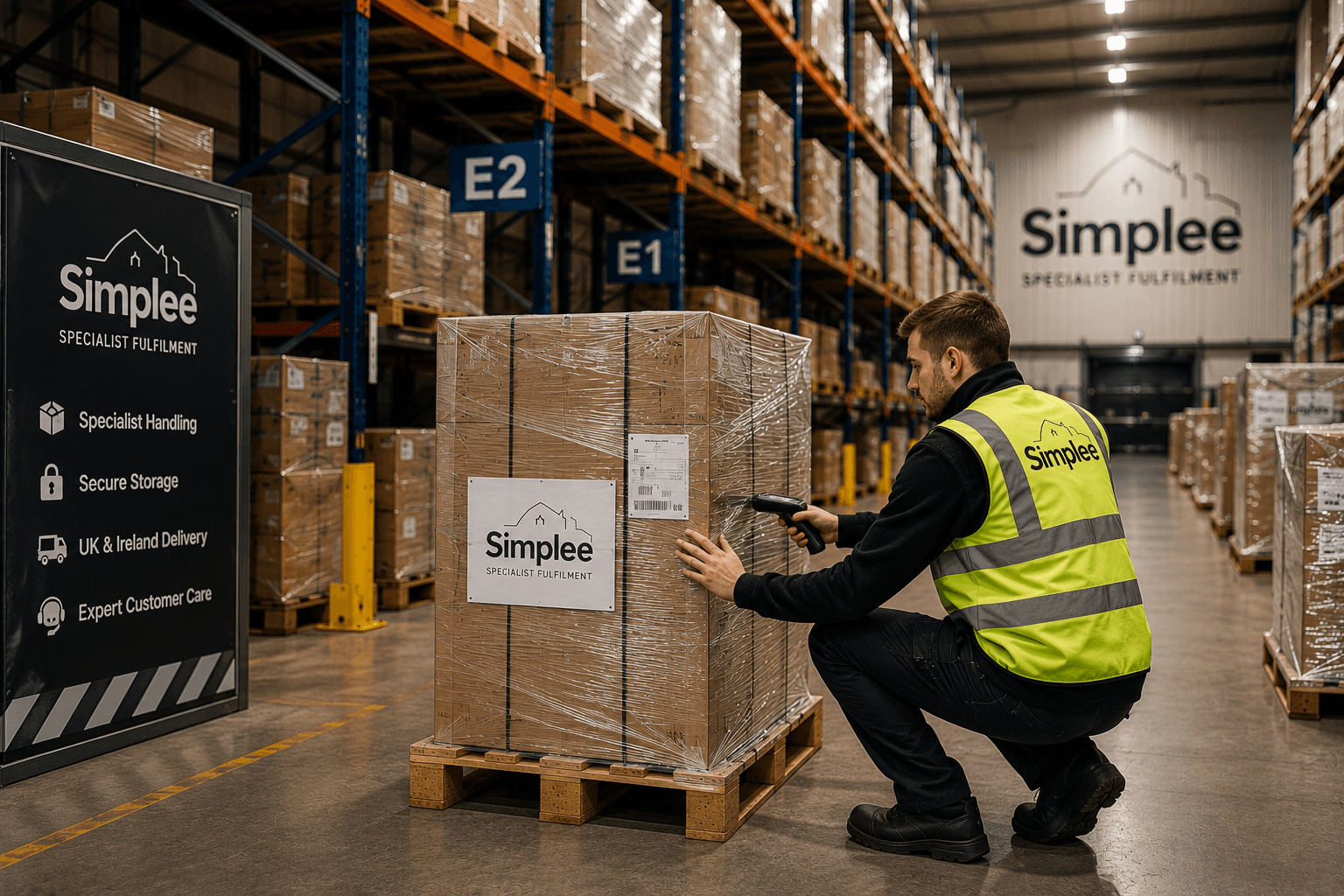
Inbound shipping, receiving, picking, packing, dispatch, and two-person delivery support for furniture, garden goods, and other awkward stock.
- Inward shipping coordination
- Inventory checks and discrepancy reporting
Pallet storage & out-of-gauge pallet solutions
Pallet storage for standard, oversize, stackable, racked, and outdoor stock profiles.
- Out-of-gauge pallet solutions
- Outdoor and racked storage options
Warehouse technology — stock visibility & reporting
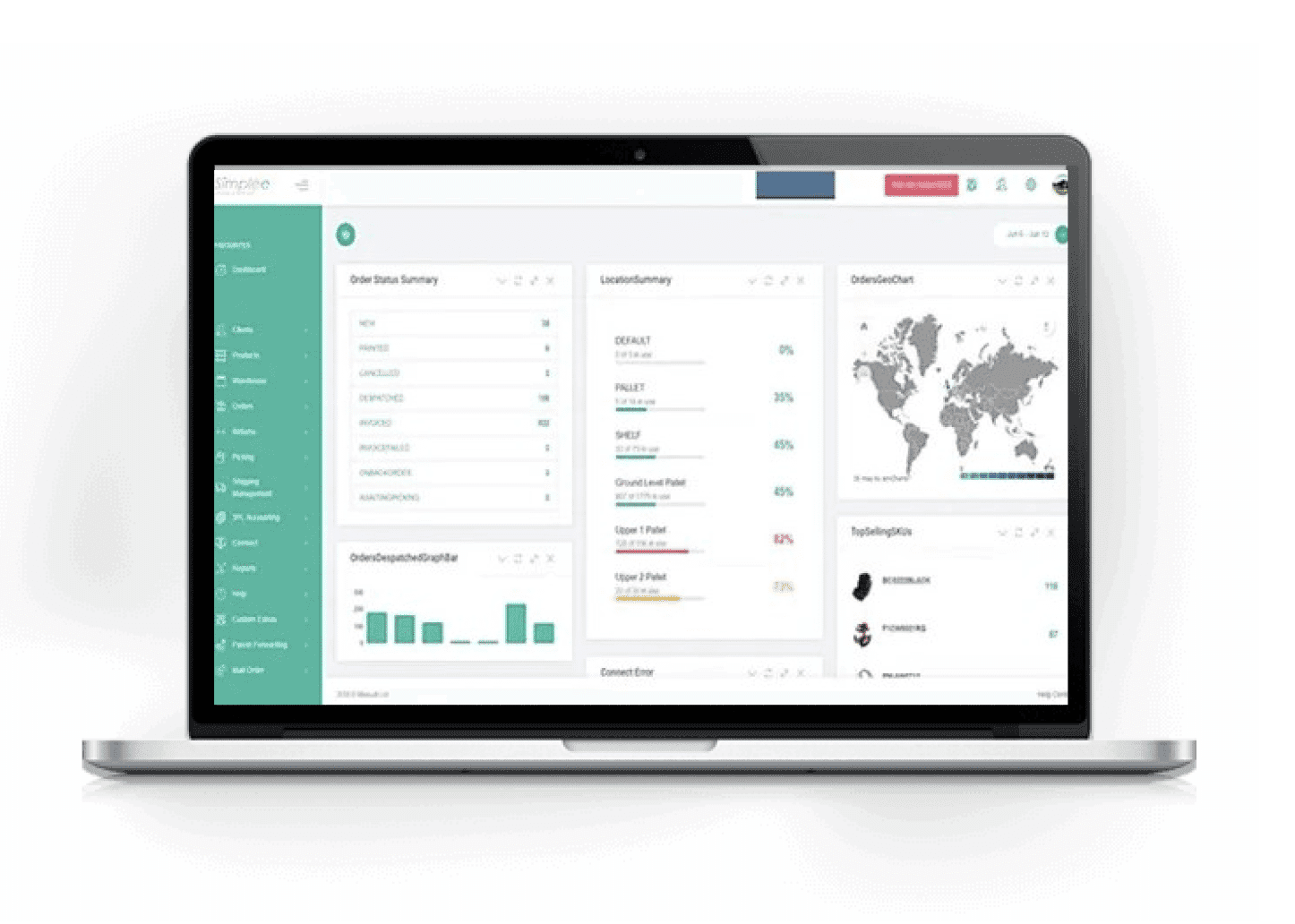
Warehouse visibility, reporting, order status, stock management, and courier integrations through Team Simplee.
- Team Simplee portal access
- Real-time order and stock visibility
Related posts
Out of gauge pallet storage explained
What happens when your stock overhangs the pallet — bespoke oversized pallets, racked versus floor decisions, and how out-of-gauge storage is actually priced.
Read article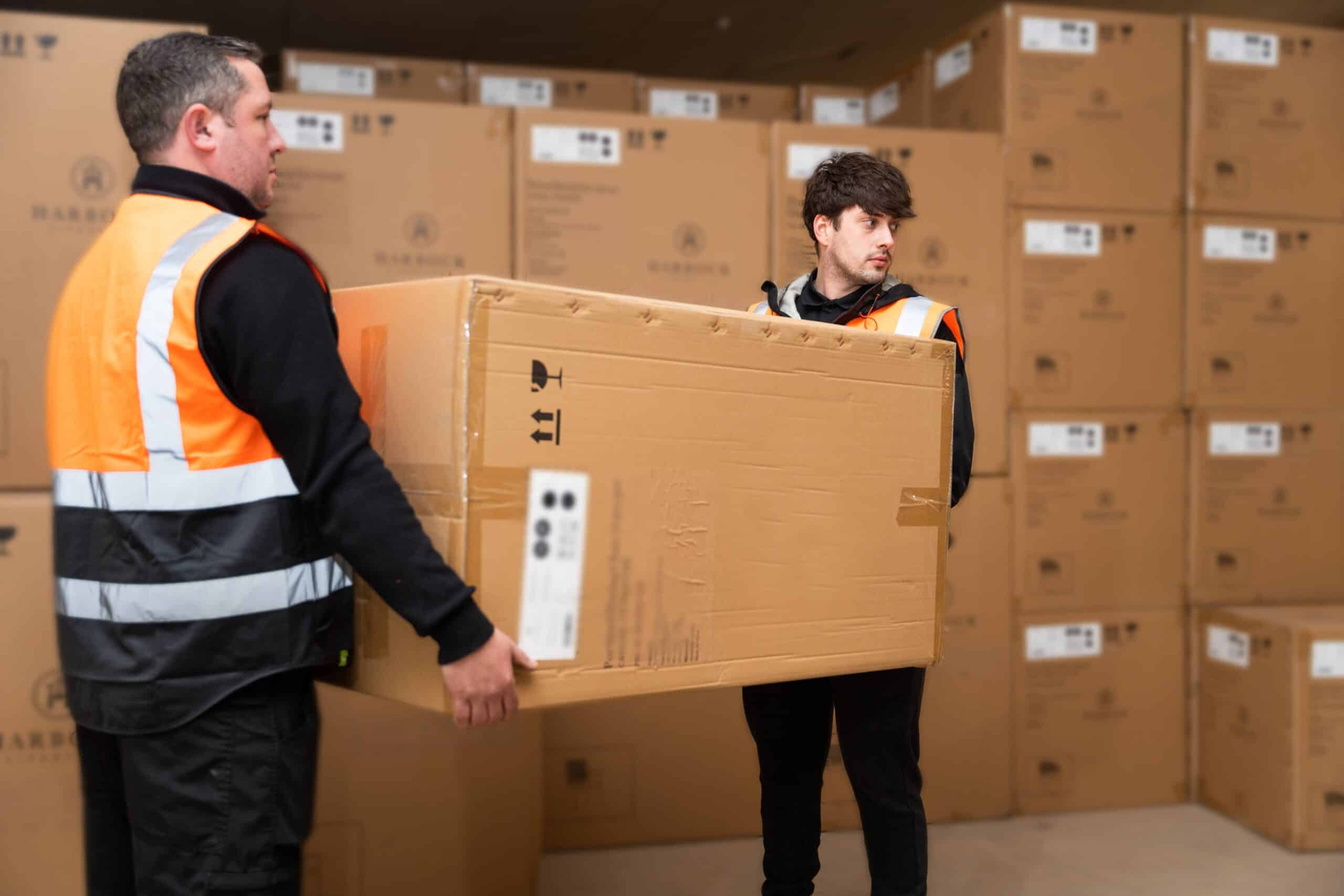
When to move from self storage to a 3PL
Self storage is a fine place to start and a bad place to scale. The practical signals that tell you it is time to move, and what actually changes when you do.
Read article