
How to choose a garden furniture 3PL
The questions that actually separate a garden furniture 3PL from a general parcel warehouse — storage profile, handling, spares, and peak capacity.
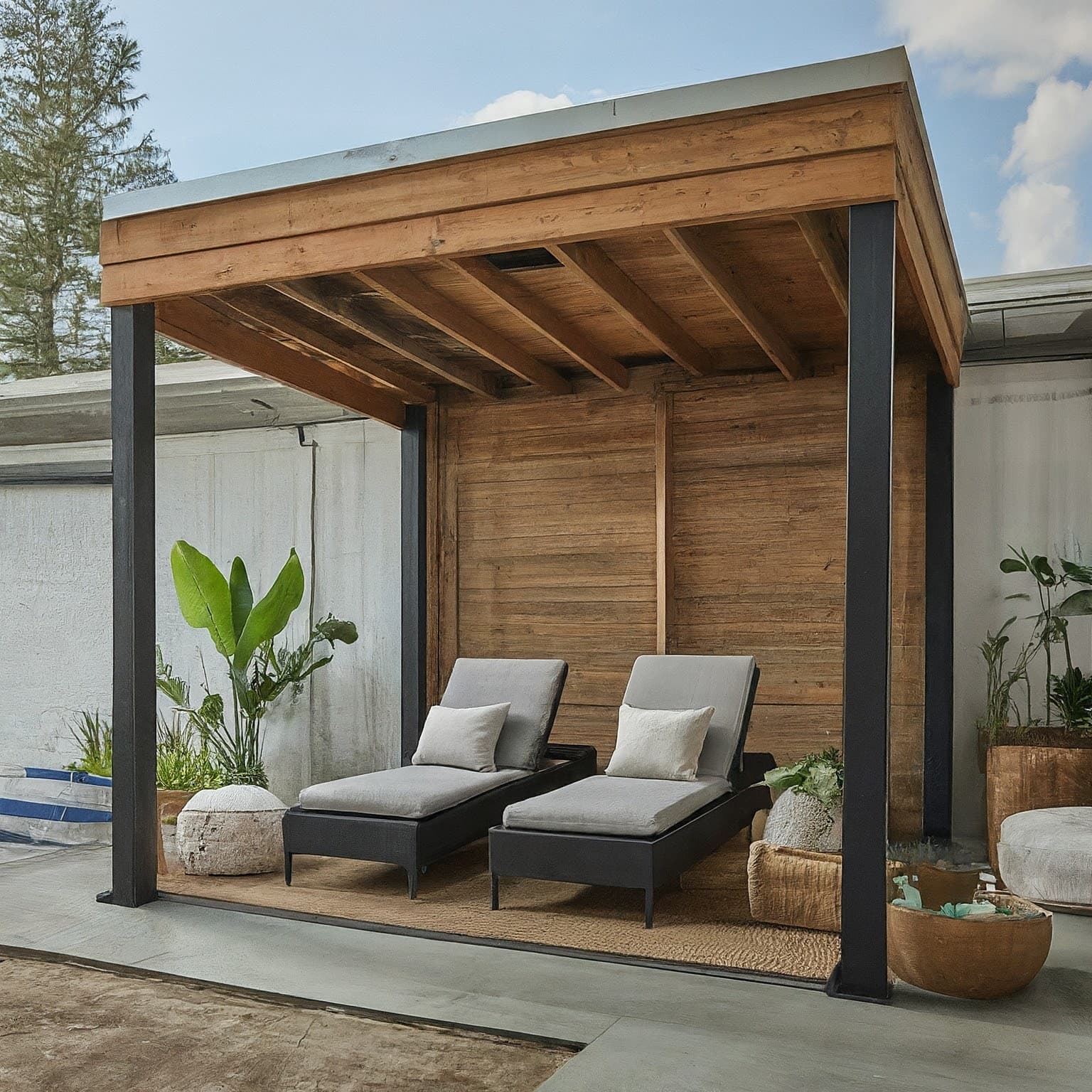
Start by asking what the warehouse is actually built for
Most 3PL warehouses are built around one assumption: that a unit of stock fits in a tote, sits on a shelf, and leaves in a van. Garden furniture breaks that assumption on day one. A four-metre cantilever parasol, a corner sofa set on an oversized pallet, a cast-iron chiminea, a boxed hot tub — none of these behave like a parcel.
So the first question is not about price per pick. It is about what the building was designed to hold. If a provider talks first about conveyor speed and shelf density, they are describing a small-parcel operation. If they talk about floor-serviced areas, oversized pallets, stack heights, and forklift access, they are describing something that will hold your stock without damaging it.
That distinction matters more than most brand owners expect, because the cost of getting it wrong is rarely visible in the quote. It shows up later as damage, as re-packing labour, as customer service tickets, and as returns.
Match the storage profile to your actual SKU mix
Garden furniture ranges are almost never uniform. A typical brand carries something in every storage category at once, and a good 3PL will ask you to break the range down before quoting rather than after.
Before you speak to anyone, do a rough sort of your own catalogue. You are looking for how many distinct handling profiles you actually have.
- Racked pallets — flat-packed dining sets, cushions, covers, boxed accessories with predictable dimensions.
- Oversized or out-of-gauge pallets — rattan corner sets, sun loungers, anything that overhangs a standard pallet footprint.
- Floor-stored goods — pre-assembled pieces, fragile glass-topped tables, items that cannot take weight on top.
- Outdoor-tolerant stock — robust, weather-resistant goods and overflow that does not need heated indoor space.
- Small-and-fast — fixings, covers, replacement panels, spares that move constantly and in small quantities.
Ask how the mix gets stored, not whether it can be
Any provider will say yes to "can you store garden furniture". The useful question is how they intend to store each part of your mix, and what that does to your bill.
At SIMPLEE UK we handle this by shaping storage around the stock rather than forcing the stock into one configuration. Palletised, bulky, fragile, floor-stored, and out-of-gauge goods each get an approach that suits them. Outdoor pallet storage can carry weather-resistant lines or absorb overflow at peak, which keeps expensive indoor space for the stock that genuinely needs it.
A provider who can only offer racking will either refuse your awkward SKUs or rack them badly. A provider who offers nothing but floor space will store your flat-packs inefficiently and charge you for the air. You want both, plus someone willing to tell you which is right for each line.
Look hard at handling and damage
Damage is the quiet cost centre in garden furniture fulfilment. A scratched teak bench or a cracked parasol pole is not a small write-off, and the replacement usually travels twice — out to the customer, and back again.
Damage comes from a small number of predictable places, so ask about each one specifically. How is the container unloaded, and by whom? Are inventory checks done on arrival, with discrepancies reported before the stock disappears into the building? Is anything stacked on top of goods that were not designed to take it? What happens to a box that arrives already damaged — does it get quarantined, photographed, and reported, or does it get put away and discovered by your customer?
The right answer is boring and procedural. Goods are unloaded, checked, discrepancies are reported, and put-away follows a decided plan. There should be a photographic record when something is wrong. If a provider cannot describe this sequence without improvising, they have not thought about it.
Spares and returns are part of the service, not an afterthought
Garden furniture generates a specific kind of aftercare load. A customer does not usually want to return a nine-piece dining set because one glass panel arrived cracked — they want the panel. If your 3PL cannot hold and dispatch spares, every minor fault becomes a full return, and full returns on bulky goods are expensive in a way that parcel returns are not.
Ask whether spares can be held as their own stock line, picked and dispatched independently, and tracked against the original order. Ask what happens to a returned corner set — is it inspected, photographed, repackaged, and restocked, or does it sit in a corner until someone makes a decision?
We hold and dispatch spares such as covers, replacement panels, and fixings, and returns are received, inspected, and photo-documented so you can make warranty or restock decisions with evidence rather than guesswork. The point is not that this is unusual. The point is that if you do not ask, you may end up with a partner who has no answer.
Test them on peak, because peak is the whole game
Garden furniture demand is not evenly spread and everyone knows it. What separates providers is whether they plan for it or react to it.
The questions worth asking are about the shape of the year, not the average. How far ahead do they want your forecast? What happens when three containers land in the same fortnight in March? Can storage configuration change between March and October, or are you paying for peak-sized space in December? Can picking and packing labour scale with volume, or is the team fixed?
We forecast capacity with clients ahead of season and use flexible storage configurations to absorb peak inbound. That only works if the brand engages early, which is the real point — a good peak plan is a joint document, not something your 3PL produces alone in February.
Check the delivery end matches the product
A three-seat rattan sofa does not go out on a standard parcel network, and a brand that tries to force it there will spend the season apologising. Ask what dispatch options actually exist for your heaviest and largest lines.
For bulky goods this usually means pallet networks, and for the pieces where a doorstep drop is not good enough, two-person delivery with room-of-choice placement. Some of your range may also warrant assembly or installation. If your 3PL cannot connect storage to the right delivery method, you are managing two suppliers and the handover between them — which is where things go wrong.
Visibility: can you see your own stock?
You should be able to answer "how many of SKU X do we have, and where is order Y" without emailing anyone. That is the baseline, not a premium feature.
SIMPLEE UK clients use the Team Simplee portal at app.simpleeuk.com for goods in, goods out, returns, customer service, and spares. Whatever provider you choose, ask for a demonstration of the portal with real screens rather than a slide. Ask specifically whether inbound arrivals, discrepancies, order status, and returns all appear in the same view. Reporting that lives in three places is reporting nobody reads.
A short shortlist test
If you want a fast way to compare providers, send all of them the same three things: your five most awkward SKUs with real dimensions and weights, your inbound container schedule for next season, and your worst month of returns from last year.
The provider who asks good follow-up questions about those three documents is the one who will handle your account well. The provider who sends a price per pallet by return has not read them.
If your range is bulky, seasonal, and awkward enough that most 3PLs go quiet when you describe it, that is precisely the profile SIMPLEE UK is built around. Send the dimensions to sales@simpleeuk.com or call +44 1787 378154 and we will tell you honestly whether it fits.
Related SIMPLEE UK services
Garden furniture 3PL & fulfilment services
Tailored 3PL support for garden furniture brands managing bulky stock, seasonal peaks, spares, and customer care.
- Seasonal peak support
- Storage for bulky and fragile SKUs
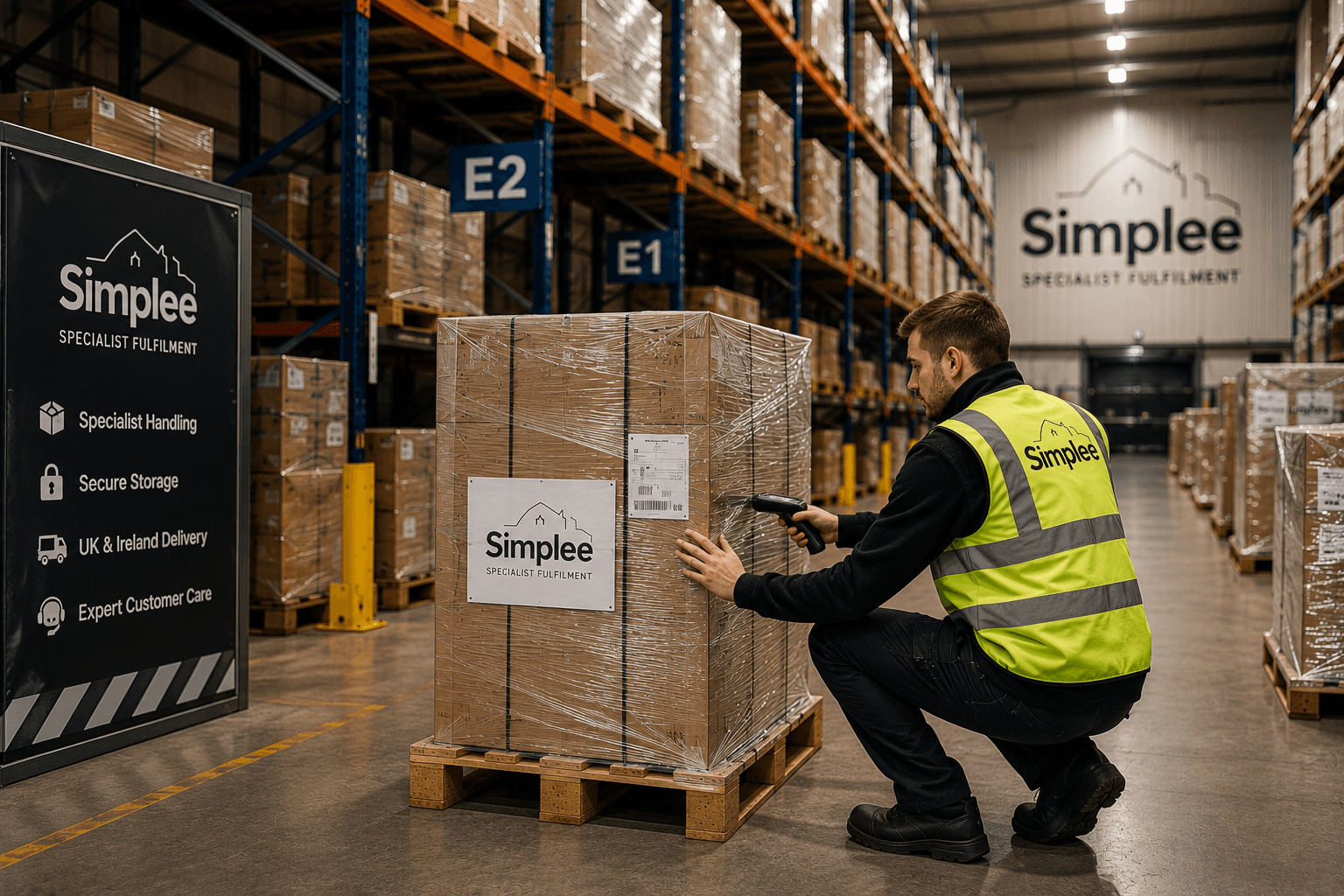
Warehouse fulfilment for bulky & out-of-gauge goods
Inbound shipping, receiving, picking, packing, dispatch, and two-person delivery support for furniture, garden goods, and other awkward stock.
- Inward shipping coordination
- Inventory checks and discrepancy reporting
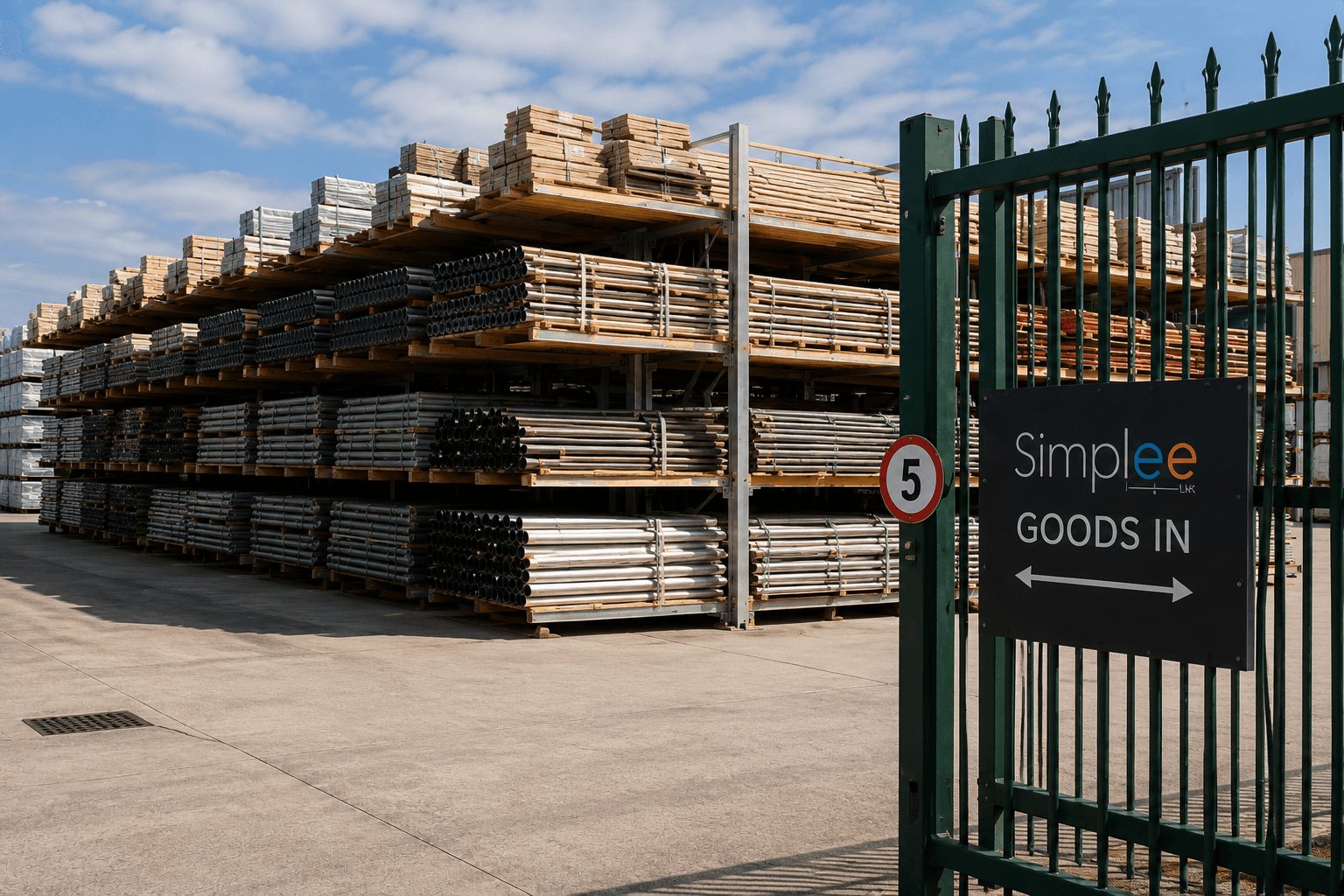
Outdoor & outside storage UK
Outdoor storage for stackable building materials, garden goods, containers, and other robust bulky stock.
- Outdoor storage for stackable materials
- Custom storage configurations
Related posts
Seasonal peak planning for garden furniture brands
Garden furniture storage is a year-round problem with a summer deadline. How to plan inbound, space, labour, and the off-season without paying for peak all year.
Read article
Warehouse options for garden furniture
Storage and fulfilment considerations for bulky, irregular, and weather-sensitive garden furniture.
Read article