
Seasonal peak planning for garden furniture brands
Garden furniture storage is a year-round problem with a summer deadline. How to plan inbound, space, labour, and the off-season without paying for peak all year.
Peak is not a season, it is a shape
Garden furniture has one of the least forgiving demand curves in retail. Sales concentrate into a stretch of spring and summer, they are pushed around by weather nobody can forecast, and the stock arrives months before any of it sells.
The result is a specific storage problem. Your space requirement peaks when your sales have not started yet — when the containers have landed and the customers have not — and it collapses at exactly the point in the year when a fixed warehouse lease is still charging you the same rent.
Peak planning is really about managing that gap. Almost every expensive mistake in this category comes from treating the year as an average.
Start with the inbound calendar, not the sales forecast
Most brands plan peak by forecasting sales. That is necessary but it is the second document. The first is the inbound calendar, because the inbound calendar is what determines your space, your labour, and your worst week.
Take next season's container schedule and lay it out by week. Now look for the pile-up — the fortnight where three containers land together because two sailings shifted and the factory pulled a date forward. That fortnight is your real capacity requirement, and it is usually well above the average anyone quoted on.
Then ask the useful question: can any of it be phased? A container arriving two weeks later, or a line split across two sailings, can flatten a spike that would otherwise cost you overflow space, agency labour, and a bad week. Phasing inbound is the cheapest peak lever available to most brands and the one most often ignored, because it is a conversation with a supplier rather than a logistics decision.
Sort your range by how it behaves, not what it is
For peak planning, the useful categorisation of your range has nothing to do with product families. It has to do with how each line behaves under pressure.
- Fast movers that must be instantly pickable — keep these accessible even when space is tight, because access failures here cost you sales.
- Bulk lines that will leave whole or in large batches — store for density, not selectivity.
- Weather-tolerant lines — candidates for outdoor storage, releasing indoor space for stock that needs it.
- Fragile or unstackable lines — these will consume more space than their size suggests; plan for it rather than discovering it.
- Spares and small parts — low volume, high frequency, and disproportionately damaging to your service level if they get buried.
- Long tail — slow lines that will still be here in November. Decide now whether they earn their space.
Use outdoor storage as a deliberate valve
Indoor space during a garden furniture inbound peak is the scarcest thing you have. Outdoor pallet storage is the obvious release valve and is under-used, usually because it gets framed as second-best rather than as a tool.
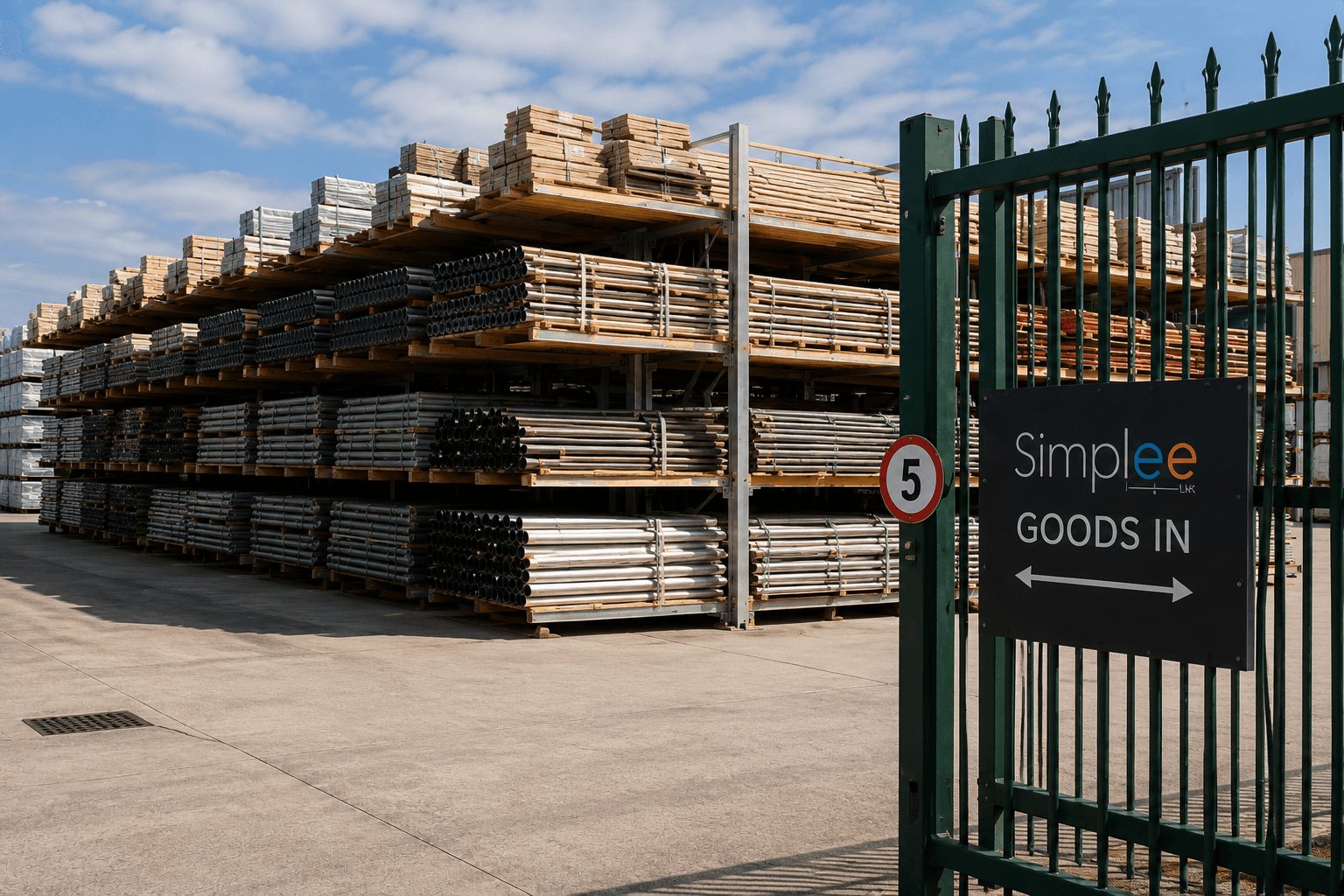
Outdoor storage suits weather-resistant goods and works well as overflow during peak periods. Where goods need a bit more protection, wrapping and weatherproofing can be added. The areas are secured with fencing, lighting, and surveillance, so this is not a compromise on security — it is a compromise on environment, and only for stock that does not care.
The decision rule is straightforward. If a line would come out of an outdoor bay in a condition you would happily ship to a customer, it does not need to be indoors during your busiest fortnight. Every pallet you move outside is a pallet of fragile or fast-moving stock that gets an indoor position it actually needs.
Plan the labour curve, not just the space curve
Space is only half of peak. The other half is that a container needs unloading, checking, and putting away in a compressed window, and then a few weeks later the same team needs to be picking and packing at several times the winter rate.
These are two different labour peaks and they do not line up. The inbound peak comes first and is heavy, forklift-driven, and predictable if you have the schedule. The dispatch peak comes later, is picking-driven, and moves with the weather.
This is one of the strongest arguments for outsourcing the function rather than building it. A brand carrying its own warehouse team either overstaffs for eleven months or scrambles for agency labour in the two that matter — and agency labour in a peak week is both expensive and unfamiliar with your stock, which is where damage comes from. We scale picking and packing to volume across the season because the building is not carrying one brand's curve alone.
Weather is a variable, so build for the wrong forecast
No garden furniture plan survives contact with a British summer. A hot fortnight in May empties your fast lines three weeks early; a wet June leaves you holding stock you expected to be gone.
You cannot forecast this, so plan the response instead. Decide in advance what happens if you sell out of a hero line in week three — is there a second sailing, or is that season done? Decide what happens if sell-through is well below plan by July — where does the surplus go, what does it cost to hold to next season, and at what point does clearing it beat storing it?
Both answers are much cheaper to think about in February than to improvise in July. And both depend on your storage arrangement being flexible enough to change, which brings us to contracts.
Do not buy peak space for twelve months
The core economic problem of a fixed warehouse in this category is that you sign for your worst fortnight and pay for it in every quiet one. That is the whole false economy in a sentence.
Storage can be arranged on flexible short-term, seasonal, or long-term contracts depending on the operational need, and storage configurations can be adjusted as demand changes. A garden furniture brand should expect its footprint to look materially different in March and December. If your arrangement cannot flex, you are financing empty space out of your margin for most of the year.
This is not an argument for the cheapest possible arrangement. It is an argument for the shape of the arrangement matching the shape of your year.
Use the off-season properly
The quiet months are not dead time; they are when next peak is won.
Off-season is when you audit stock accuracy, clean up product data so the dimensions in your system match the boxes in the building, review last season's damage and returns to find the SKUs that caused it, decide what to do with the long tail, and agree next season's inbound phasing with your suppliers while they will still listen.
It is also when a storage plan can be rebuilt calmly. Moving stock in November is cheap. Moving stock in April is not.
The peak plan, in one page
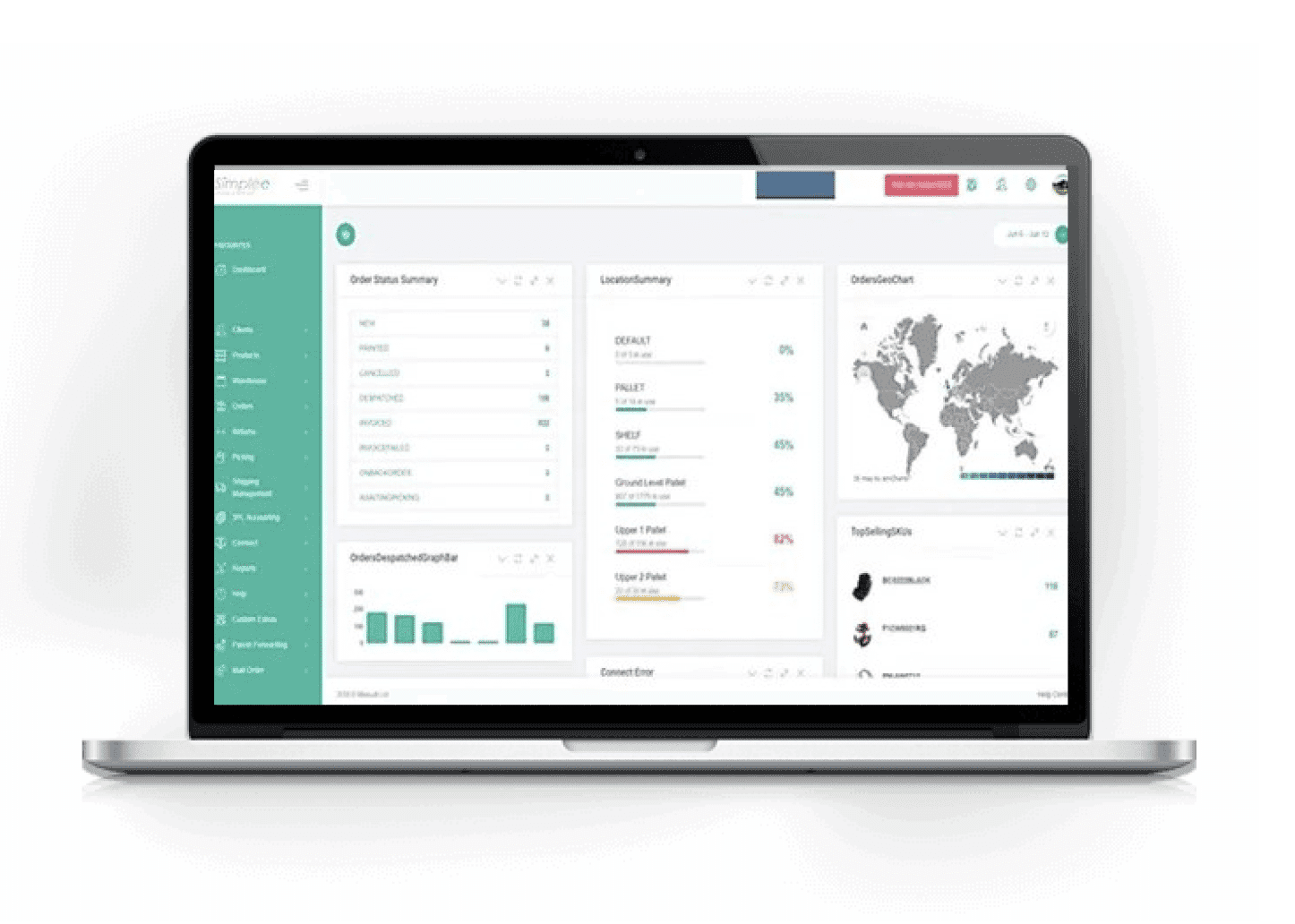
All of this depends on knowing your true stock position during the weeks when you have least time to check it. If you are reconciling spreadsheets in April, you are already behind. Team Simplee gives clients real-time information and reporting on goods in, goods out, returns, customer service, and spares, and in peak the value of that is simple: you can answer "have we got it and where is it" without stopping the warehouse to find out.
The plan itself is short. Lay out the inbound calendar by week and find the pile-up. Phase what you can with suppliers. Sort the range by behaviour and assign each group a storage type. Push weather-tolerant lines outside during the crunch. Agree how labour scales in both the inbound and dispatch peaks. Write down your responses to a hot May and a wet June. Make sure the contract flexes with the year. Then use the off-season to fix what last year exposed.
We work with garden furniture brands on exactly this, forecasting capacity ahead of season from our Suffolk site near Felixstowe. If you want a second pair of eyes on next season before the containers are booked, call +44 1787 378154 or email sales@simpleeuk.com.
Related SIMPLEE UK services
Garden furniture 3PL & fulfilment services
Tailored 3PL support for garden furniture brands managing bulky stock, seasonal peaks, spares, and customer care.
- Seasonal peak support
- Storage for bulky and fragile SKUs
Outdoor & outside storage UK
Outdoor storage for stackable building materials, garden goods, containers, and other robust bulky stock.
- Outdoor storage for stackable materials
- Custom storage configurations
Warehouse technology — stock visibility & reporting
Warehouse visibility, reporting, order status, stock management, and courier integrations through Team Simplee.
- Team Simplee portal access
- Real-time order and stock visibility
Related posts
Q4 peak season readiness: a checklist for bulky-goods brands
What to have settled before Q4 peak arrives — stock, space, data, labour, delivery routes, and the customer service load nobody plans for.
Read articleHow to choose a garden furniture 3PL
The questions that actually separate a garden furniture 3PL from a general parcel warehouse — storage profile, handling, spares, and peak capacity.
Read article