
Out of gauge pallet storage explained
What happens when your stock overhangs the pallet — bespoke oversized pallets, racked versus floor decisions, and how out-of-gauge storage is actually priced.
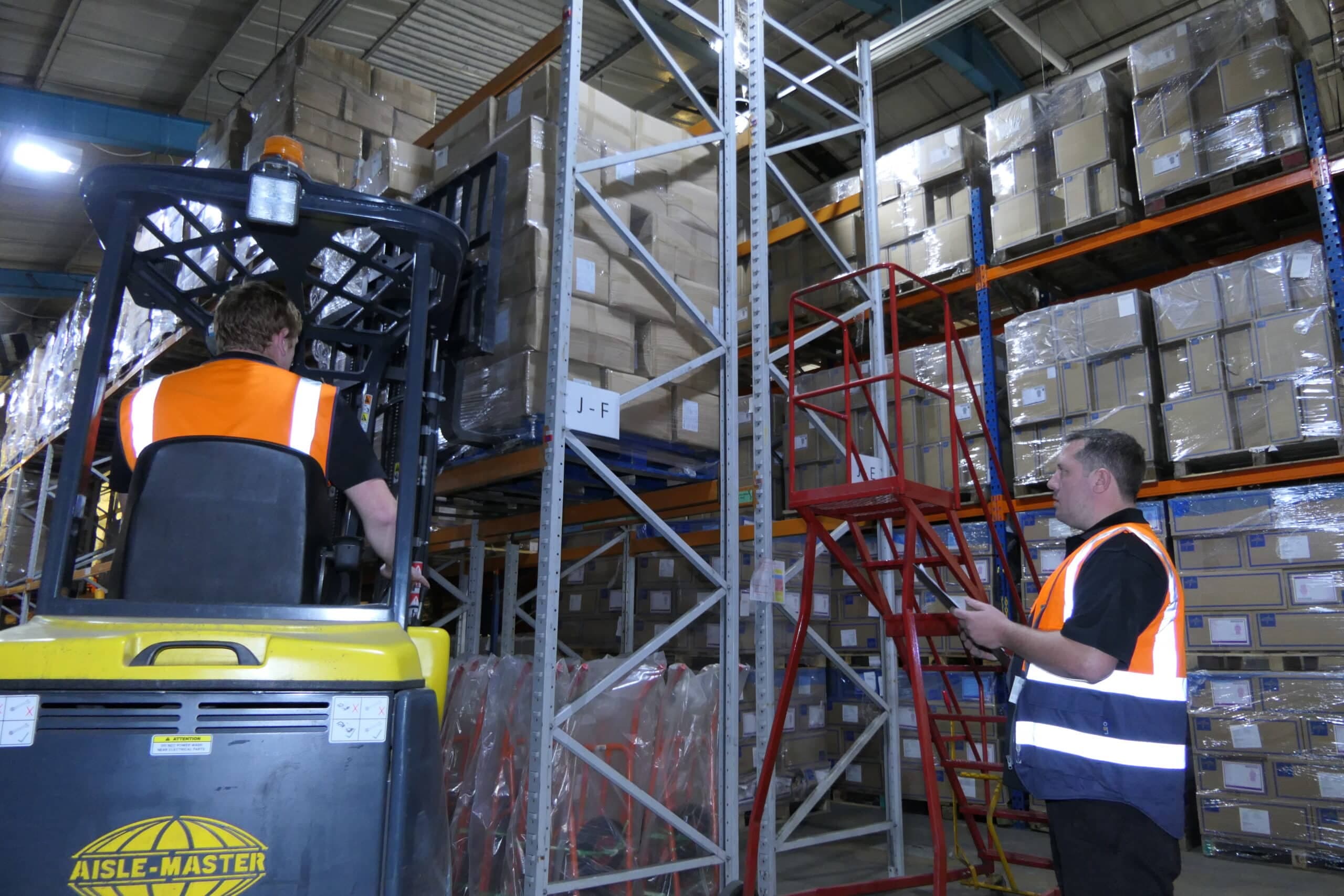
What makes a pallet out of gauge
A pallet is out of gauge when the loaded unit no longer fits the assumptions the warehouse is built on. Usually that means one of three things: the goods overhang the pallet footprint, the loaded height exceeds the bay, or the weight exceeds what the location is rated to hold.
The pallet itself is often fine. It is standard UK or Euro size, correctly wrapped, and perfectly serviceable. The problem is what is sitting on it — a rattan corner set that hangs 200mm over each side, a set of timber lengths that overshoot the end, a stack that has to go higher than the beam allows.
That overhang is not a rounding error. In a racked warehouse it is the difference between a pallet that goes into a bay and a pallet that fouls the upright, the beam, or its neighbour. There is no partial answer. Either it fits or it does not.
It is worth noticing that this is a warehouse-side definition, and it may not match the one your supplier or your freight forwarder uses. A load can be perfectly ordinary on the water, perfectly ordinary on a trailer, and still be out of gauge the moment it needs a home. The point at which stock becomes awkward is usually the point at which it stops moving.
Why overhang costs more than it looks like it should
Brands are often surprised that a small overhang produces a large price difference, and the reason is geometric rather than commercial.
Racking is a grid. Each bay holds a fixed number of pallet positions, and the whole building is costed on that count. A pallet that overhangs does not consume 1.1 positions — it consumes two, because the neighbouring position cannot now be filled. If it also exceeds the bay height, it may cost you the level above as well. One awkward pallet can quietly occupy the space of four.
The same logic applies to load-bearing. A pallet that cannot be stacked on strands everything above it in a floor-stacked area. The item is not heavy or huge; it simply refuses to carry a neighbour, and that refusal has a footprint.
Understanding this makes quotes far less mysterious. When a provider prices out-of-gauge storage higher, they are usually not adding a penalty. They are counting the space you actually occupy.
Bespoke oversized pallets
The first tool for out-of-gauge stock is to stop trying to force it onto a standard pallet. For items that defy standard dimensions, bespoke oversized pallet solutions can be built to the dimensions and weight of the item itself.
This sounds obvious, and it is, but it changes the arithmetic. Instead of a 1200mm pallet with 200mm of unsupported overhang on each side — which is both a space problem and a damage risk, because the corners of the goods are carrying themselves — the item sits on a base that fits it. It is properly supported, it can be moved by forklift without guesswork, and the space it occupies is the space it actually needs rather than the space its overhang sterilises.
There is a second benefit that brands tend to discover only after the fact. A properly formed unit is safer to handle, and handling events are where damage happens. A pallet whose load is stable, supported, and squarely on its base can be lifted, moved, and set down by someone who is not being careful in a special way. A pallet with 200mm of overhang requires care every single time it moves, and care is the thing that runs out first in a busy week.
At SIMPLEE UK, this is a routine part of pallet storage rather than an exception. If your goods do not fit standard pallet dimensions or racking assumptions, that is the conversation to have at quoting stage, with real measurements.
Racked, floor-stacked, or outdoors
The right configuration depends on weight, turnover, and product type, and most brands need more than one. A garden furniture range might have flat-packs racked, corner sets on bespoke oversized pallets floor-serviced, and robust weather-tolerant lines outside during the summer inbound rush.
The mistake is treating this as a one-time decision. It is a seasonal one.
- Racked — best for pallets with predictable dimensions and steady turnover, where you need to reach any pallet without moving another.
- Floor-stacked — best where the goods can safely take load on top and the stack height can be planned. Maximises floor space, at the cost of selective access.
- Floor-serviced, unstacked — for goods that cannot be stacked at all, or that are too fragile or awkward to risk. Lowest density, highest protection.
- Outdoor — for weather-resistant goods, and as overflow during peak periods when indoor space is at its most valuable.
Access is the trade-off you are actually making
Every gain in storage density costs you access, and out-of-gauge stock makes that trade sharper than standard pallets do.
If a pallet is buried three deep in a floor stack, retrieving it means moving two others with a forklift. On standard goods that is a minor inefficiency. On oversized, fragile goods it is two extra handling events, each one a chance to damage something expensive. So the question to ask about any storage plan is not just "how much does this cost per week" but "what does it cost me to get one out".
For fast-moving lines, pay for access. For slow-moving or seasonal stock that will leave in bulk, density is usually the better deal. Storage planning should include receipt, location control, pallet movement, stock checks, and reporting — so that decision is made deliberately rather than discovered later.
Picking individual items from out-of-gauge pallets
A common worry is that out-of-gauge pallet storage means bulk in, bulk out — that you cannot run e-commerce fulfilment off it. That is not the case.
Pallet storage can run alongside pick-and-pack fulfilment, with individual SKUs picked from stored pallets as orders arrive. The practical constraint is not whether it can be done but how the pallet is built. A pallet you will break down over three months should be assembled with that in mind — accessible, re-wrappable, with the fast lines reachable. A pallet that will leave whole can be built for density.
Telling your 3PL which is which, at the point the container is unloaded, saves a lot of handling later.
What to send when you ask for a quote
Out-of-gauge quoting fails when it is based on descriptions instead of numbers. If you want a quote you can rely on, send the following for each awkward line: packaged length, width, and height; gross weight; whether it can be stacked and how high; whether it can be laid flat; expected pallet count on arrival; and how quickly it turns over.
That is a short list, and it is enough for a specialist to tell you whether your stock racks, stacks, needs a bespoke base, or belongs outside — and roughly what each option costs you in space.
One caution on measurements: measure the packaged item as it will actually arrive, not the product, and not the drawing. Boxed dimensions routinely exceed the specification by more than people expect once protective packaging, corner protection, and a pallet base are included. A quote built on product dimensions is a quote you will renegotiate.
Where SIMPLEE UK fits
We are a UKWA-accredited operator with 120,000 sq ft of capacity, including a new 50,000 sq ft warehouse, in Liston near Sudbury, Suffolk — within 35 miles of the Port of Felixstowe. Out-of-gauge and bespoke pallet requirements are a core part of what we do rather than something we tolerate.
Storage can be arranged on flexible short-term, seasonal, or long-term contracts depending on the operational need. If your stock has been quoted awkwardly elsewhere, send the measurements to sales@simpleeuk.com or call +44 1787 378154.
Related SIMPLEE UK services
Pallet storage & out-of-gauge pallet solutions
Pallet storage for standard, oversize, stackable, racked, and outdoor stock profiles.
- Out-of-gauge pallet solutions
- Outdoor and racked storage options
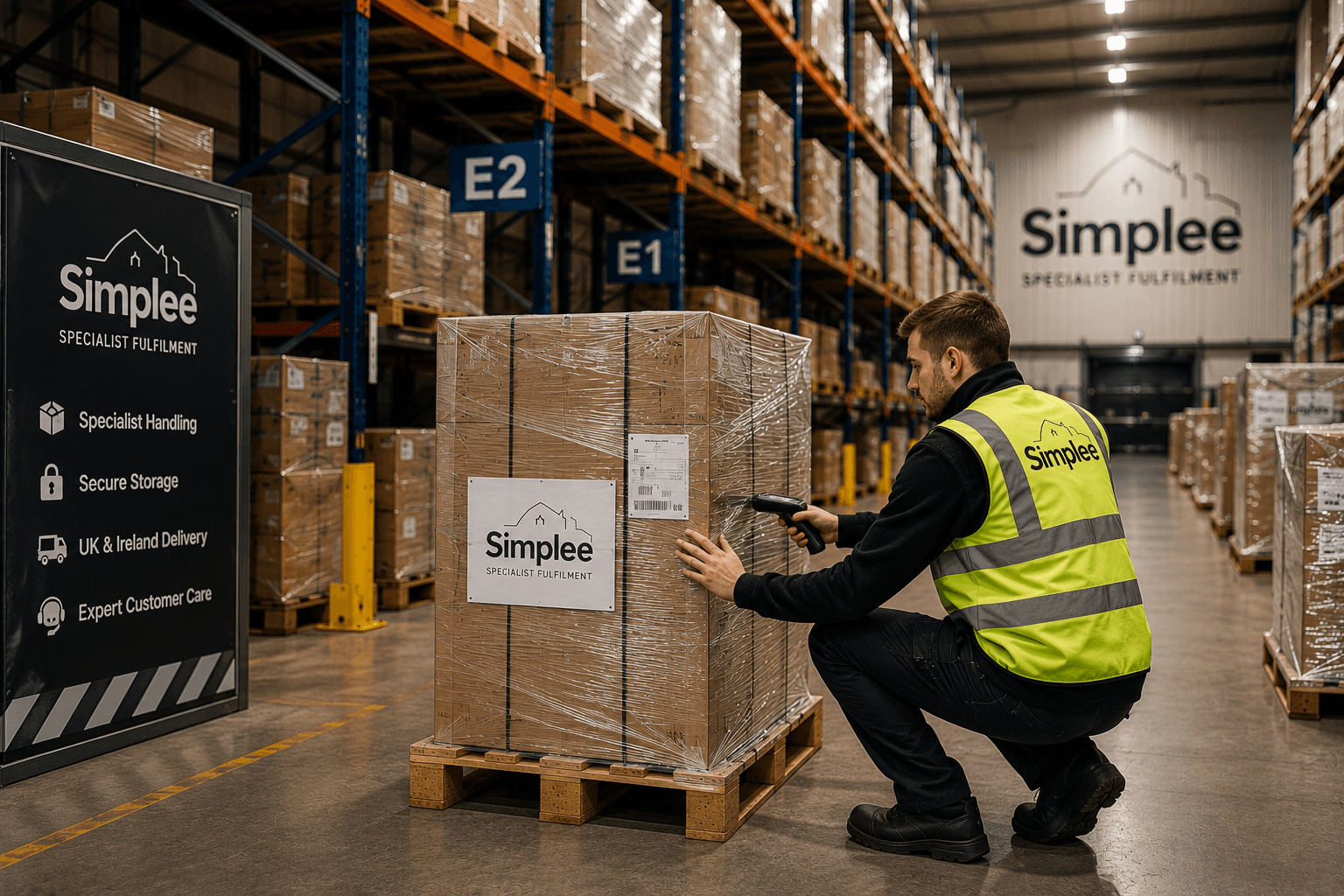
Warehouse fulfilment for bulky & out-of-gauge goods
Inbound shipping, receiving, picking, packing, dispatch, and two-person delivery support for furniture, garden goods, and other awkward stock.
- Inward shipping coordination
- Inventory checks and discrepancy reporting
Specialist internal storage for awkward goods
Internal storage for awkward, bulky, fragile, and specialist materials that need careful handling beyond pallet or rack.
- Specialist internal storage
- Floor storage for awkward goods
Related posts
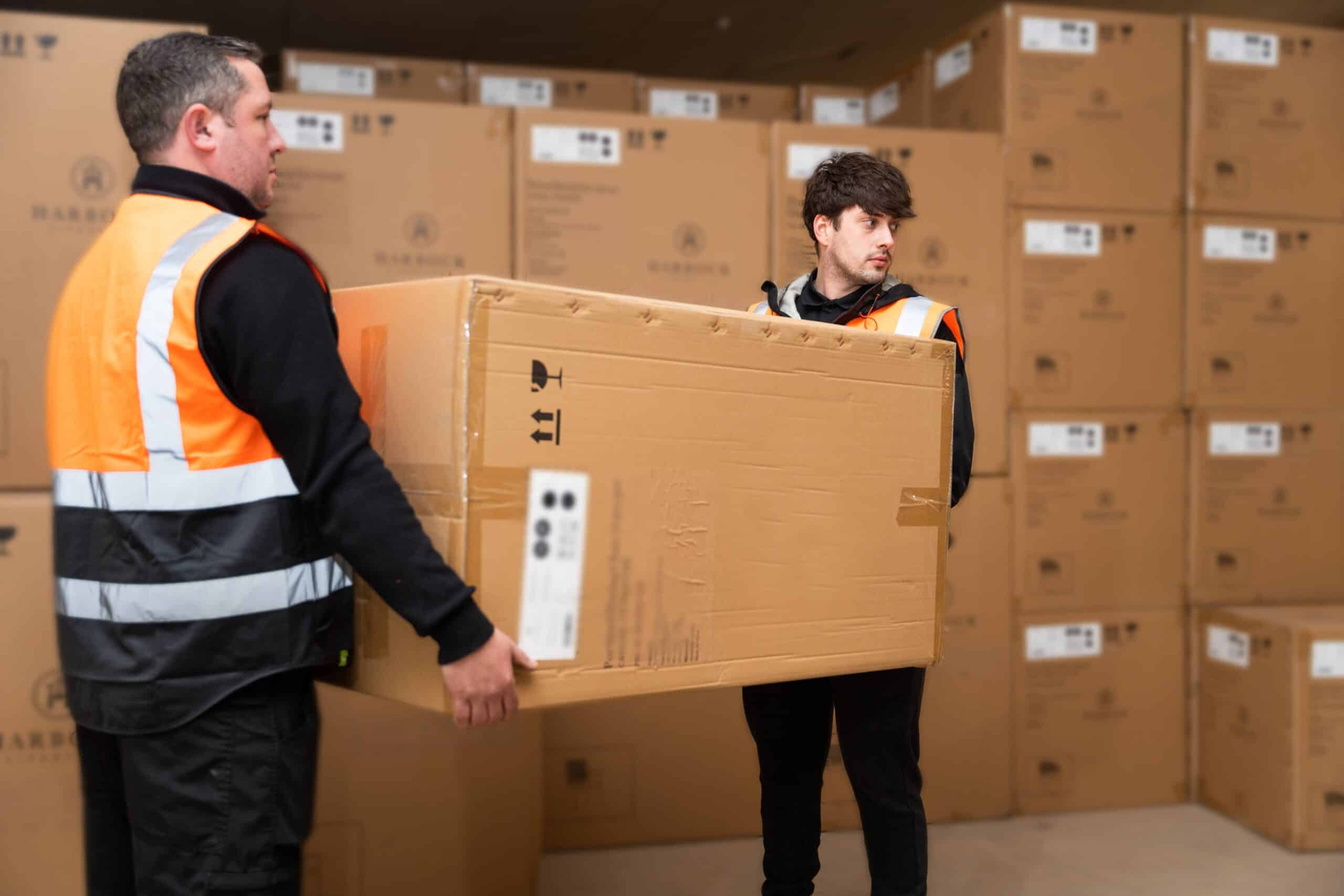
Racked, stacked or floor: choosing the right pallet storage option
Racking, floor stacking, floor-serviced storage and outdoor space each suit different stock. How to work out which of your pallets belongs where.
Read article
What does out of gauge mean in UK fulfilment?
Out of gauge means the goods exceed the dimensions a standard handling system assumes. Here is what that means in a warehouse, and why it changes everything downstream.
Read article