
Machinery storage in the UK: security, access, and handling
High-value machinery needs more than floor space. What to check on security, retrieval, lifting equipment, and inspection access before choosing a store.
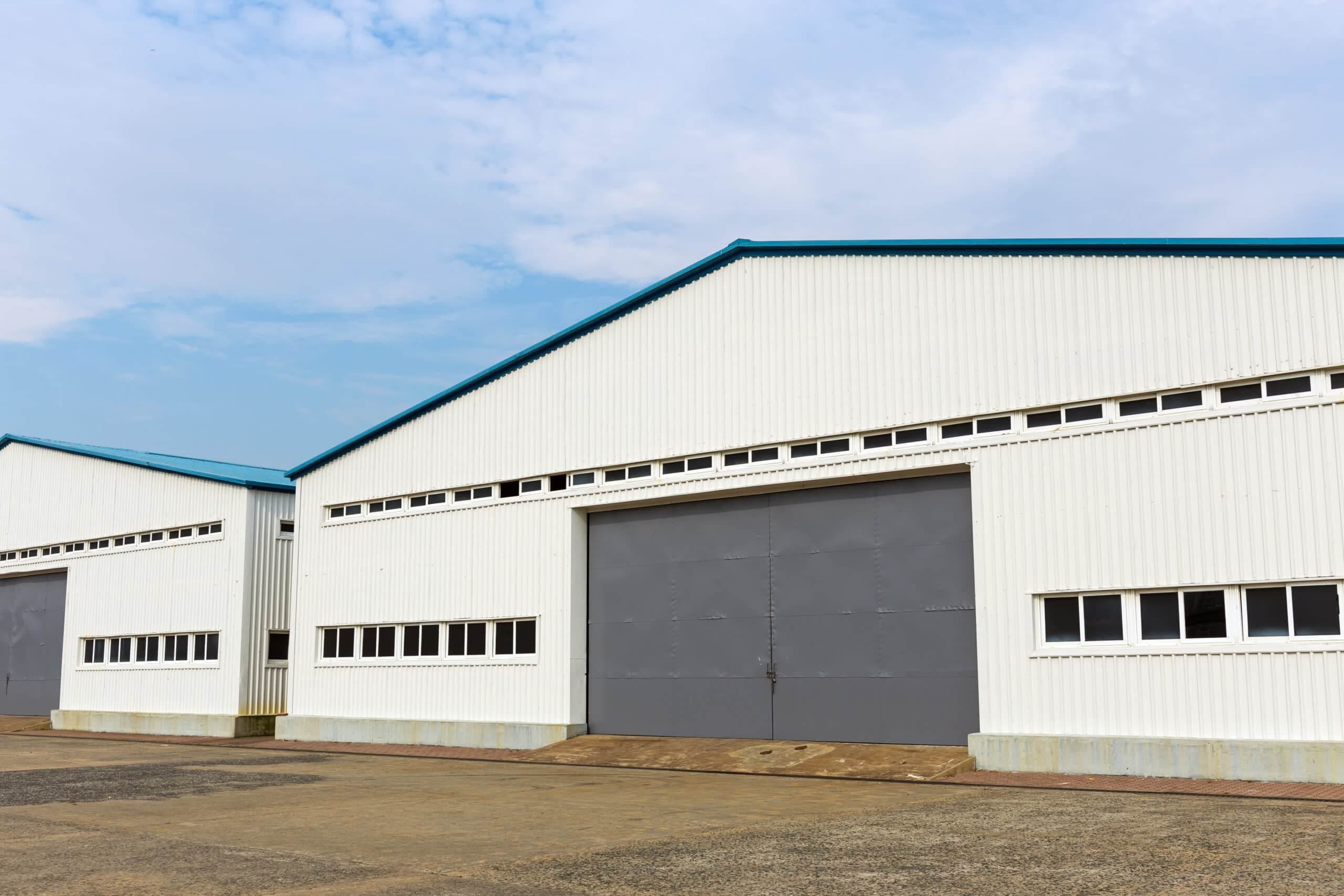
Machinery storage is a handling problem before it is a space problem
It is tempting to think of machinery storage as buying square feet. You have a machine, it has a footprint, you need somewhere to put it. But almost every difficulty that arises with stored machinery is about getting it in, getting to it, and getting it out — not about the space it sits on.
A generator, a piece of manufacturing plant, or an agricultural item might occupy a modest floor area and still be genuinely difficult to store, because it is heavy, awkwardly balanced, high-value, and needs to come out on a date nobody has told you yet.
So the useful questions to ask a storage provider are about handling, security, and retrieval. Space is the easy part.
Security: what "secure" should actually mean
High-value machinery is an attractive target and a difficult one to replace quickly. "Secure storage" is a phrase every provider uses, so it is worth pushing on what sits behind it.
At SIMPLEE UK, premises have CCTV, alarm systems, and gated access, and stored machinery sits in a monitored facility. That is the baseline you should expect anywhere. What varies between providers is the operational side of security rather than the hardware.
- Is the site gated, with controlled access rather than open yard entry?
- Is stock segregated and identified by client, so nobody moves the wrong item?
- Are inventory records kept such that you can prove what is there and where?
- Is the facility accredited? SIMPLEE UK is a UKWA member, which means an external standard applies rather than a self-assessment.
- Is insurance cover appropriate for the value involved, and can that be confirmed in writing at quoting?
Insurance and value: settle it before delivery
This is the item most often left until it matters. If a machine is worth a significant sum, the value needs to be declared and the cover confirmed before it arrives, not after an incident.
As a UKWA member we hold appropriate insurance cover, and specifics for high-value stock are confirmed during the quoting process. That confirmation should be part of your onboarding paperwork with whichever provider you choose. If a storage company is vague about cover for a six-figure asset, that vagueness is the answer.
It is also worth being honest about value at the outset even if it raises the price. Under-declaring is not a saving; it is a deferred loss.
Handling: the right equipment, and people who have done it before
Machinery does not forgive improvised handling. It is heavy, its centre of gravity is often not where it looks like it should be, and the damage from a poor lift is not cosmetic.
Ask what equipment is actually on site. Forklifts, side-loaders, and specialist lifting equipment are available at SIMPLEE UK, and externally coordinated heavy lifts can be arranged where the item needs more than that. The important part of that sentence is the second half — a good provider knows the limit of their own kit and coordinates rather than attempts.
Ask also about the people. Handling oversized equipment with care is a trained skill, and the difference between a crew who move machinery regularly and a crew who move boxes and are about to move a machine is not something you want to discover on delivery day.
There is a practical step that helps enormously and costs nothing: send the lifting information ahead of the machine. Where the lifting points are, whether it can be forked and from which side, what the centre of gravity does, whether anything protrudes that will foul a mast, and whether any part of it must not be used as a lifting point. Manufacturers supply this. It very often stays with the manufacturer.
Indoor or outdoor?
Some machinery is entirely happy outdoors under wrapping. Much of it is not, and the deciding factors are usually corrosion, electronics, and seals rather than size.
High-value and complex machinery generally wants secure indoor space. Robust, weather-tolerant items — and there are plenty in the agricultural and industrial world — can sit outside on a secured, fenced, lit, and surveilled area, which is typically lower cost per square foot than indoor space.
The honest test is not "will it survive outside" but "will it be sellable, or immediately usable, when it comes out". A machine that needs a day of remedial work after storage has cost you more than the indoor rate would have.
Duration matters as much as the item. A robust machine outside for six weeks over the summer is a different proposition from the same machine outside from October through March. If the storage period is open-ended — and with machinery it usually is — price the decision against the long version, because the long version is what tends to happen.
Wrapping and weatherproofing can be added where goods need extra protection, which widens what is sensible outdoors. It does not turn outdoor storage into indoor storage, and a provider who implies otherwise is not doing you a favour.
Access and retrieval: plan for the call you have not had yet
The pattern with machinery storage is that the retrieval date is unknown at the point of storage. A machine goes in awaiting a buyer, a site readiness date, or a commissioning slot, and then someone needs it at short notice.
Two things make that painless. The first is a storage plan that does not bury the item — if retrieval could come at any time, do not accept a configuration that requires moving three other machines to reach it. The second is agreeing lead times at onboarding rather than negotiating them under pressure. Retrieval and dispatch can be arranged with appropriate notice, and typical lead times are confirmed when the account is set up.
It is also worth agreeing inspection access separately. Buyers, engineers, and insurers sometimes need to see a machine without moving it. Flexible access can support retrieval or inspection, but only if someone has thought about where the machine sits.
Keep the record straight
Machinery accounts are usually low in item count and high in value, which produces a specific failure mode: nobody thinks a formal system is necessary because there are only nine items, and then nobody can say with certainty which of the nine is where, what condition it arrived in, or when it was last inspected.
Inventory management systems support tracking and management of stored machinery for exactly this reason. Condition on arrival, location, movements, and access events should all be recorded. Nine items is not too few to be worth a system; it is few enough that the system costs you almost nothing and saves an argument.
Bringing machinery in through a UK port
A good proportion of stored machinery arrives by sea, and the handover between the shipping agent and the warehouse is where delay tends to gather.
Our team can contact your shipping agent and arrange shipment direct to our warehouse, then handle unloading, inventory checks, discrepancy reporting, and put-away on arrival. Being in Liston near Sudbury, within 35 miles of the Port of Felixstowe, keeps the road leg short — which for an out-of-gauge machine on a specialist trailer is worth more than it is for a container of boxes.
What to have ready before you enquire
To get a useful answer rather than a placeholder price, have five things to hand: dimensions and weight of each item, whether it can be lifted by forklift and where the lifting points are, declared value, indoor or outdoor tolerance, and your best guess at how long it will be stored and how quickly you might need it back.
Share weights and dimensions during quoting so fit can be confirmed properly — heavy-duty handling is available, but it should be planned, not discovered. Call +44 1787 378154 or email sales@simpleeuk.com to talk it through.
Related SIMPLEE UK services
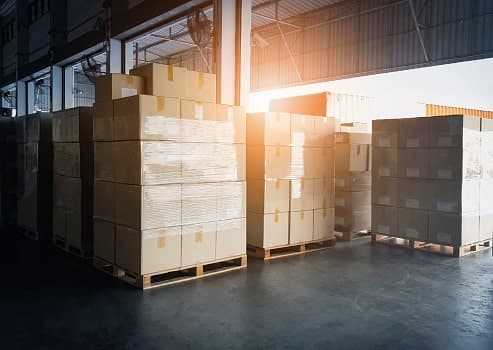
Machinery storage & specialist handling
Specialist storage support for oversized, high-value, and complex machinery that needs secure indoor space.
- Custom machinery storage
- Handling for oversized equipment
Specialist internal storage for awkward goods
Internal storage for awkward, bulky, fragile, and specialist materials that need careful handling beyond pallet or rack.
- Specialist internal storage
- Floor storage for awkward goods
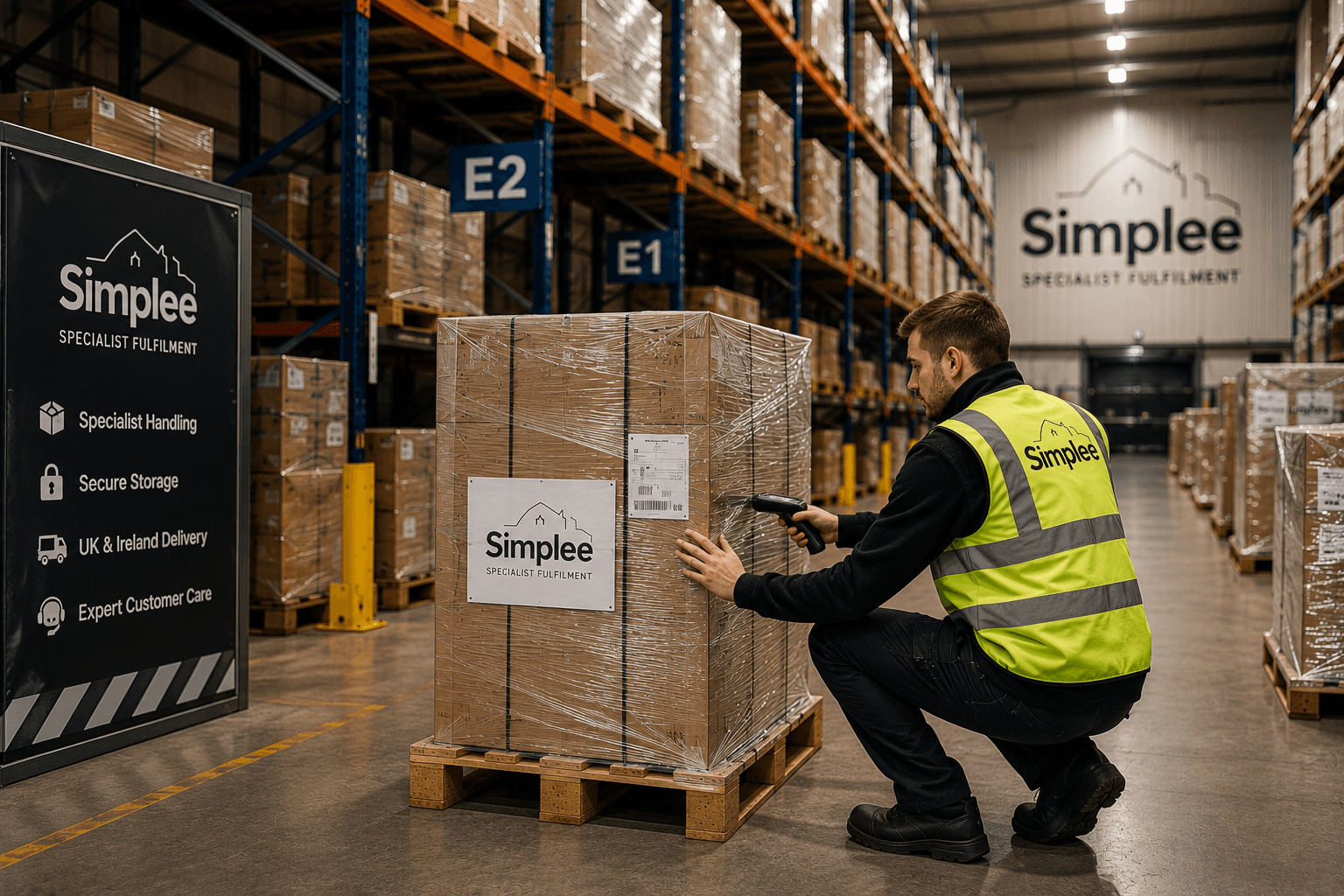
Warehouse fulfilment for bulky & out-of-gauge goods
Inbound shipping, receiving, picking, packing, dispatch, and two-person delivery support for furniture, garden goods, and other awkward stock.
- Inward shipping coordination
- Inventory checks and discrepancy reporting
Related posts
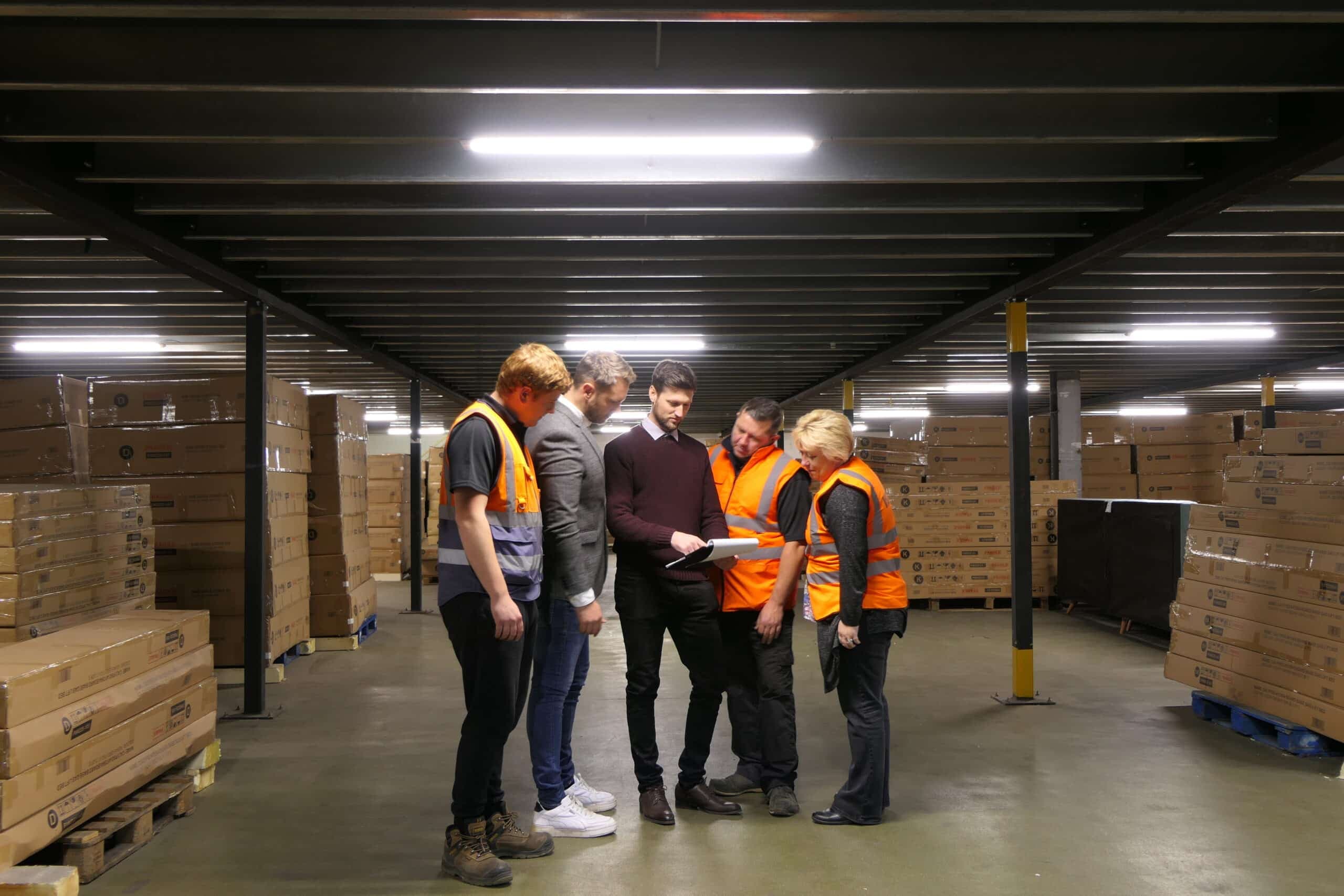
Storage for awkward goods that do not fit racking
Racking assumes your stock is a neat cube on a standard pallet. When it is not, you need floor storage, stillages, and a warehouse that plans around the product instead of the shelf.
Read article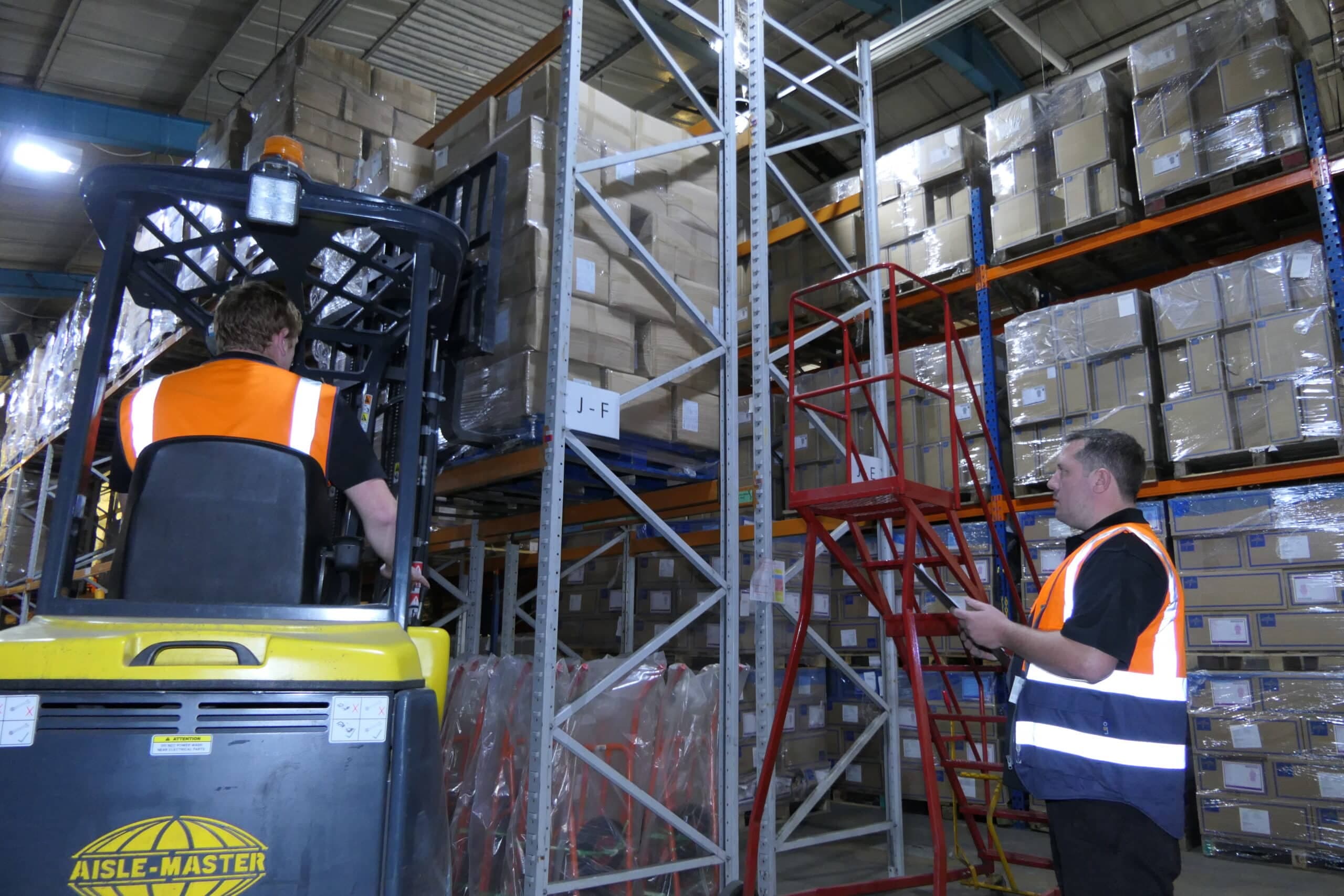
What can safely be stored outside?
Outdoor storage for stock is cheaper per square foot — but only some goods belong there. How to judge what can go outside, and what should not.
Read article