
Referral, white-label or co-brand: choosing a freight partnership model
A guide for freight operators to the three ways of partnering on out-of-gauge storage and fulfilment — who holds the client, who carries the risk, and how to choose.

The question behind the question
If you run a freight business, you already know the moment this post is about. A client mentions that the goods you have just brought in need to sit somewhere for three months, or need picking and dispatching to consumers, or are simply too big for the 3PL they have been using. You can move it. You cannot store or fulfil it — at least not the awkward stuff.
You then have three real choices: say no, build warehousing yourself, or partner. Saying no leaves revenue on the table and, worse, leaves a gap in the relationship that someone else will fill. Building warehousing for out-of-gauge goods means capital, height, handling equipment, trained people, and accreditation, for a service that is adjacent to your business rather than core to it.
So most operators partner. The question is not whether to partner. It is which model to use — and that question is really about who holds the client relationship, who carries the operational risk, and who sets the price.
The three models
We work with freight operators in three ways: white-label, referral, and co-brand. They are not tiers and there is no premium option. They are different answers to the same three questions above, and the right one depends on how you want your client relationship to look.
White-label: your brand, our operation
Under a white-label arrangement, your client sees your brand throughout. You hold the contractual relationship with them. You set the pricing margin. We provide the warehouse and fulfilment capacity behind the service you are selling.
The attraction is control. Your client experiences one supplier — you — across freight and warehousing, and the storage capability presents as part of your offering rather than as a hand-off to someone else. You keep the commercial relationship intact and you decide what the service costs.
The trade-off is involvement. Because you hold the contract, you are the one your client calls. That means you need to be close enough to the operation to answer, and you need internal capacity to manage the account rather than just introduce it. You are also the one carrying the pricing decision, which is an upside when the margin is good and a responsibility when the scope changes.
This model suits freight operators who want to expand their service offering without changing the client-facing brand — typically those with enough out-of-gauge clients to make warehousing a real line of business rather than an occasional favour.
Referral: pass the client, share the upside
Under a referral arrangement, the client works directly with SIMPLEE UK for storage and fulfilment. We pay you an agreed referral fee or commission. You keep the freight relationship, and your operational involvement stays low.
The attraction is simplicity. There is no account to manage, no pricing to hold, no service to stand behind operationally. You have solved the client's problem, you have kept the freight, and you get paid for the introduction. If out-of-gauge requests are something you meet occasionally rather than routinely, this is usually the honest answer.
The trade-off is visibility. Your client now has a direct relationship with another supplier, and you are not in the middle of it. For many freight operators that is entirely fine — warehousing was never the point, and the freight relationship is the one that matters. For others it is not, and if the thought makes you uncomfortable, that discomfort is telling you to look at white-label or co-brand instead.
This model suits freight operators who occasionally encounter out-of-gauge clients but do not want to broker the service themselves.
Co-brand: joint value, shared visibility
Under a co-brand arrangement, the service is positioned as a joint offering. Both brands are visible to the client. Commercial terms are agreed per arrangement.
The attraction is positioning. In a competitive pitch, being able to name a warehousing specialist alongside your own freight capability is a stronger proposition than implying you do it all. For larger or more strategic client wins, the credibility of a named partner with a real warehouse behind it can be the difference. The client can see who does what, which some sophisticated buyers actively prefer.
The trade-off is coordination. Two brands in front of a client means the story has to be agreed, the boundaries have to be clear, and both parties have to be aligned on what is being promised. It is more work up front than a referral and less unilateral than a white-label.
This model suits freight operators who want to strengthen a portfolio offering with a named warehousing specialist — usually where the client is significant enough to justify the coordination effort.
How to choose
It is also worth saying that the model is not a life sentence. Operators quite reasonably start with a referral to see how a client behaves and how the working relationship feels, then move to white-label once the volume justifies the account effort. Starting cautiously is not a lack of ambition. It is how sensible partnerships are built.
- How often does this come up? Occasionally points to referral. Regularly points to white-label.
- Do you want to hold the contract and the pricing? If yes, white-label. If that sounds like overhead you do not want, referral.
- Is the client relationship one you would be uncomfortable sharing? If yes, white-label. If not, referral is cleaner.
- Are you pitching against operators who claim end-to-end capability? A named partner in a co-brand can be a stronger answer than a claim you would have to defend.
- Do you have capacity to manage a warehousing account internally? Be honest. White-label without account capacity becomes a referral with extra steps and worse service.
- How strategic is the client? Larger, more strategic wins tend to justify the coordination of a co-brand.
What your clients get, regardless of model
The commercial model changes who the client sees. It does not change the operation behind it.
Clients access flexible short, medium, and long-term storage arrangements. Our facilities are in Suffolk, near the Port of Felixstowe, with secure premises, CCTV, alarm systems, and gated access. We are an accredited member of the United Kingdom Warehousing Association, and we have been operating since 2017 with around 120,000 sq ft of capacity.
The capability is aimed squarely at goods other operators turn down: out-of-gauge pallets, floor-stored and stillage-stored stock, furniture and garden ranges, machinery, and bulky consumer products. Alongside storage we run picking, packing, dispatch, returns, spares, and outsourced customer service.
Visibility runs through Team Simplee, our client portal at app.simpleeuk.com, covering goods in, storage, dispatch, returns, and customer service. That matters for partnerships specifically: whether the client sees your brand or ours, someone needs to be able to answer a stock question without phoning the warehouse and waiting.
Common questions from freight operators
- Is it exclusive? Our standard partnerships are non-exclusive, though exclusive arrangements can be discussed for specific markets or product types.
- What volume does this make sense at? Any volume. We can scale from a single referred client to a long-term white-label programme.
- Who do you work with? UK freight forwarders, customs agents, port logistics operators, and other 3PLs that do not handle out-of-gauge stock themselves.
- Will you compete with us on freight? No. Warehousing and fulfilment is what we do. Freight is what you do, and the partnership only works if that stays true.
Taking it forward
The useful first conversation is not about contracts. It is about your client base: what kind of out-of-gauge requests you actually get, how often, and what you currently do with them. That tells us — and you — whether this is a referral relationship or a warehousing line of business you have been declining without noticing.
If you want to have that conversation, call +44 1787 378154 or email sales@simpleeuk.com, and we can look at the model that fits how you want your client relationships to work.
Related SIMPLEE UK services

White-label fulfilment for freight partners
White-label storage and fulfilment partnerships for freight businesses supporting bulky and out-of-gauge goods.
- White-labelled storage service
- Additional revenue opportunities
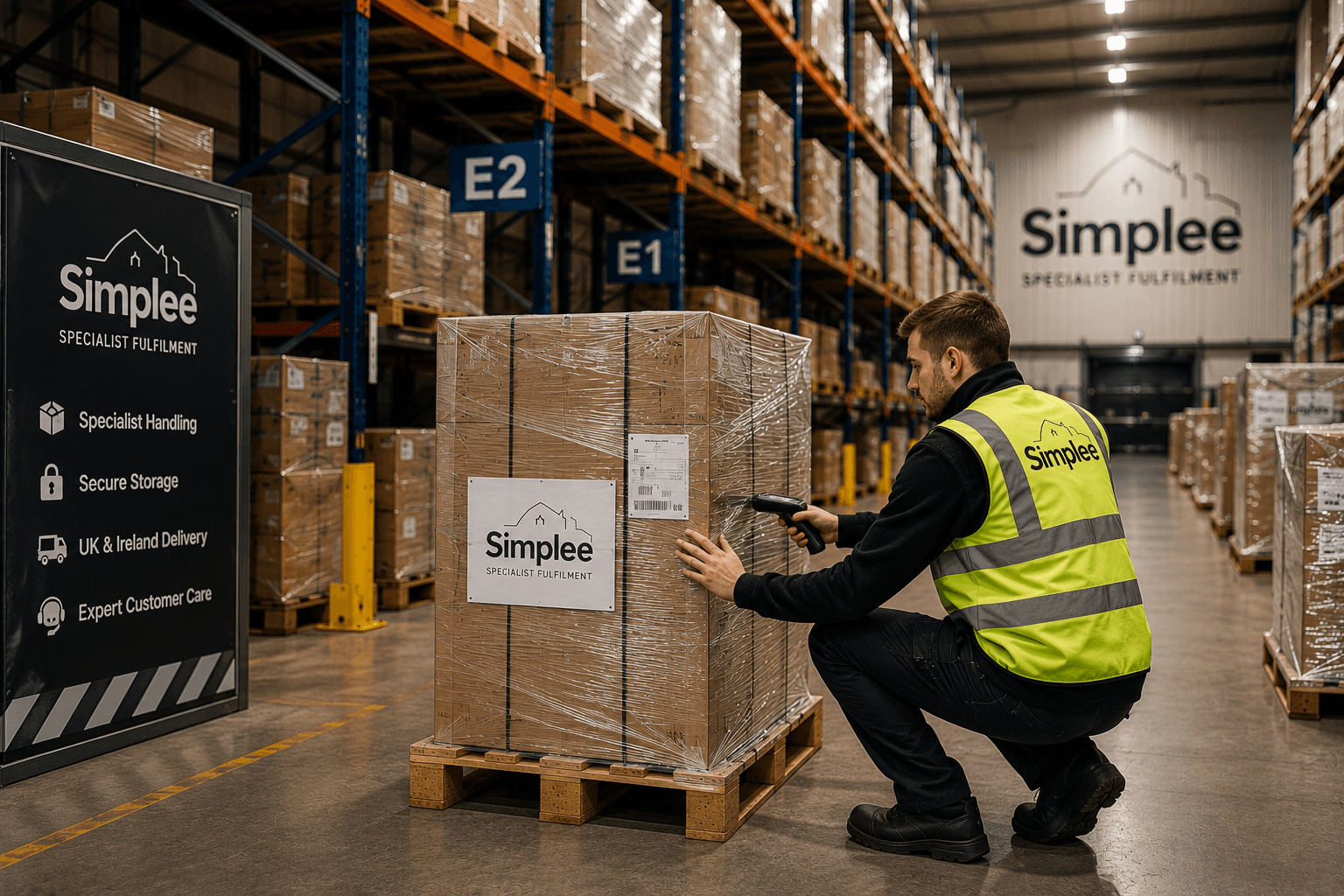
Warehouse fulfilment for bulky & out-of-gauge goods
Inbound shipping, receiving, picking, packing, dispatch, and two-person delivery support for furniture, garden goods, and other awkward stock.
- Inward shipping coordination
- Inventory checks and discrepancy reporting
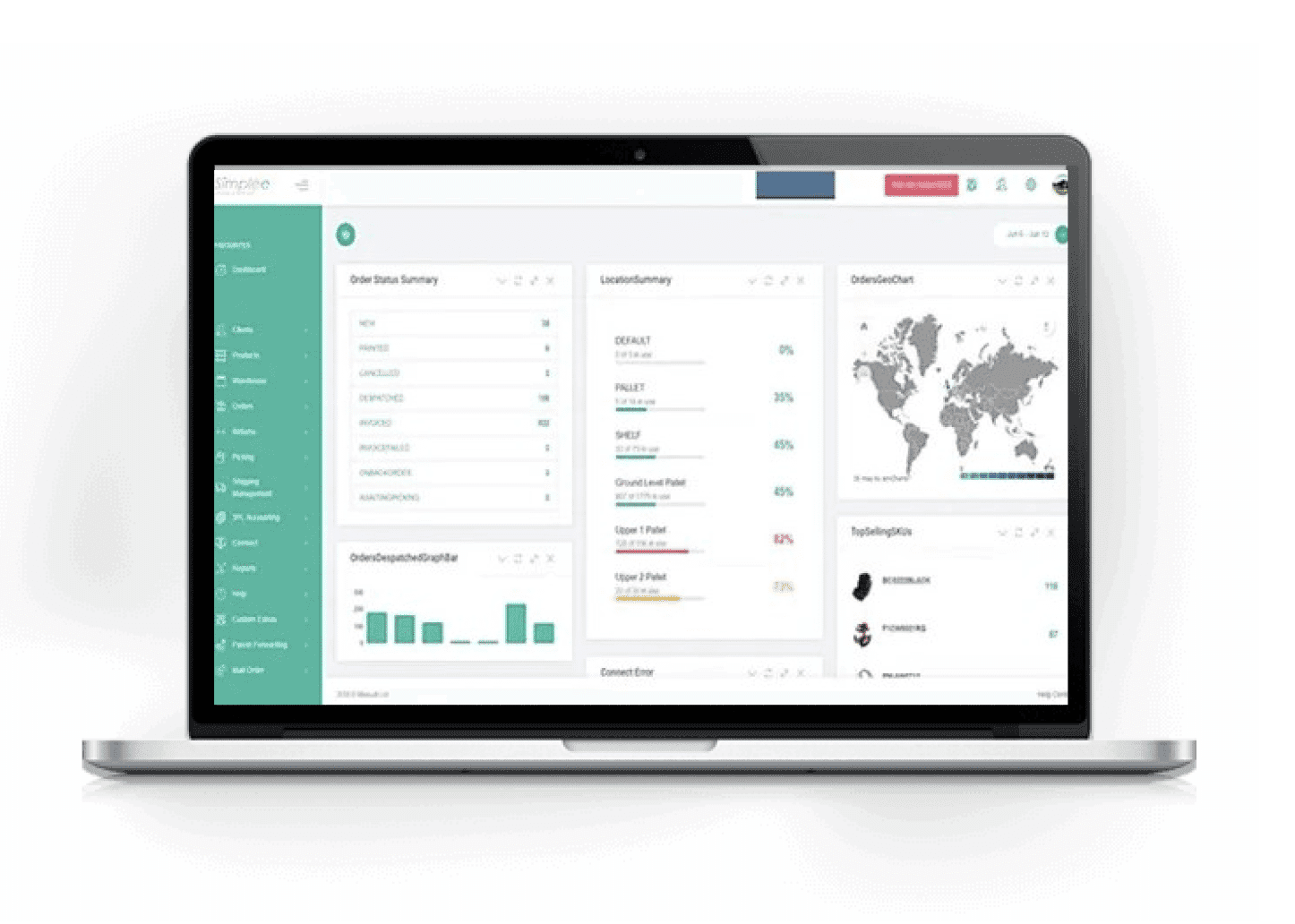
Warehouse technology — stock visibility & reporting
Warehouse visibility, reporting, order status, stock management, and courier integrations through Team Simplee.
- Team Simplee portal access
- Real-time order and stock visibility
Related posts
White label fulfilment for freight companies
Your clients keep asking where their out-of-gauge stock can go. White label fulfilment lets you answer without building a warehouse or losing the account.
Read article
Storage for awkward goods that do not fit racking
Racking assumes your stock is a neat cube on a standard pallet. When it is not, you need floor storage, stillages, and a warehouse that plans around the product instead of the shelf.
Read article