
White label fulfilment for freight companies
Your clients keep asking where their out-of-gauge stock can go. White label fulfilment lets you answer without building a warehouse or losing the account.
The question you cannot answer is costing you accounts
You move your client's containers. The relationship is good, the rates are competitive, and then they ask where the goods are going to sit once they land — and they are not pallets of boxed consumables, they are pergolas, or hot tubs, or machinery that will not go near a standard rack.
At that point one of three things happens. You say no, and they go and find someone who says yes. You put them in touch with a warehouse you barely know, and hope. Or you have an answer ready, under your own name, and the conversation stays yours.
This is not a hypothetical for freight operators handling import-heavy clients. Out-of-gauge storage is the request that most often walks a client out of a freight relationship, because whoever solves the storage problem tends to end up owning the logistics conversation.
What white label fulfilment means commercially
The model is straightforward. Your client sees the storage and fulfilment service under your brand. You hold the contractual relationship. You set the pricing margin. We provide the warehouse and fulfilment capacity behind it.
That is a different arrangement from a referral, and the difference is worth being precise about because it determines who owns what. In a white-label arrangement, you are the supplier as far as the client is concerned. You are also the one who has to be comfortable standing behind the service — which is exactly why the choice of who sits behind it matters.
What you are buying is capability without capital. You add a warehousing and fulfilment line to your offer without a lease, without racking, without a forklift fleet, and without recruiting a warehouse team into a business that has never managed one.
Why not just build it
Some freight operators do, and for some it is the right call. It is worth understanding what you would be taking on before you decide.
Warehousing for out-of-gauge goods is not a smaller version of general warehousing. The handling equipment is different. The storage formats are different — floor storage, stillages, bespoke oversized pallet configurations, outdoor areas for weather-tolerant stock. The team needs to be trained on loads that are heavy and awkward rather than uniform. The insurance conversation is different. And you would be committing to fixed space against demand that arrives in lumps, from clients whose seasons all peak at once.
The economics are the harder part. A warehouse is a fixed cost against a variable book. If the storage revenue is a side line to your freight business, you would be carrying the fixed cost of a warehouse to protect margin on the freight — which can work, but only at volumes most freight operators do not have in this category.
White-labelling turns that fixed cost into a variable one. You sell what your clients want and you pay for what they use.
What we bring to the arrangement
- 120,000 sq ft of capacity, including a new 50,000 sq ft warehouse, built around big, heavy, awkward, out-of-gauge goods rather than adapted to them.
- UKWA-accredited operation, in business since 2017 — a specialist, not a general 3PL taking on your overflow as a favour.
- A site near Sudbury in Suffolk, within 35 miles of the Port of Felixstowe, so containers your clients land can come straight to the warehouse.
- Flexible short, medium, and long-term storage, which matters when your clients' needs are seasonal or project-based.
- Secure premises with CCTV, alarm systems, and gated access — the thing your client will ask about first.
- Storage formats that actually fit the stock: racked, floor-stacked, stillaged, bespoke oversized pallets, and outdoor space for weather-tolerant goods.
- Fulfilment behind the storage — picking, packing, dispatch, courier integrations, and two-person delivery — for clients who need more than a box to sit in.
The visibility problem, and how it is solved
The instinctive worry with white-labelling anything is that you are now answerable for a service you cannot see. If your client calls you about their stock and you have to ring us and call them back, you have not gained a service — you have gained a middleman role that makes you look slower than you are.
This is what Team Simplee is for. The portal provides real-time visibility of stock, inbound arrivals, order status, inventory levels, dispatches, returns, and reporting. When the client asks, you can answer, because you are looking at the same operational record we are.
Service level agreements and KPIs sit alongside that, which matters more in a white-label arrangement than a direct one. You are putting your name on it, so you need the performance to be measurable rather than described.
Which clients this actually suits
Be selective about who you take this to. It works best for clients importing goods that will not fit a standard 3PL — furniture, garden furniture, pergolas, hot tubs, BBQs, fire pits, parasols, gazebos, machinery. The ones who have already been turned away by a general fulfilment provider, or who are currently paying for self-storage units because nobody would quote them properly.
It works less well for clients wanting high-volume small-parcel fulfilment. That is a commodity service with a hundred providers, and there is no reason for you to be in the middle of it.
The tell is usually the client asking a storage question with an apology attached — "I know this is awkward, but". That is an out-of-gauge client, and they are chronically underserved. Being the freight operator who has an answer for them is a genuinely differentiated position, because most of your competitors do not.
White label is not the only option
We work with freight operators in three ways, and white-label is only one of them. It is right when you want the client-facing brand to stay yours and you are comfortable holding the contract and the margin.
A referral model suits operators who encounter out-of-gauge clients occasionally but do not want to broker the service. The client works directly with SIMPLEE UK, we pay an agreed referral fee or commission, you keep the freight relationship, and your operational involvement stays low.
A co-brand model suits operators who want to strengthen a portfolio offer with a named warehousing specialist — both brands visible, terms agreed per arrangement, and stronger positioning for larger client wins.
Partnerships are non-exclusive as standard, though exclusive arrangements can be discussed for specific markets or product types. Which model fits is a commercial question about how you want the client relationship to look, not a technical one — the warehouse operates the same way underneath all three.
Starting the conversation
The useful first step is to look at your existing book rather than at ours. How many of your clients import goods that would not fit a standard 3PL? How often does a storage question come up in a freight conversation and get dropped? Those two answers tell you whether there is a business here for you.
If there is, the next conversation is about which model fits, what the commercial terms look like, and how your clients would experience it. We work with UK freight forwarders, customs agents, port logistics operators, and other 3PLs that do not handle out-of-gauge stock themselves. Any volume works — from a single referred client to a long-term white-label programme.
Call +44 1787 378154 or email sales@simpleeuk.com to discuss a partnership.
Related SIMPLEE UK services
White-label fulfilment for freight partners
White-label storage and fulfilment partnerships for freight businesses supporting bulky and out-of-gauge goods.
- White-labelled storage service
- Additional revenue opportunities
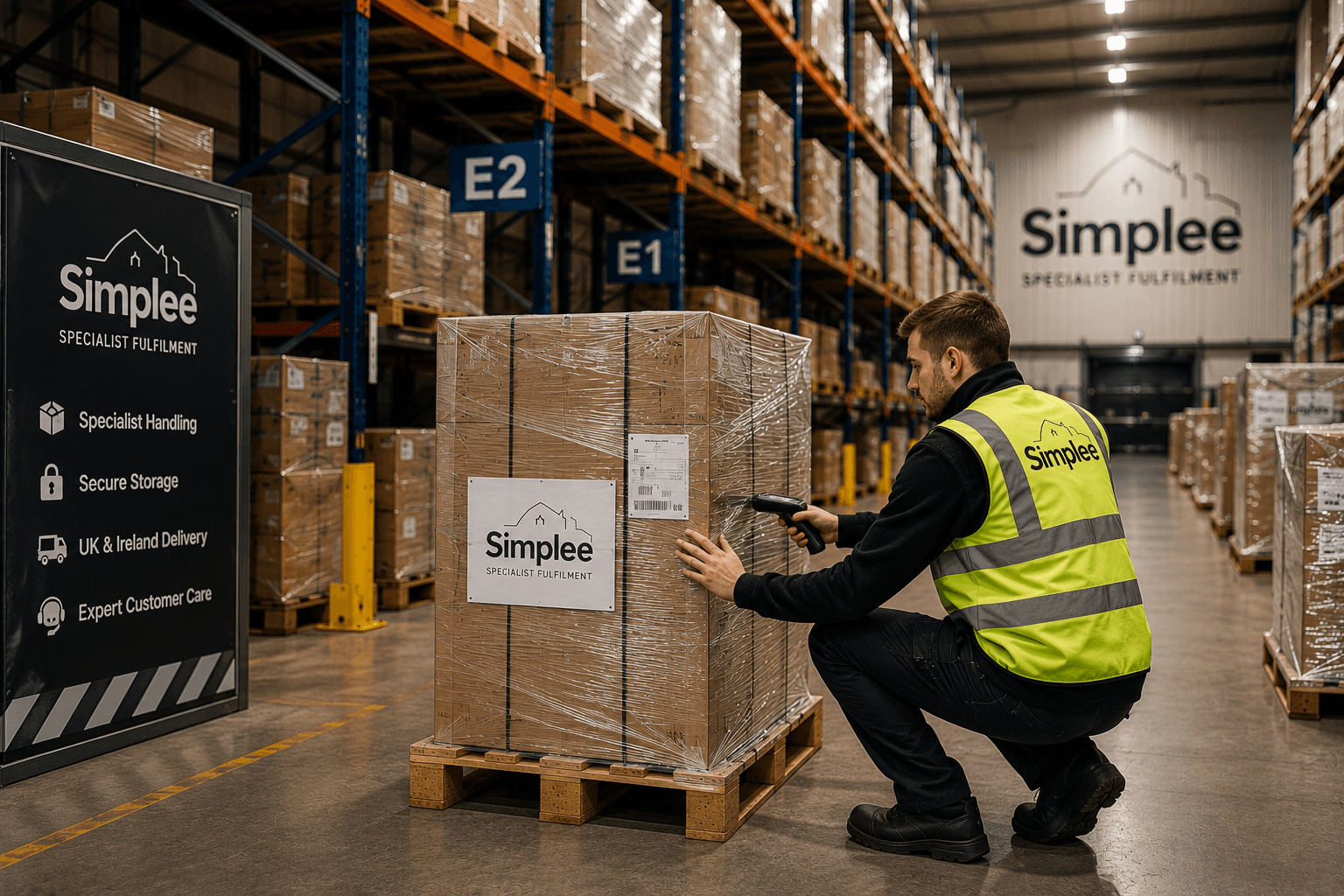
Warehouse fulfilment for bulky & out-of-gauge goods
Inbound shipping, receiving, picking, packing, dispatch, and two-person delivery support for furniture, garden goods, and other awkward stock.
- Inward shipping coordination
- Inventory checks and discrepancy reporting
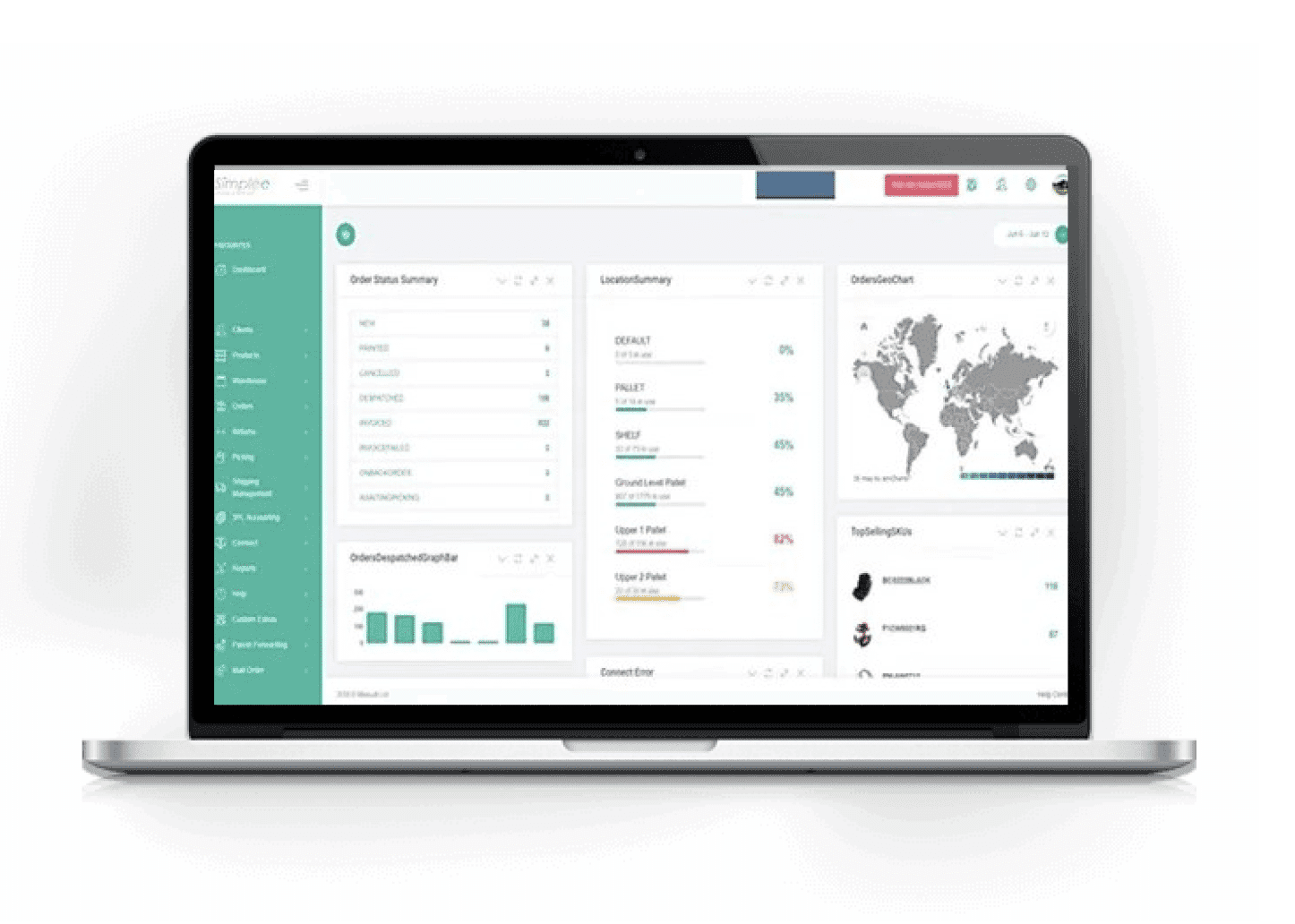
Warehouse technology — stock visibility & reporting
Warehouse visibility, reporting, order status, stock management, and courier integrations through Team Simplee.
- Team Simplee portal access
- Real-time order and stock visibility
Related posts
Referral, white-label or co-brand: choosing a freight partnership model
A guide for freight operators to the three ways of partnering on out-of-gauge storage and fulfilment — who holds the client, who carries the risk, and how to choose.
Read article
Out of gauge pallet storage explained
What happens when your stock overhangs the pallet — bespoke oversized pallets, racked versus floor decisions, and how out-of-gauge storage is actually priced.
Read article