
Q4 peak season readiness: a checklist for bulky-goods brands
What to have settled before Q4 peak arrives — stock, space, data, labour, delivery routes, and the customer service load nobody plans for.

Peak season is not won in peak season. By the time the orders arrive, almost every variable that determines how it goes has already been fixed — your stock is where it is, your space is what it is, and your delivery routes are what you agreed months ago. What is left is execution.
September is roughly the last point at which a Q4 problem is still cheap to fix. This is what to check now, in the order the problems actually bite.
Q4 is a different peak for bulky goods
Most peak season advice is written for small-parcel retail: order volumes spike, courier networks congest, and the game is throughput. Bulky-goods brands share some of that and diverge from it in ways that matter.
For a garden furniture brand, Q4 is not the sales peak at all — the summer was. Q4 is when you are holding whatever did not sell through, deciding what to do with it, and taking inbound for next season while the warehouse is at its fullest. For indoor furniture, Q4 genuinely is the peak, but it is a peak of large items needing scheduled two-person deliveries into a period where every crew and vehicle in the country is committed.
Both situations reward the same discipline, but they reward it for different reasons. Be clear about which one you are in before you plan around someone else's calendar.
Stock and space: settle this first
- Is your inbound schedule confirmed and shared with your 3PL? A container arriving unannounced into a full warehouse is the most expensive kind of surprise.
- Do you know your peak space requirement, not your average? They are different numbers and only one of them is useful.
- Have you identified your dead stock? Slow-moving lines are occupying accessible locations that fast-moving Q4 lines need.
- Is anything that could go outside actually outside? Peak is when the cost difference between indoor and overflow space is worth the most.
- Are your Q4 sellers in the most accessible locations? Every extra move to reach a peak SKU is paid on every order.
- Have you agreed what happens if you exceed the space you planned for? The answer is much better negotiated in September than in December.
Data and forecasts: give your 3PL something to work with
A forecast is not a promise, and no operations team expects it to be right. What it does is let people plan labour, space, and equipment against something rather than nothing. A wrong forecast shared in September is enormously more useful than a correct one shared in December.
The forecast that helps is shaped, not annual. Weekly rather than monthly if you can. Broken down by the SKUs that actually drive volume rather than the whole catalogue. Explicit about what you expect around your promotional dates, because that is where the shape gets violent.
Say what you do not know, too. If a container might land in week two or week five, that ambiguity is a plannable fact. Pretending to a certainty you do not have helps nobody, and the plan built on it will fail quietly rather than loudly.
The other half of this is a shared view of what is actually happening once peak starts. If you are emailing to ask what your stock position is, both sides are spending time on something a portal should be showing you. Confirm before peak that you can see stock, order status, and dispatches yourself.
Delivery routes: the constraint that surprises people
For bulky brands this is the hardest Q4 constraint, and it is the one that cannot be fixed late.
Two-person delivery capacity is finite in a way that parcel capacity is not. A parcel network absorbs a surge by adding vans and hours. A two-person crew is two trained people and a vehicle for a slot, and there is no elastic supply of them in December. If your Q4 plan needs a certain number of scheduled deliveries a week, that needs to be a conversation now, not a booking request then.
Cut-off dates are the other half. Work out and publish the last order date for each delivery route you use — parcel, pallet network, two-person, and installation — and make sure they are honest. A two-person delivery that needs a booking confirmation, a customer response, and a scheduled slot has a genuinely different cut-off from a parcel, and stating them as the same date is a promise you will break in front of a customer at the worst possible time.
Then check the boring things: which days are you dispatching over the holiday period, which are your carriers, and do those two answers agree with each other.
Customer service: plan for the volume, not the orders
Customer contact does not scale with orders. It scales faster, because peak generates disproportionate contact per order: delivery date anxiety, gift deadlines, access questions, and every one of your exceptions arriving at once.
The single most effective thing you can do is remove the reason to make contact. Most peak enquiries are a customer asking where something is, and proactive updates — a booking confirmation, a pre-arrival notification, a completion photo — eliminate the majority of them before they reach anyone. That is cheaper than staffing to answer them.
For what remains, decide before December who is handling it and with what information. A team answering delivery questions without visibility of stock and dispatch status cannot resolve anything; they can only take a message. Outsourced or in-house, the requirement is the same: whoever answers needs to see the order.
And brief them on the exceptions specifically. Peak is defined by the unusual cases, and a script for the normal ones does not help.
The returns wave nobody plans for
January is part of Q4. Plan for it in September or you will improvise it in the worst month of the year.
Oversized returns are not reverse parcels. They need collection rather than a drop-off, they need inspection and photographing rather than a scan, and they need a decision on every unit — restock, repackage, spares, or write-off. All of that lands in a compressed window while the warehouse is still full of stock that did not sell.
Three things to settle now. Where the returns will physically go, because they need space you have to reserve rather than find. Who makes the restock-or-write-off call and on what evidence. And whether a spare part would resolve the case instead, because it very often would and it is dramatically cheaper than taking a whole unit back.
The two-week check
That last one matters more than any of the others. Peak problems are rarely caused by a bad plan; they are caused by a good plan meeting something unexpected and nobody being empowered to decide what to do about it before it compounds.
- Cut-off dates published, honest, and different per delivery route.
- Inbound schedule confirmed, with a plan for what happens if a container slips.
- Peak SKUs in accessible locations; dead stock moved out of them.
- Two-person and installation capacity agreed, not assumed.
- Portal access working for everyone who will need it, tested before they need it.
- Customer service briefed, with visibility of orders and a plan for exceptions.
- Returns space reserved and the decision process agreed.
- One named person on each side who can make a call quickly when something breaks.
If your current setup will not take the load
If working through this has surfaced something you cannot fix in time, the honest answer is that changing 3PL in the middle of a peak is worse than running a difficult peak with the one you have. Get through it, and take the notes.
But take them properly. Write down what actually broke and when, while it is fresh, because in February nobody will remember. That record is the most valuable input to next year's decision, whether that is a conversation with your existing provider or a different one.
If it is the latter, we are happy to talk it through — including what a realistic onboarding timeline looks like relative to your season. Start on the get a quote page or call +44 1787 378154.
Related SIMPLEE UK services
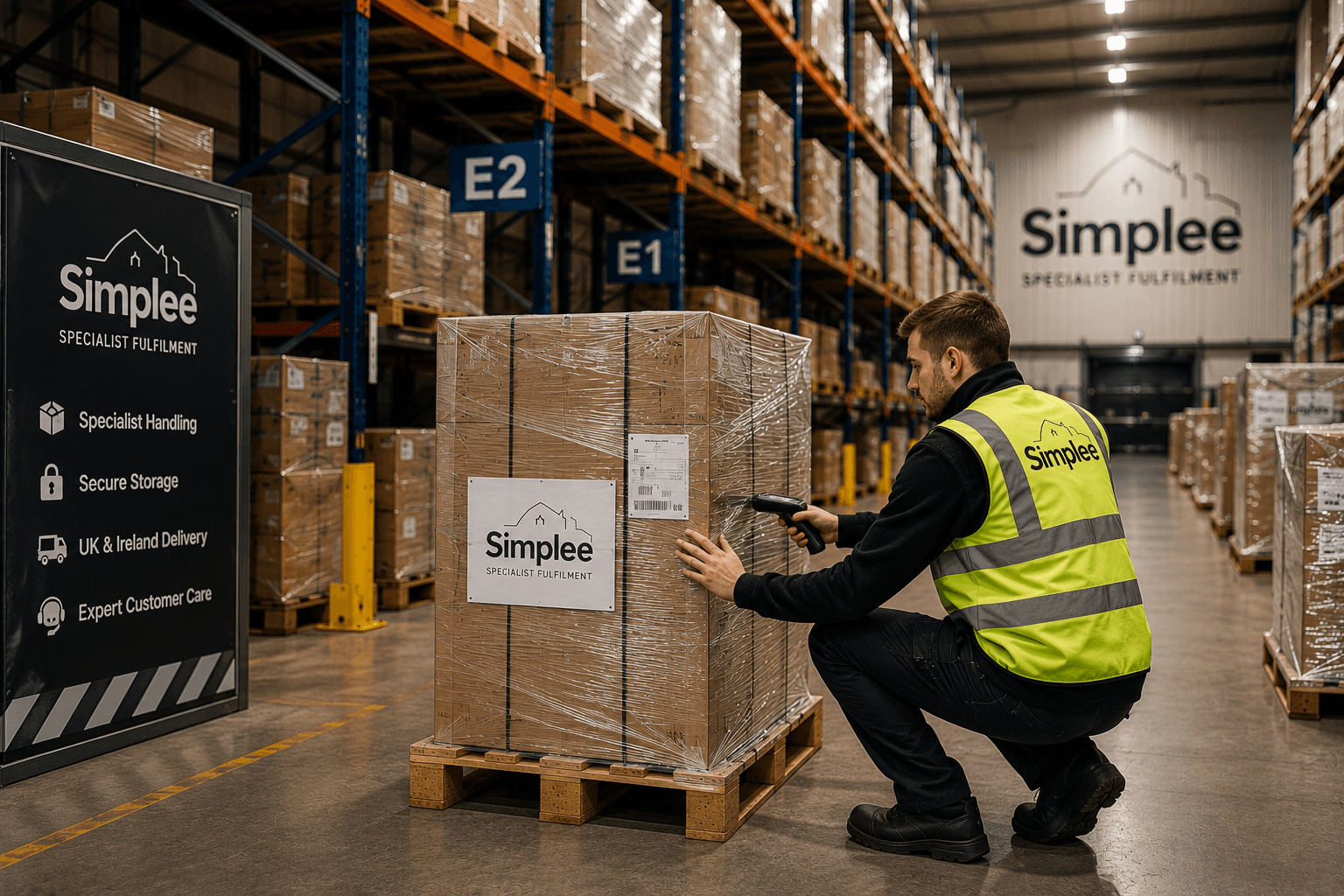
Warehouse fulfilment for bulky & out-of-gauge goods
Inbound shipping, receiving, picking, packing, dispatch, and two-person delivery support for furniture, garden goods, and other awkward stock.
- Inward shipping coordination
- Inventory checks and discrepancy reporting
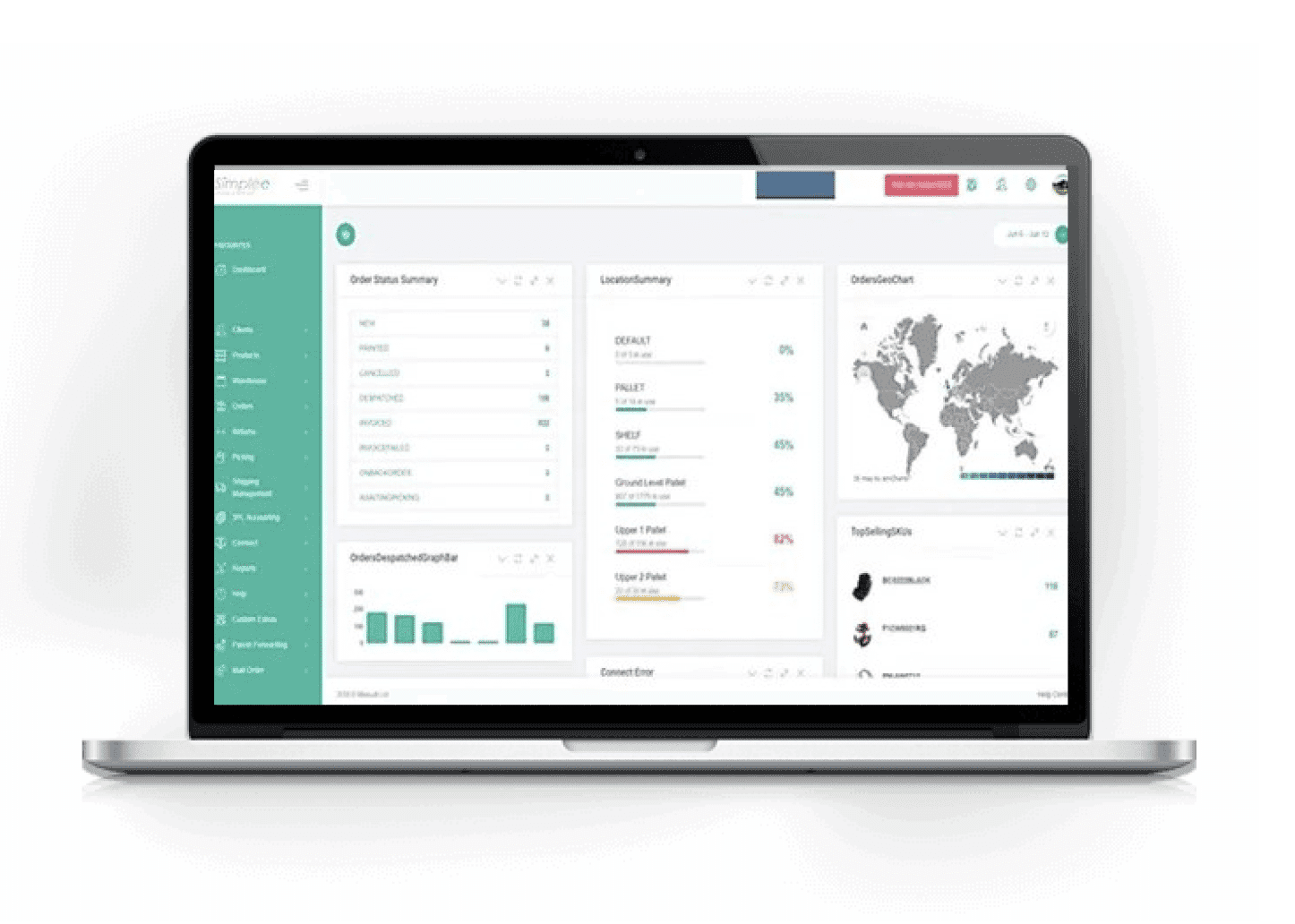
Warehouse technology — stock visibility & reporting
Warehouse visibility, reporting, order status, stock management, and courier integrations through Team Simplee.
- Team Simplee portal access
- Real-time order and stock visibility

Outsourced customer service for e-commerce brands
Outsourced customer care combining personal UK-based support with software-driven query handling and fulfilment visibility.
- Telephone customer support
- Query tracking and KPI reporting
Related posts

Seasonal peak planning for garden furniture brands
Garden furniture storage is a year-round problem with a summer deadline. How to plan inbound, space, labour, and the off-season without paying for peak all year.
Read article
Stock visibility and reporting: what to expect from a 3PL
Most 3PL stock visibility reporting shows you a number. What you need is a number you can act on, and a record of how it got there.
Read article