
Storing hot tubs, BBQs and fire pits: what the stock actually needs
Three product groups that look similar on a spreadsheet and behave completely differently in a warehouse. What each one needs from storage and fulfilment.
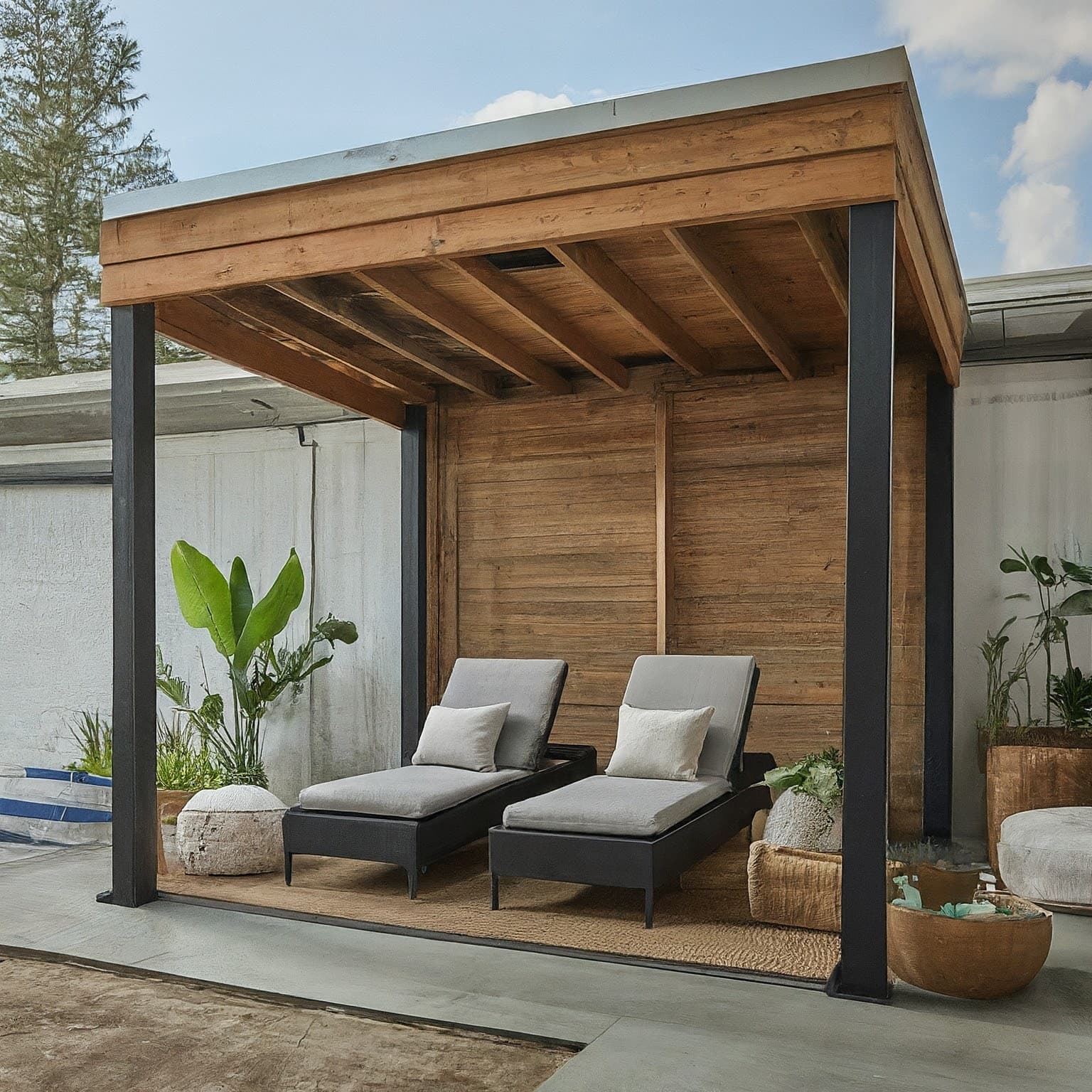
On a spreadsheet these three look like the same business: heavy, seasonal, sold to people with gardens. In a warehouse they behave nothing like each other. A hot tub is a space problem. A BBQ is a fragility and returns problem. A fire pit is a weight and packaging problem. Storing them as one undifferentiated category is how brands end up with damage rates they cannot explain.
This is a practical look at what each group actually demands, and where the shared requirements genuinely are.
Hot tubs: a volume problem before anything else
A rigid hot tub is one of the most awkward things a garden brand can hold. It is large in all three dimensions, so it consumes cubic space rather than floor space. It generally cannot be stacked. Its shape is close to a cube, which means it wastes very little of its own volume but occupies a great deal of it. And it needs mechanical handling for essentially every movement.
That combination puts rigid tubs firmly in floor-serviced storage rather than racking. It also makes the aisle and access planning around them a real design decision: if you have to move three tubs to reach the fourth, you are paying for that on every order, and you are creating three chances to damage stock that was not even sold.
Inflatable tubs are a different product entirely despite the shared category. They are boxed, dense, stackable, and much closer to conventional palletised stock. If your range includes both, they should be planned separately — treating your inflatables like your rigid tubs wastes space, and treating your rigid tubs like your inflatables does not work at all.
The other thing rigid tubs demand is a realistic outbound plan. A tub is not going through a parcel network under any circumstances, and for many models the delivery is a coordinated event with a crew rather than a drop-off. That has to be designed in from the start, not discovered at the first order.
BBQs: fragile in ways that are not obvious
BBQs look robust. Many are steel, and the instinct is to treat them as durable. That instinct causes damage, because the vulnerability is rarely structural.
The failure modes are cosmetic and functional. Enamelled and painted lids chip. Stainless surfaces scratch and mark. Gas models carry regulators, hoses, valves and control panels that are far more delicate than the frame around them. Ceramic and kamado-style models are genuinely fragile in ways that surprise people handling them for the first time. And almost none of it is visible from the outside of the carton.
That last point is the operational one. A dropped BBQ often looks completely fine in its box, and the damage only surfaces when the customer opens it in their garden. By then the item has been signed for, the packaging is in a bin, and you are having a conversation about whose fault it is with no evidence either way.
The answer is process rather than heroics: careful handling as the default rather than a judgement call, damage documented on inbound rather than discovered on outbound, and returns inspected and photographed so the pattern becomes visible. If the same model keeps coming back with the same fault, that is information worth having early.
BBQs are also the group most likely to need spares. A missing grate, a damaged regulator, or a warped burner does not need a whole replacement unit — it needs a part, quickly. Holding and dispatching spares is usually far cheaper than replacing the unit, and it resolves the customer's problem faster, which is the thing they actually care about.
Fire pits and chimineas: dense, heavy, and hard on packaging
Fire pits are the opposite problem to hot tubs. They are small and heavy rather than large and light, and that density is what causes the trouble.
Cast iron and stone concentrate a lot of weight in a small carton. That weight moves inside its packaging in transit, which is how a well-boxed chiminea arrives with the corner of the box punched out from the inside. Stacking is limited not by the item's strength but by what the packaging underneath can carry, and cardboard that was adequate for a single unit fails under a column of them.
Cast iron also rusts. Anything with an untreated or partially treated iron surface has a genuine environmental requirement, and it belongs indoors. That is worth being clear about, because fire pits are outdoor products and people assume outdoor products can be stored outdoors — which is a different claim from the one their material makes.
Ceramic chimineas add straightforward fragility to the same weight problem. They are heavy and they crack, which is an unforgiving combination for anything that gets handled more than it needs to.
What can actually go outside
Outdoor storage is a legitimate and cheaper class of space, and for the right stock it is the sensible answer — especially as peak overflow when containers land faster than the season sells through.
But the deciding question is not whether the product is an outdoor product. It is whether the product in its packaging tolerates the weather. Almost nothing in these three groups arrives in packaging designed to sit in an English winter. Cardboard fails, printed cartons become unsaleable even when the contents are perfect, and moisture finds anything with an iron or electrical component.
In practice that means treated timber, some robust structural items, and appropriately wrapped weather-tolerant stock are outdoor candidates. Boxed BBQs, cast iron, ceramics, and anything electrical are not. The realistic outdoor use for a garden brand is usually overflow of a specific, agreed subset — not a general policy.
What the three groups do share
That last point is worth dwelling on. For heavy, cosmetic-sensitive goods, the temptation to put a returned item straight back into saleable stock is strong and the cost of getting it wrong is high. Every return in these categories needs a decision — restock, repackage, spares, or write-off — and evidence behind it.
- Mechanical handling. Forklifts and equipment for essentially every movement, which means the storage layout has to be built around access rather than density alone.
- A season. Stock arrives in containers before demand and has to be held through a quiet period afterwards, so peak and average requirements are different numbers.
- A spares operation. All three fail in ways that a part can fix, and all three are expensive to replace whole.
- A returns workflow that inspects rather than restocks blindly. An unchecked return going back on the shelf is a second failed delivery waiting to happen.
Planning your own mix
If your range spans these categories, the useful exercise is to stop thinking about product categories and start thinking about storage profiles. Sort your SKUs by how they behave physically: what stacks, what needs floor space, what needs mechanical handling on every touch, what is cosmetically vulnerable, and what genuinely tolerates being outdoors in its packaging.
That grouping will not match your website's navigation, and it should not. It is the grouping that determines what your stock costs to hold and how often it gets damaged.
SIMPLEE UK handles rattan and hardwood sets, parasols and gazebos, BBQs and outdoor cooking, fire pits and chimineas, and hot tubs and spas with coordinated delivery — alongside the spares and returns workflows that go with them. If you want to work through what your own mix needs, send us your SKU profile through the get a quote page, or call the team on +44 1787 378154.
Related SIMPLEE UK services
Garden furniture 3PL & fulfilment services
Tailored 3PL support for garden furniture brands managing bulky stock, seasonal peaks, spares, and customer care.
- Seasonal peak support
- Storage for bulky and fragile SKUs
Specialist internal storage for awkward goods
Internal storage for awkward, bulky, fragile, and specialist materials that need careful handling beyond pallet or rack.
- Specialist internal storage
- Floor storage for awkward goods
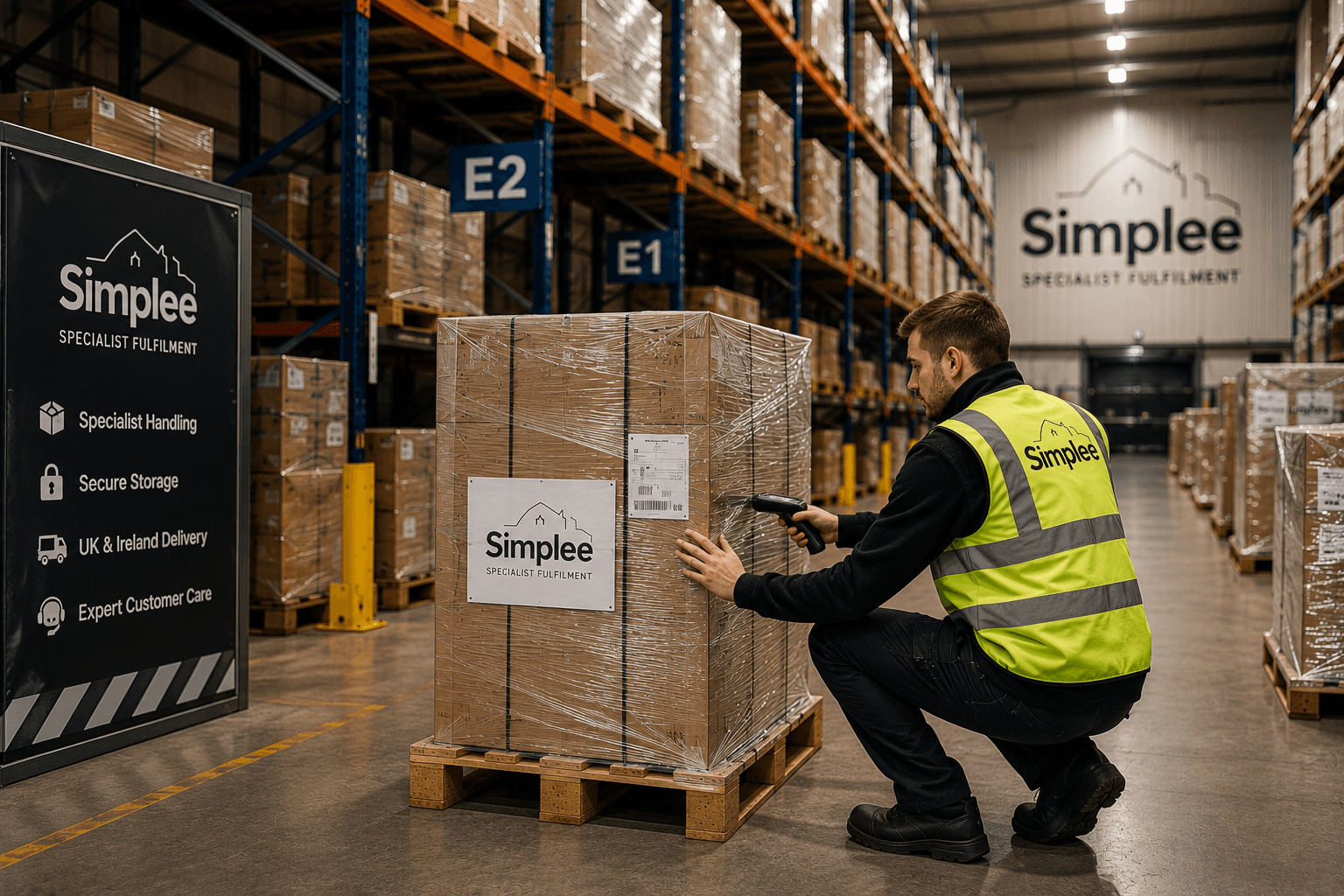
Warehouse fulfilment for bulky & out-of-gauge goods
Inbound shipping, receiving, picking, packing, dispatch, and two-person delivery support for furniture, garden goods, and other awkward stock.
- Inward shipping coordination
- Inventory checks and discrepancy reporting
Related posts
Seasonal peak planning for garden furniture brands
Garden furniture storage is a year-round problem with a summer deadline. How to plan inbound, space, labour, and the off-season without paying for peak all year.
Read article
What can safely be stored outside?
Outdoor storage for stock is cheaper per square foot — but only some goods belong there. How to judge what can go outside, and what should not.
Read article