
Two-person delivery vs standard courier: which does your product need?
How to tell whether your product genuinely needs a two-person delivery service, and what that changes about cost, damage, and the customer experience.

The short version: if one person cannot safely carry your product from the tailgate to where the customer wants it, you do not have a courier product. You have a two-person delivery product, and treating it as anything else transfers the problem to your customer and the cost back to you.
The longer version is more interesting, because the line is not only about weight. Plenty of items well within a courier's weight limit still fail as parcels, and a few genuinely heavy things travel fine. Here is how to work out which side of the line you are actually on.
What each service actually is
A standard courier network is a sorting machine. Your item is one of many thousands moving through hubs on conveyors and roll cages, handled by people who never see what is inside and are measured on how many they move. It is delivered by one driver, to the door, in whatever slot the round dictates. It is extraordinarily efficient at what it is designed for.
A two-person delivery is a scheduled visit. Two people and a vehicle are booked for a slot. The item is generally handled by the same crew from the vehicle to its destination, which may be a room of the customer's choosing rather than a doorstep. Depending on the service, they may unpack it, assemble it, install it, take the packaging away, and get a signature on a photo record.
These are not two tiers of the same thing. They are different products with different economics. One is priced on throughput, the other on time.
The five tests that decide it
The threshold test is the one brands underestimate most. A single item left in a driveway because the driver is not permitted to cross the threshold is a delivery that technically succeeded and practically failed. The customer is standing next to a box they cannot move, and your customer service inbox is about to find out about it.
- The lift test. Can one adult safely lift and carry it alone, in a doorway, on stairs, in the rain? Not "is it under the weight limit" — can one person actually do it?
- The shape test. Is it long, flat, awkwardly balanced, or unable to sit stably on a conveyor or roll cage? Long flat items are the classic false negative: light enough for a parcel, entirely unsuited to one.
- The fragility test. Does it have a polished, glazed, upholstered, or painted surface where a scuff is a return? Sorting hubs are not gentle environments.
- The threshold test. Is the doorstep actually the end of the journey? If the customer cannot reasonably move it from where the driver leaves it, you have not finished the delivery.
- The assembly test. Does it need building, levelling, bolting down, or connecting before the customer has what they bought?
Why the cheaper option is often the expensive one
The rate for a courier movement is lower than the rate for a two-person delivery. That comparison is real but incomplete, because pushing an unsuitable product through a parcel network produces costs that appear elsewhere in your business.
Damage is the obvious one, and it is not a flat rate — it is a replacement unit, a return collection, a second outbound delivery, and the labour to inspect and write off the first one. A single damaged sofa can consume the margin on a run of successful ones.
Then there are the failures that are not damage. Refused deliveries because the item would not fit. Redeliveries because nobody could take it in. Items left in unsuitable places. Each generates customer service time, and each generates a review that costs more than the delivery did.
The honest comparison is not rate versus rate. It is the total landed cost of a successful delivery, including everything that happens when it does not go right first time. For genuinely bulky products, the specialist service frequently wins that comparison — not because it is cheap, but because it works.
What a proper two-person service includes
That documentation trail matters more than it first appears. When a customer reports damage a week later, the difference between a warranty conversation and an argument is whether anyone photographed the item at handover.
- A booking confirmation with a proposed date and time that the customer actively confirms, rather than a slot imposed on them.
- A pre-arrival notification when the crew is on the way.
- Access and site checks before the crew commits to the job — and a survey beforehand where the install needs one.
- Photo documentation of the boxes and the property condition on arrival.
- Placement in the room of the customer's choice, not the doorstep.
- Unpacking, assembly, or installation where that is part of the agreed scope.
- Packaging removal, so the customer is not left with the disposal problem.
- Photos on completion and customer sign-off, giving you a clean record of what was delivered and in what condition.
The branding question
For most products, the delivery is a logistics event. For a large piece of furniture or a garden structure, it is often the only time a human being represents your brand in your customer's home. They will remember the crew long after they have forgotten your checkout.
That is an argument for the specialist route that has nothing to do with damage rates. A crew working under your brand, following your process, with your standards for how a customer is spoken to, is part of the product you sold. A parcel network cannot offer that, and is not trying to.
At SIMPLEE UK, installation and two-person delivery are designed to run under the client's brand — booking, communication, the visit itself, and sign-off — so the customer experiences one continuous service rather than a handover to a stranger.
When a standard courier is still the right answer
This is not an argument that everything bulky needs a crew. Plenty of things in a bulky brand's catalogue travel perfectly well as parcels, and routing them through a two-person service would be a waste of money.
Spares and fixings are the clearest case. A replacement bracket or cushion cover is a parcel, and treating it as anything else delays the fix and costs the customer time. Compact accessories, covers, and smaller flat-pack items usually belong in the parcel network too — if they pass the five tests above.
The point is that a bulky-goods brand needs both, and needs the routing decision made at SKU level rather than as a blanket policy. That is a real operational requirement: your systems need to know which product goes which way, and your warehouse needs to be able to execute both without thinking about it.
Deciding for your own range
Work through your catalogue and put every SKU into one of three buckets: parcel, pallet network, or two-person. Do it on the five tests, not on the rate card. Most brands find the boundary sits somewhere different from where they assumed, and usually in the direction of more items needing a crew than they thought.
Then look at what your current damage, redelivery, and returns figures actually are for the items near the boundary. Those numbers, which you already have, will tell you whether the line is drawn in the right place better than any general advice can.
If the exercise suggests part of your range is on the wrong route, that is worth a conversation. Tell us the dimensions, the weights, and what happens today when one of your largest items goes out — we can talk about what routing would look like. Start on our get a quote page, or call the team on +44 1787 378154.
Related SIMPLEE UK services
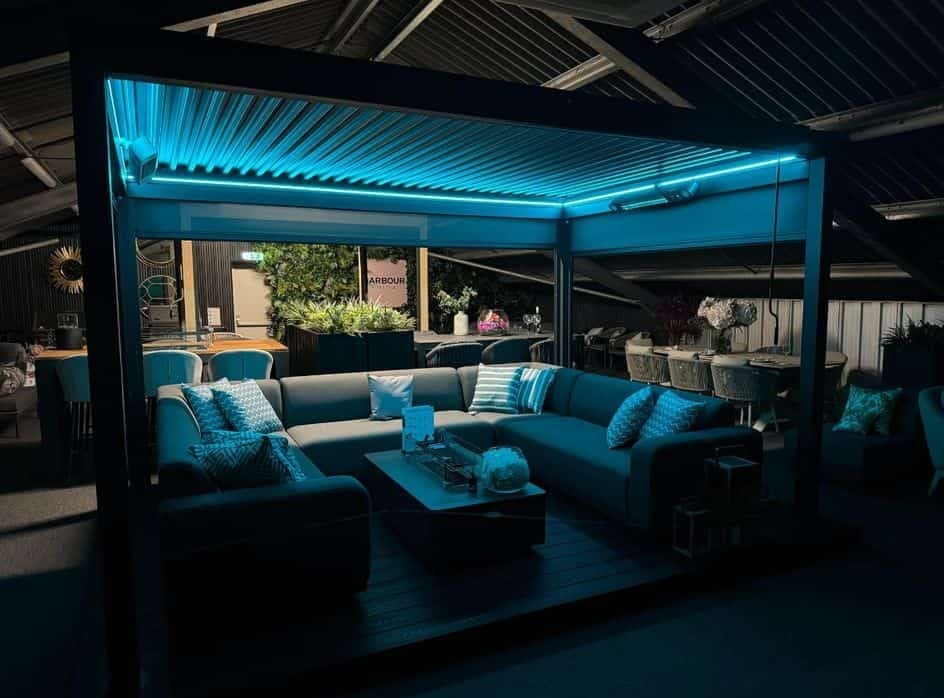
Pergola installation & two-person furniture delivery
Premium two-person pergola and furniture assembly, installation, survey, and aftercare workflows delivered under your brand.
- Booking confirmation workflow
- Furniture and pergola assembly
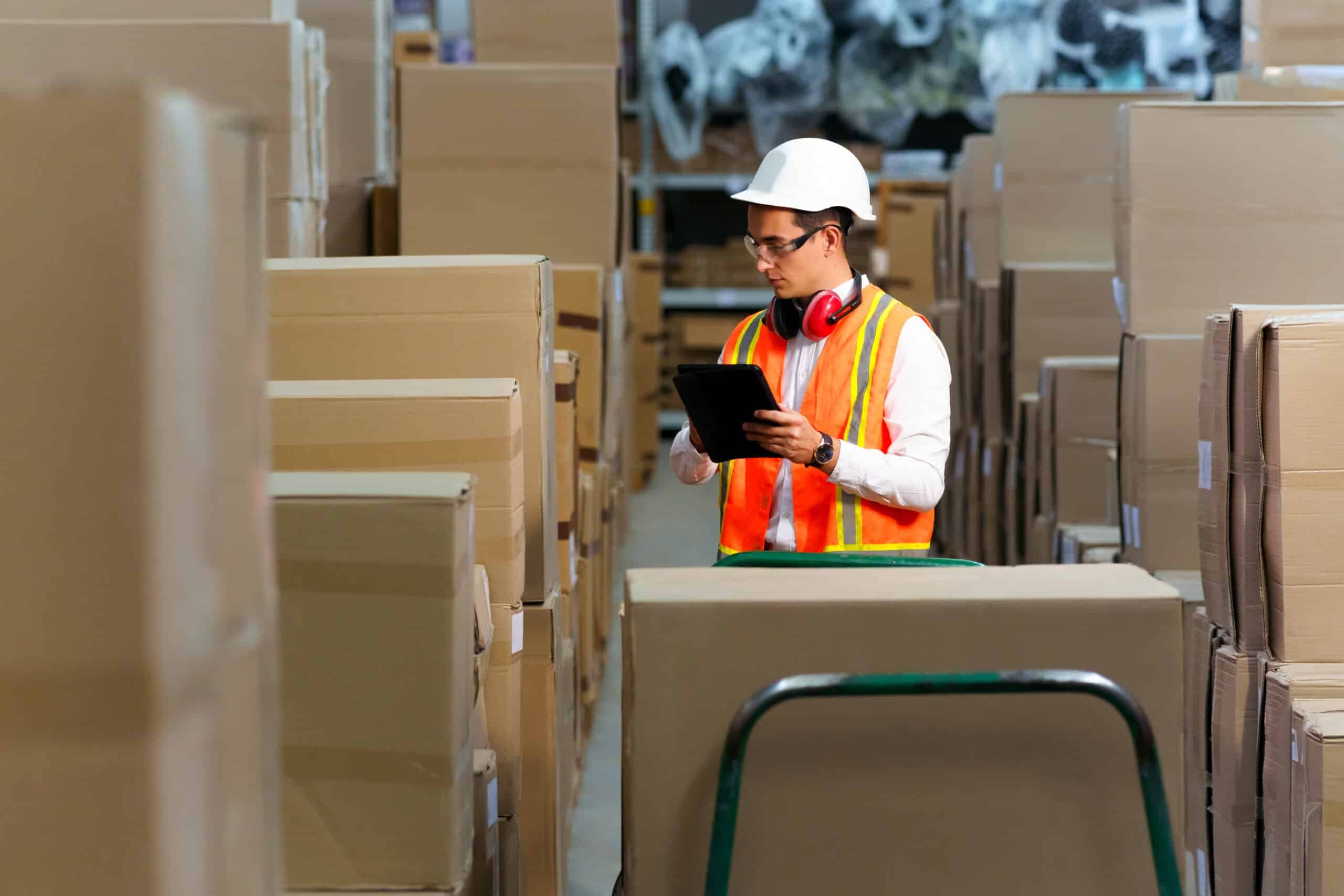
Indoor furniture e-commerce fulfilment
E-commerce fulfilment designed for indoor furniture ranges, from compact decor to oversized pieces needing white-glove support.
- Storage for mixed furniture SKUs
- Warehouse management system support
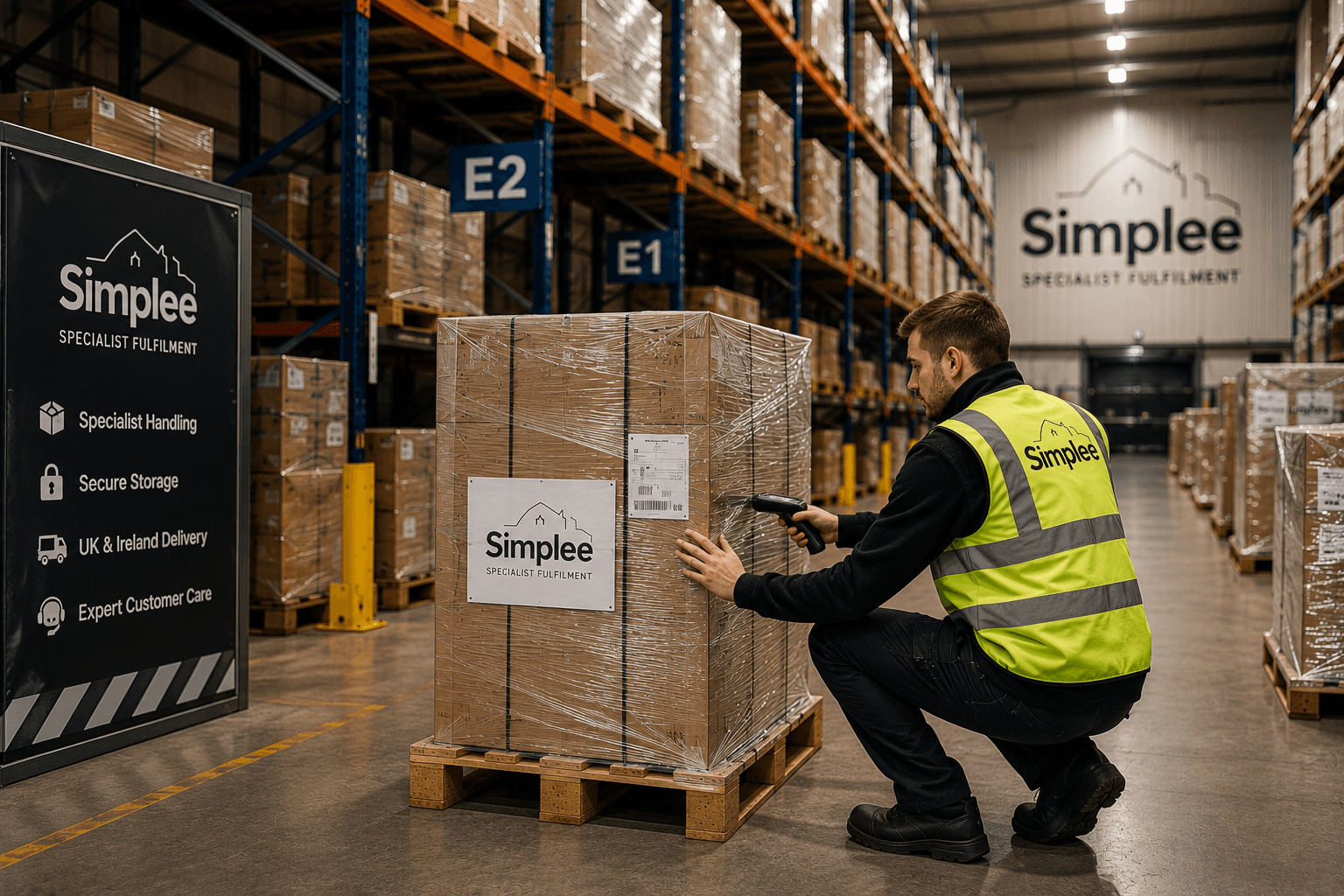
Warehouse fulfilment for bulky & out-of-gauge goods
Inbound shipping, receiving, picking, packing, dispatch, and two-person delivery support for furniture, garden goods, and other awkward stock.
- Inward shipping coordination
- Inventory checks and discrepancy reporting
Related posts
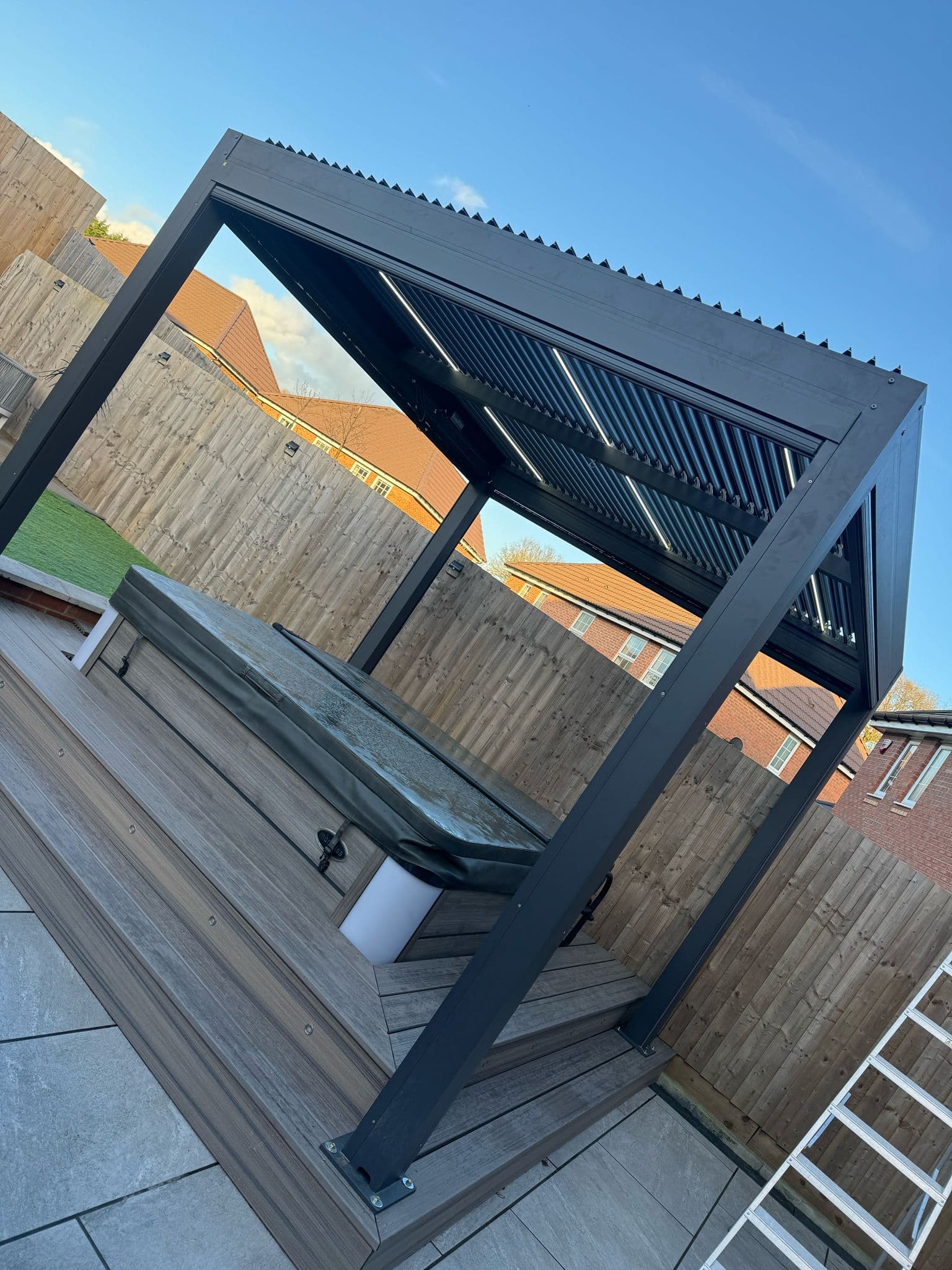
What a two-person pergola delivery service should include
A pergola delivery is an installation, not a drop-off. Here is the process a premium brand should expect, from booking through to photographed sign-off.
Read article
Reducing damage rates in indoor furniture fulfilment
Furniture fulfilment damage is rarely one dramatic accident. It accumulates across handling touches. Here is where it actually happens and how to cut it.
Read article