
Reducing damage rates in indoor furniture fulfilment
Furniture fulfilment damage is rarely one dramatic accident. It accumulates across handling touches. Here is where it actually happens and how to cut it.
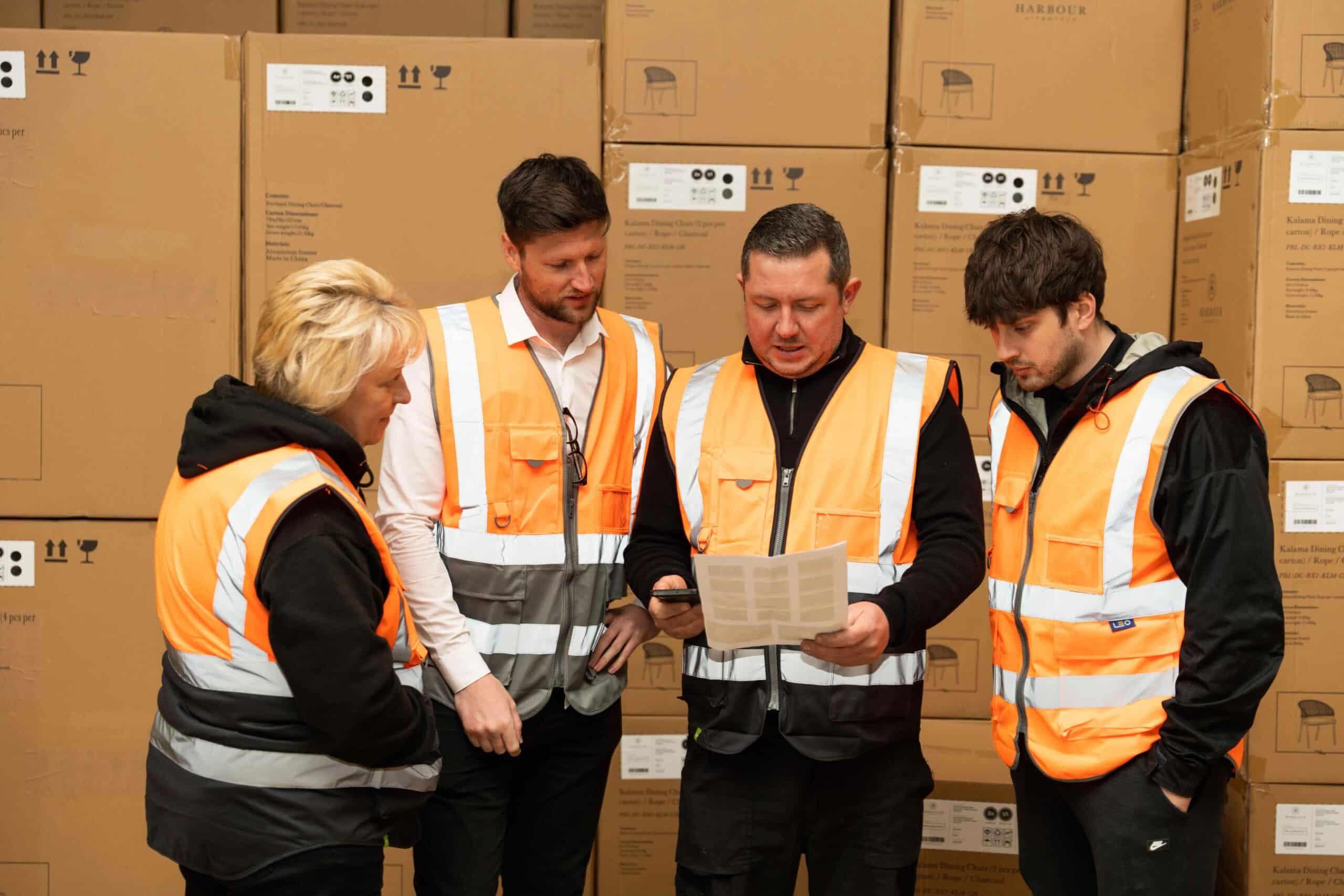
Damage is a process problem, not an accident problem
When a customer reports a scuffed sideboard, the instinct is to look for the moment it happened. Usually there was not one. The panel was fine when it left the container, fine when it was put away, fine when it was picked, and marked by the time it was unwrapped in a living room — and no single step is obviously to blame.
That is the nature of furniture damage. It is cumulative. Every handling touch carries a small probability of a mark, and furniture gets more touches than almost any other category of stock because it is heavy, awkward, and needs two people. Reduce the number of touches and the quality of each one, and the rate falls. Hunt for the culprit and you will spend a year not finding one.
Where damage actually occurs
- Devanning. Goods packed tightly into a container arrive under pressure and often shift in transit. The first lift out is the most exposed moment of the whole chain.
- Put-away. Getting a long, top-heavy carton into a storage position is where corners meet uprights and where the load can tip if it is set down unevenly.
- Neighbouring stock. Most furniture damage is not caused by handling the damaged item — it is caused by handling the item next to it.
- Picking. Retrieving one SKU from a nest of similar cartons means moving things that were not meant to move that day.
- Loading. Stacking mixed dimensions into a vehicle is where compression damage is created and where it is never noticed until unpacking.
- The last few metres. Doorways, stairs, and corners in a customer's home are outside the warehouse but very much inside your damage rate.
Storage format is the biggest lever
The single most effective way to reduce furniture damage is to store items in a format that means you do not have to disturb them. Standard racking is designed for standard pallets, and forcing a wardrobe carton or a three-metre table top into a rack designed for something else guarantees that every retrieval is a manoeuvre.
Our warehouse accommodates furniture dimensions using a combination of floor storage, stillages, and racking rather than one system for everything. That is not a technicality. A stillage means an item is lifted once, sits protected, and is lifted once more. Floor storage means a heavy or fragile piece is not being raised and lowered. Racking means a palletised, well-boxed line is not consuming floor space it does not need.
The point is matching the format to the item. When the format is wrong, no amount of care from the team will fix the underlying number of touches the format demands.
Packaging is your decision, not your 3PL's
A great deal of furniture arrives from suppliers in packaging designed to survive a sea container, not a warehouse and a van. Those are different journeys. Container packaging protects against compression and vibration. Fulfilment packaging needs to protect against corner impact and single-item handling, and needs to survive being picked out from a group.
The recurring failures are predictable: corners with no protection, no edge board on polished or veneered surfaces, film that holds the box shut rather than protecting the product, and no internal restraint so the item moves inside its own carton.
A 3PL can add protective packaging on dispatch, and we do where the piece needs it. But adding protection at the outbound stage does nothing for the damage that occurred at devanning and put-away, which is where a lot of it starts. If your damage rate is high and your inbound packaging is thin, the conversation to have is with your supplier. Fixing packaging upstream fixes damage at every subsequent step at once.
Catch damage at goods-in, not at the customer
The most expensive place to discover a damaged item is a customer's home. You have paid to store it, pick it, and deliver it with two people, and now you will pay to collect it, replace it, and repair the relationship. The cheapest place to discover it is the moment the container is opened.
That means inventory checks and discrepancy reporting on arrival need to be a real inspection with a record, not a count. Where a mark exists on arrival, it should be photographed and reported before the item goes into storage, so the claim sits with the supplier or the freight carrier while it is still credible.
This also gives you something more useful than a claim: a pattern. If the same SKU is arriving marked in the same place, that is a packaging fault with a fixable cause. If damage is spread evenly across everything in a container, that is a loading or transit issue. You cannot tell those apart without inbound records.
Delivery is part of the damage rate
For indoor furniture, standard parcel networks are a damage strategy in themselves — a bad one. Items get sorted, conveyed, and stacked by systems built around boxes of a very different size and weight, and every one of those interactions is a touch you cannot see or control.
Two-person delivery with room-of-choice placement is not only a service upgrade. It removes a whole tier of automated handling and replaces it with two people who know what they are carrying. Where the piece needs assembly, doing it on site means the item travels in its most protected state and is only exposed once, at its destination.
The same logic applies to documentation. Photographing box condition and property condition on arrival, and the finished placement on completion, gives you a clean record of what actually happened. Most disputed damage claims are disputes about when, not whether — and photos end that conversation quickly and fairly for both sides.
Close the loop with returns and customer service
Damage data is only useful if it comes back to you. When a returned item is received, inspected, photo-documented, and reported, you learn something. When it is quietly replaced and the paperwork stays in an inbox, you learn nothing and pay twice.
Where customer service, returns, and fulfilment sit in the same operation, the connection is direct: the person taking the call can see the order, the dispatch record, and the delivery photos, and the item comes back to the team that shipped it. Where those functions are split across three suppliers, the information is split across three suppliers too, and nobody owns the pattern.
Spare parts deserve a mention here. A large proportion of furniture damage reports are not "the item is ruined" — they are one marked panel, one bent bracket, one missing fixing. Holding and dispatching spares turns a replacement into a part, which is cheaper for you and faster for the customer.
Where to start
Pick your three highest-damage SKUs and trace them backwards. Look at how they arrive, how they are stored, how many items have to be moved to pick one, and how they travel. In most cases one of those four will be obviously wrong, and it is usually storage format or inbound packaging.
Then measure the thing you actually care about. Not "damage rate" as a single number, but where the damage was found — inbound, in storage, on delivery, or at the customer. Those four numbers tell you what to change. One number tells you nothing.
If you would like a view on how your furniture range should be stored and handled, send us the SKU list with dimensions, weights, and packaging details. Email sales@simpleeuk.com or call +44 1787 378154.
Related SIMPLEE UK services
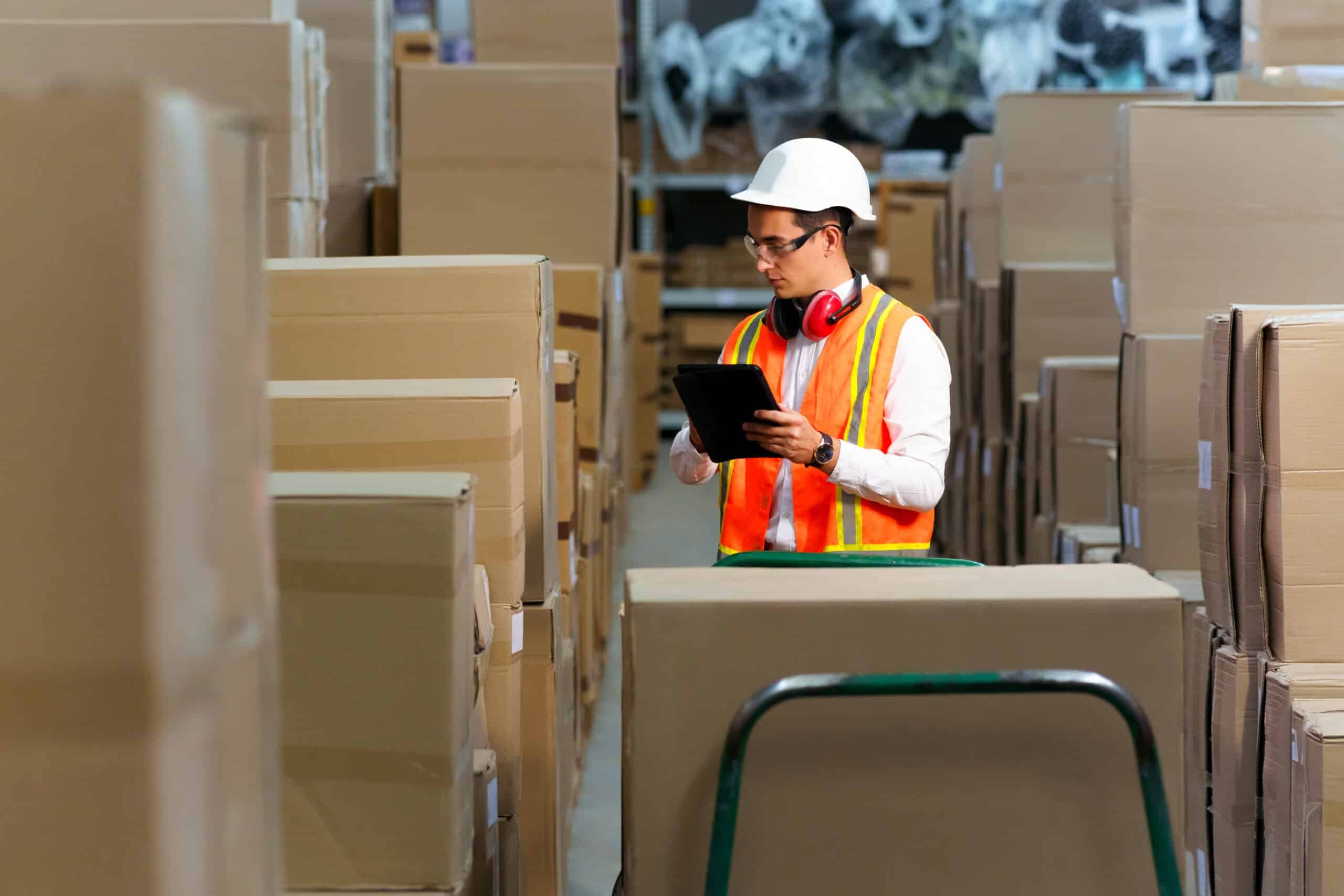
Indoor furniture e-commerce fulfilment
E-commerce fulfilment designed for indoor furniture ranges, from compact decor to oversized pieces needing white-glove support.
- Storage for mixed furniture SKUs
- Warehouse management system support
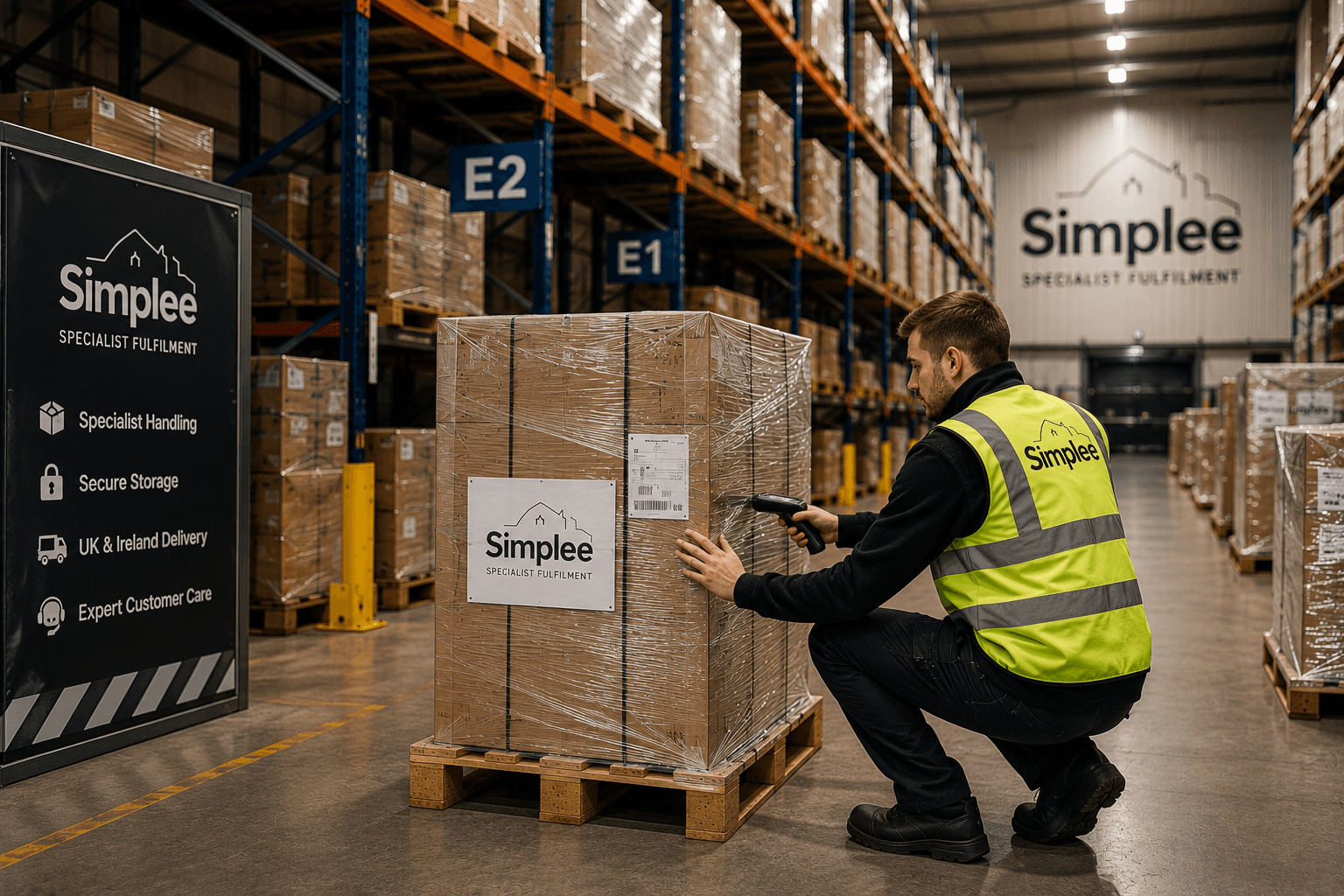
Warehouse fulfilment for bulky & out-of-gauge goods
Inbound shipping, receiving, picking, packing, dispatch, and two-person delivery support for furniture, garden goods, and other awkward stock.
- Inward shipping coordination
- Inventory checks and discrepancy reporting

Outsourced customer service for e-commerce brands
Outsourced customer care combining personal UK-based support with software-driven query handling and fulfilment visibility.
- Telephone customer support
- Query tracking and KPI reporting
Related posts

Packaging standards for flat-pack and assembled furniture
What good furniture packaging actually specifies — board grade, corner protection, carton marking, and how flat-pack and assembled goods need completely different answers.
Read articleReturns handling for oversized goods
Oversized returns are not big parcel returns. Why collection, inspection, and the resell decision drive the whole cost — and how to build a process that recovers value.
Read article