
What a two-person pergola delivery service should include
A pergola delivery is an installation, not a drop-off. Here is the process a premium brand should expect, from booking through to photographed sign-off.
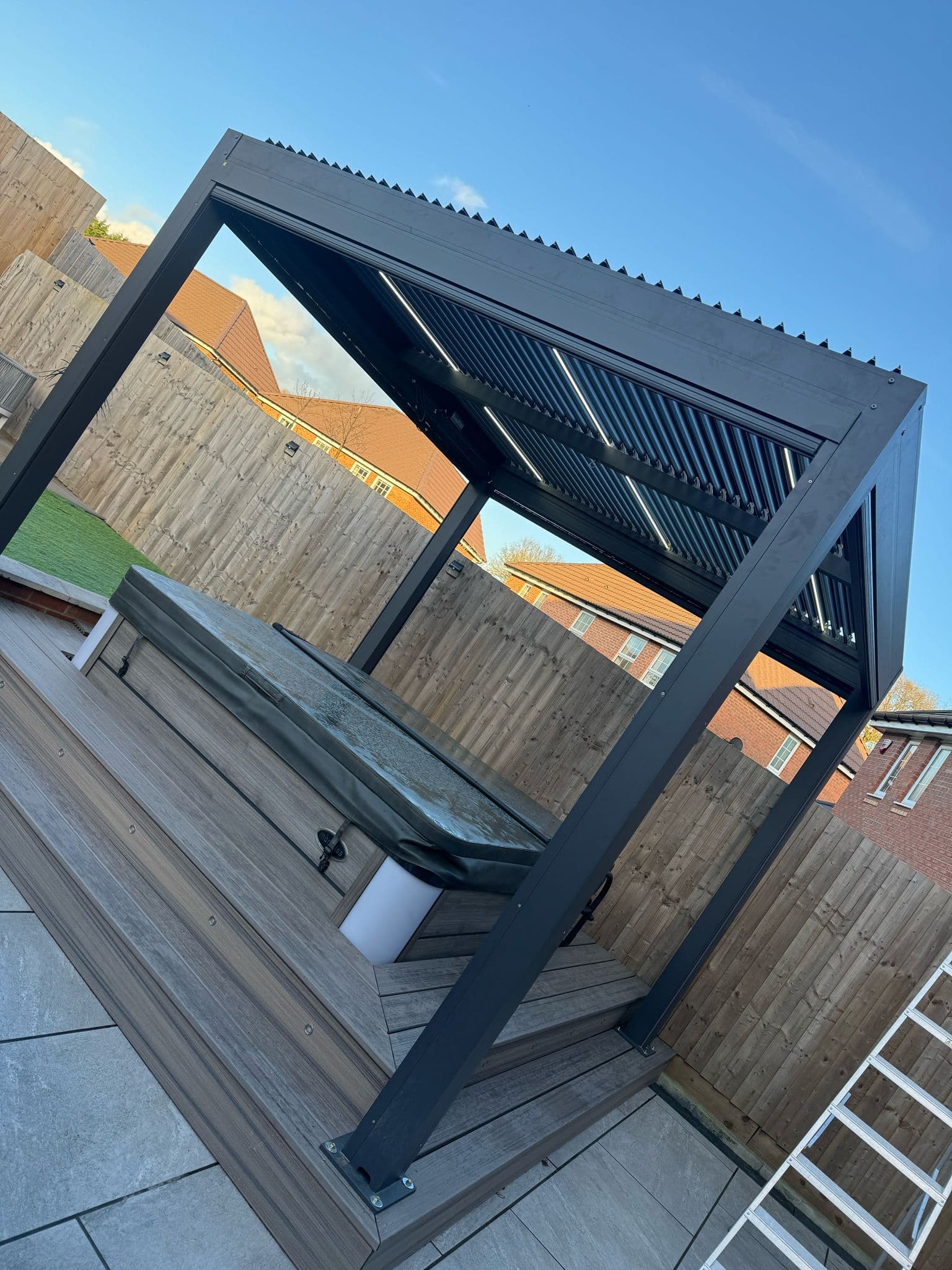
A pergola delivery is an installation
If you sell pergolas, the delivery is not the end of your fulfilment process. It is the most visible part of your product. The customer has spent a significant sum on something that will sit in their garden for years, and their entire impression of your brand is formed by two people they have never met, working on their patio for a few hours.
That is why "pergola delivery service" is a slightly misleading phrase. What you are actually buying is a booked, surveyed, documented installation with a delivery attached. If a provider quotes you as though it is a heavy parcel with two sets of hands, they have not understood the job.
This post sets out what the service should include, in the order the customer experiences it.
1. A survey before anyone gets in a van
The single most expensive failure in pergola installation is a crew arriving at a site that cannot take the product. Everything is already loaded, the day is already booked, and the customer is already at home waiting.
A proper service checks the site first. That means access to the garden, patio space, foot clearance around the intended position, gradient, tile or surface type, and surface quality. For a straightforward site this can often be done remotely from customer photographs. For anything unusual, it should be a physical survey.
Ask any provider what happens when the survey fails. The right answer is that the issue is documented and the next step is agreed with the brand and the customer before the installation proceeds — not that the crew improvises a fixing into an unsuitable surface because they do not want to come back.
That last scenario is worth dwelling on, because it is how installation businesses acquire their worst liabilities. A pergola bolted into a surface that will not hold it is a problem that surfaces months later, in weather, and it is your name on the product. A survey that stops a job is a survey doing its job.
2. Booking the customer actually agreed to
Bulky delivery has a reputation for vague windows and missed appointments, and that reputation is not entirely undeserved. A premium brand cannot carry it.
The workflow should be: the order is placed, the system sends a booking confirmation with a proposed date and time, the customer confirms, and the delivery proceeds. That confirmation step matters. A date the customer has actively accepted is a date they will be in for. A date they were told about is a coin toss.
Everything after this point depends on that confirmation existing as a record, because when something goes wrong, "what was agreed" is the first question anyone asks.
3. Notice on the day, and a documented arrival
On the day itself the customer should be notified once the crew is on the way. This is not a courtesy feature. It is the difference between a customer who spends the morning relaxed and a customer who spends the morning watching the window and then calls your support line at eleven o'clock to ask where the van is.
A pre-arrival call also lets the crew confirm the practical details one last time — whether the side gate is unlocked, whether a car needs moving, whether anything has changed since the survey. Two minutes on the phone routinely saves an hour on site, and occasionally saves the whole job.
When the team arrives, the delivery boxes and the property condition should be documented before any work starts. Photographs, taken as a matter of routine, on every job, before a single box is opened.
This protects everyone. It protects the customer, because damage that was already there is recorded as such rather than assumed to be the installer's. It protects your brand, because a claim about a cracked paving slab three weeks later can be answered with evidence instead of argument. And it protects the crew, because they are not defending their work from memory.
The value of this comes from it being universal. A photographic record that only exists on the jobs someone thought were risky is not a record, it is a selection — and it will be missing on precisely the job where you need it.
4. The installation itself
The build is the part everyone focuses on, and it is genuinely skilled work. Aluminium, timber, louvered, freestanding, and wall-fixed pergolas each behave differently, and bolt-down installations put the fixing decision squarely on the installer.
What you should ask about is not whether they can build it — anyone will say yes — but how they handle the specifics your product raises.
- Fixing approach for each surface type your customers actually have.
- Packaging removal and disposal, and whether it is included or agreed per job.
- Weather working terms — what conditions stop the work, and who decides.
- What happens to a part that is missing or damaged in the box, mid-build.
- Whether the install can be done under your warranty terms.
5. Photos and sign-off at the end
When the work is complete, final photographs should be uploaded and the customer should sign off on the agreed work. This gives you a clean record of every installation — what was delivered, how it was left, and that the customer agreed it was done.
Over a season, this record is worth more than it looks. It is your evidence base for warranty questions, your quality control on the crews, and your answer to the small number of disputes that any installation business generates. Brands that skip it end up settling arguments they could have won.
It is also the only honest way to know whether the work is any good. Nobody watches every installation, and customers only tell you about the bad ones and the exceptional ones. A photographic record of every finished job tells you what your average looks like, which is the number that actually determines your reputation.
6. It should look like your brand throughout
The customer bought from you. They should not discover halfway through that three different companies are involved.
At SIMPLEE UK the whole booking, communication, and installation experience can be delivered under your brand — branded confirmations, branded contact, one continuous service from order to sign-off. Where the customer has a question before or after the install, our outsourced customer service team can take it under your brand as well, with the query logged and tracked rather than lost in an inbox.
That continuity is the point of using a specialist rather than a general courier plus a local fitter. The seams are where customer experience fails.
7. Aftercare, servicing, and spares
A pergola has a life after installation. Louvres need adjusting, fixings need checking, storms happen, and manufacturer guarantees have to mean something.
Servicing and repairs packages can be built into the workflow as part of your guarantee, and spares can be held and dispatched alongside the rest of your stock. The advantage of having installation, storage, spares, and customer service under one roof is that a customer call about a faulty louvre does not become a three-way email chain between your office, a warehouse, and a subcontractor.
What to take away
A pergola delivery service worth buying has a defined process and does not vary it: survey, booking confirmation, pre-arrival call, access and surface checks, photos before, careful build, photos after, customer sign-off, and packaging removed. Nothing is left ambiguous, because ambiguity on a customer's patio is expensive.
If you are a premium garden or furniture brand looking at how your installations are running this season, we are happy to walk through the process in detail. Call +44 1787 378154 or email sales@simpleeuk.com.
Related SIMPLEE UK services
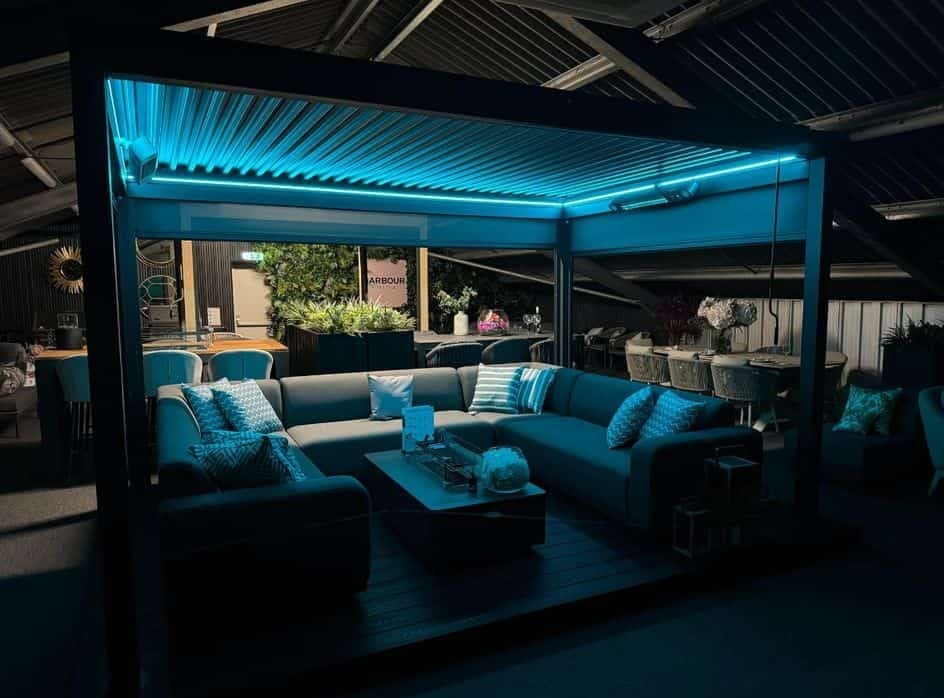
Pergola installation & two-person furniture delivery
Premium two-person pergola and furniture assembly, installation, survey, and aftercare workflows delivered under your brand.
- Booking confirmation workflow
- Furniture and pergola assembly

Indoor furniture e-commerce fulfilment
E-commerce fulfilment designed for indoor furniture ranges, from compact decor to oversized pieces needing white-glove support.
- Storage for mixed furniture SKUs
- Warehouse management system support

Outsourced customer service for e-commerce brands
Outsourced customer care combining personal UK-based support with software-driven query handling and fulfilment visibility.
- Telephone customer support
- Query tracking and KPI reporting
Related posts

Two-person delivery vs standard courier: which does your product need?
How to tell whether your product genuinely needs a two-person delivery service, and what that changes about cost, damage, and the customer experience.
Read articleOutsourced customer service for furniture brands
Outsourced customer service for ecommerce fails when the team cannot see the stock. For furniture brands, that connection is the whole point.
Read article