
Outsourced customer service for furniture brands
Outsourced customer service for ecommerce fails when the team cannot see the stock. For furniture brands, that connection is the whole point.

Furniture support is not general ecommerce support
If you sell trainers, most customer contact is about delivery timing and sizing. If you sell sofas, dining tables, or pergolas, the contact mix is completely different — and much harder to script.
Your customers ask whether an item will physically fit through a doorway. They ask what happens on the day, who is coming, and whether they need to move anything. They ask for one replacement bracket rather than a whole unit. They ask why the delivery needs two people and a booked slot when a parcel does not. They ask about a mark that appeared on a leg that was fine in the photographs.
None of those questions can be answered from a knowledge base article. They need someone who can see the order, the stock, the dispatch record, and the delivery notes — which is why outsourced customer service for ecommerce so often disappoints furniture brands. The team is capable. It just cannot see anything.
Why the split-supplier model breaks
The common setup is a customer service agency in one place, a 3PL in another, and a delivery partner in a third. Each is competent. The customer experiences the gaps between them.
A query arrives. The agency cannot answer it, so it emails the 3PL. The 3PL checks and replies. The agency relays the answer, by which point the customer has emailed again and left a review. Nobody did anything wrong, and the whole exchange took four days because the information and the person talking to the customer were never in the same place.
Multiply that by a peak season on bulky goods, where every query has a physical object behind it, and the cost is not just the agency fee. It is the refunds granted because it was faster than investigating, the reviews left in frustration, and the second delivery attempt that was never necessary.
What "brand-aligned" has to mean in practice
Every outsourcing provider says the team works under your brand. The test is whether that survives contact with a difficult call.
It means branded email templates, scripts, and phone greetings — that is the baseline. It means the customer never learns they are speaking to a third party, because there is no reason for them to. But more than that, it means the team knows your product range well enough to talk about it. A furniture customer can tell within thirty seconds whether the person on the phone has any idea what the item looks like.
That is an argument for depth over breadth. A team that handles a small number of brands in one category will know the products. A team that handles hundreds of brands across every category will know the ticketing system.
The queries that only a connected team can close
- Order status on a booked, two-person delivery — where "it is with the courier" is not an acceptable answer to anyone.
- Spare parts. The customer wants a cover, a fixing, or a replacement panel. Someone has to know whether it is in stock and be able to dispatch it.
- Returns of large items, where the answer depends on whether the item can be repacked, whether a collection is viable, and what the inspection found.
- Warranty cases, which need the dispatch record, the delivery photos, and the returned item inspected in one place to be resolved rather than argued about.
- Pre-purchase questions about dimensions, access, and what the delivery day involves — the ones that prevent a return before it happens.
- Cancellations and amendments after an order is placed but before it is picked, where speed decides whether you pay to ship something twice.
The technology has to be shared, not connected
There is a meaningful difference between a customer service platform integrated with your 3PL and a customer service team that works inside the same operation. An integration passes data between systems, with a lag and a defined set of fields. Working in the same operation means the person on the phone is looking at the same stock position the warehouse is looking at, right now.
Through Team Simplee, that view covers goods in, storage, order status, dispatch, returns, customer service, and spares in one place. When our team answers your customer, they are reading the live record rather than a copy of it. When the customer asks a question the record does not answer, the person who can answer it is in the same building.
Every query is still logged and tracked through a ticketing system, which is what gives you KPI reporting and visibility of where time is going. The ticket is the audit trail. The shared operational view is what stops the ticket from needing to be escalated in the first place.
Where the outsourced team should be
For furniture brands, the location of the team matters for practical reasons, not sentimental ones. Our customer service is delivered by SIMPLEE UK staff in Suffolk, in the same operation that holds your stock. There is no overseas outsourcing.
That is not a claim about accents. It is about proximity to the goods. When an advisor can walk to the aisle and physically check whether the boxed item has the fitting the customer says is missing, a query that would take two days of email closes in ten minutes. That is only possible when the people and the stock are in the same place.
Channel coverage should follow your customers rather than the provider's preference. Phone, email, and webform handling are the base. Live chat and social DM monitoring can be added. Integration with the platforms you actually sell on — Amazon, eBay, WhatsApp, Etsy and others — matters because a marketplace query left unanswered damages your metrics on that marketplace specifically.
What to ask a provider before you sign
Ask what the team can see. Not what they can request, or what they will be sent in a nightly file — what is on their screen while the customer is on the phone. If the answer involves emailing another supplier, the model has the same gap you already have.
Ask who handles the escalation. If a delivery goes wrong on a two-person job, the question is who owns getting it right, and whether that person also owns the warehouse and the delivery. Split ownership means split accountability, and the customer sits in the middle of it.
Ask about peak. Furniture demand is seasonal, and support volume tracks it exactly. Standard UK office hours suit most brands, but extended hours and seasonal-peak scaling need to be agreed before the peak rather than during it.
And ask about spares and returns explicitly. These are the two workflows most likely to be quietly out of scope, and they are the two that generate the most furniture contact.
Deciding whether it is right for you
Outsourcing customer service makes sense when the volume is real but not yet large enough to justify a dedicated in-house team, or when the contact is so tied to the physical stock that the answers live somewhere other than your office. Both are common for growing bulky-goods brands.
It makes less sense if your contact is genuinely about product design, bespoke specification, or trade relationships that depend on people your customers know by name. Those conversations belong with you. There is nothing wrong with a split where the operational queries go to the team that holds the stock and the commercial ones stay in-house — that is often the honest answer.
If you want to talk through your query mix and where it should sit, call +44 1787 378154 or email sales@simpleeuk.com.
Related SIMPLEE UK services
Outsourced customer service for e-commerce brands
Outsourced customer care combining personal UK-based support with software-driven query handling and fulfilment visibility.
- Telephone customer support
- Query tracking and KPI reporting
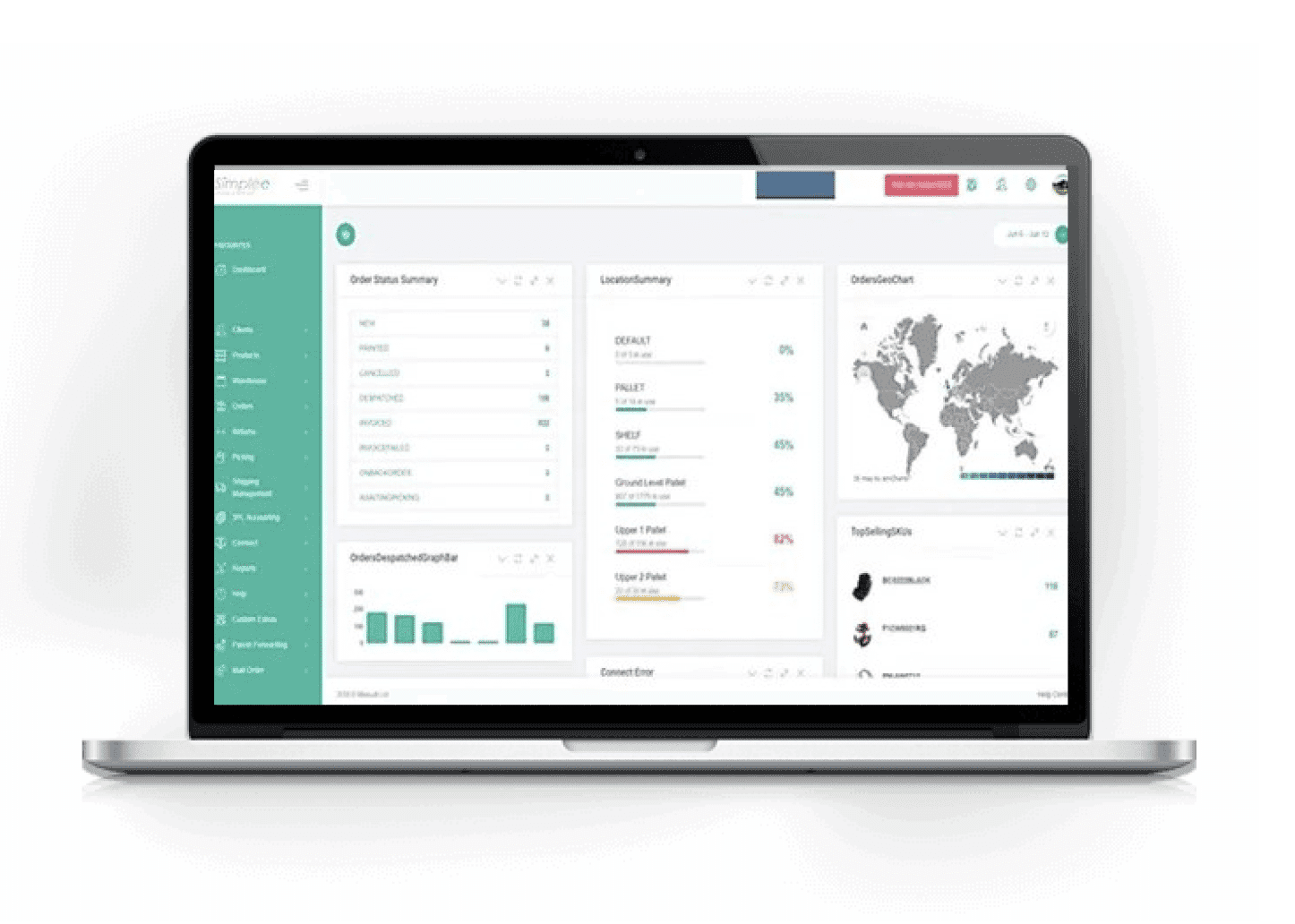
Warehouse technology — stock visibility & reporting
Warehouse visibility, reporting, order status, stock management, and courier integrations through Team Simplee.
- Team Simplee portal access
- Real-time order and stock visibility
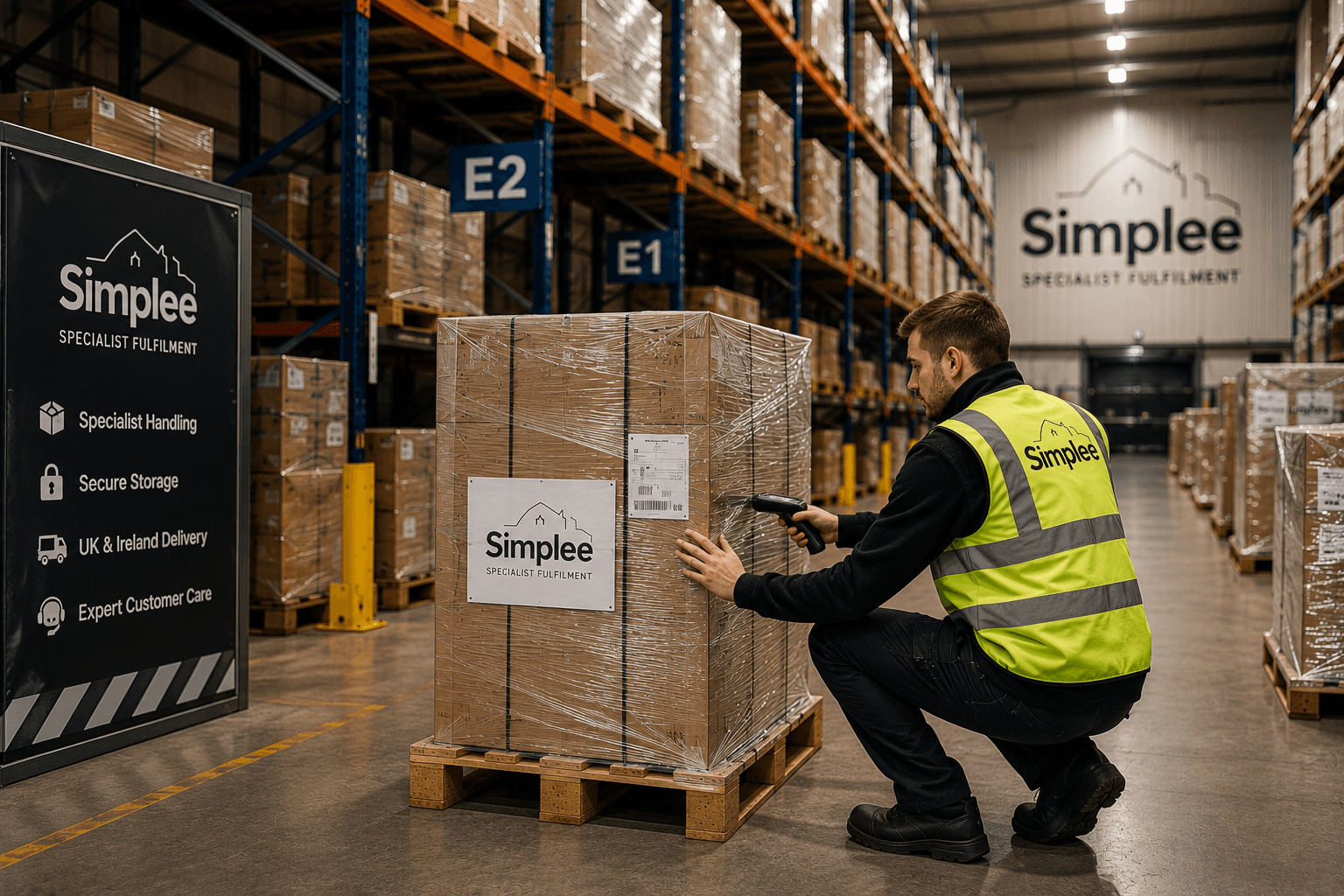
Warehouse fulfilment for bulky & out-of-gauge goods
Inbound shipping, receiving, picking, packing, dispatch, and two-person delivery support for furniture, garden goods, and other awkward stock.
- Inward shipping coordination
- Inventory checks and discrepancy reporting
Related posts

Stock visibility and reporting: what to expect from a 3PL
Most 3PL stock visibility reporting shows you a number. What you need is a number you can act on, and a record of how it got there.
Read article
Two-person delivery vs standard courier: which does your product need?
How to tell whether your product genuinely needs a two-person delivery service, and what that changes about cost, damage, and the customer experience.
Read article