
Stock visibility and reporting: what to expect from a 3PL
Most 3PL stock visibility reporting shows you a number. What you need is a number you can act on, and a record of how it got there.

A stock number is not visibility
Every 3PL will tell you that you get stock visibility. Almost all of them mean the same thing: a screen with a SKU list and a quantity against each line. That is a stock number. It is necessary and it is not sufficient.
What you actually need to run a bulky-goods business is the answer to questions the number cannot address. Why is this SKU eleven units short of what I expected? Where physically is it, and can it be picked today or is it behind something? What arrived in last week's container and what condition was it in? Which of my orders are stuck and why? How many of these came back, and what was wrong with them?
A number tells you the state. Visibility tells you the story. The difference between the two is whether you can act without ringing someone.
The four things a portal should actually cover
- Goods In — inbound arrivals, unloading records, checks, discrepancies, and put-away activity, so stock is controlled from the first warehouse touchpoint rather than from the moment it appears in a count.
- Store — stock locations, pallet or floor storage, inventory levels, stock movements, and reporting across the operation.
- Dispatch — order status, picking, label creation, courier integrations, goods out, and performance reporting.
- Returns, customer service, and spares — queries, replacement parts, returned stock, and follow-up activity in one operational view.
- Most portals do Store and Dispatch well and treat the other two as afterthoughts. For bulky goods, the other two are where the money leaks.
Goods In is where visibility is won or lost
If your stock arrives in containers, the inbound record is the foundation of everything downstream. Get it wrong and every number after it is wrong too, and you will not find out until a count months later.
A proper goods-in record captures what arrived against what was expected, what condition it was in, what discrepancies were found, and where each item was put away. That last part is not administrative detail. For out-of-gauge goods stored across racking, floor areas, and stillages, "we have forty of them" is useless if nobody knows they are in four different formats in three parts of the building.
Discrepancy reporting has a commercial deadline attached, which is why it belongs in the portal rather than in someone's email. A shortage or a damage found and recorded at devanning is a claim against your supplier or your carrier. The same shortage found six weeks later in a stock check is your loss. The record is what makes it the former.
Why bulky goods make visibility harder
This is worth understanding because it explains why generic fulfilment software struggles with furniture and garden goods.
Standard fulfilment assumes a unit is a unit. It is in a bin, the bin has a location, and you pick it. Out-of-gauge stock breaks that assumption in several places at once. A single SKU may be stored in more than one format. Some units are accessible and some are behind others. A "unit" might be three cartons that must ship together, and a system that counts cartons will tell you that you have stock when you do not have a complete set.
Then there is condition. For furniture, a unit is not simply present or absent — it can be present and marked, present and awaiting inspection, present but missing a fitting, or quarantined pending a decision. A system with two states, in stock and out of stock, will cheerfully sell you something a human already knows is not sellable.
This is why the storage format and the system have to be designed together. Location control, pallet movement, and stock checks only mean anything if the system understands the formats the warehouse actually uses.
Live, not nightly
Ask any prospective 3PL a very specific question: is the data live, or is it a file?
A surprising number of providers run on a nightly export. Your stock figure is accurate as of last night, which is fine until you are in a peak week and selling faster than the file refreshes. Then you oversell, and you find out from a customer.
Live matters most in exactly the moments you care about: a peak weekend, a promotion, a container landing, a large trade order. Those are the times when yesterday's number and today's reality diverge most. A dashboard that supports monitoring of stock, order status, inventory levels, and reporting in real time is not a luxury feature — it is the difference between managing a peak and reacting to one.
Reporting is for decisions, not for reassurance
There is a category of 3PL reporting that exists to make you feel comfortable. Monthly PDF, some green figures, a note about how busy it has been. It is not useless, but it is not decision support.
Useful reporting answers questions you would otherwise have to guess at. Which SKUs are moving and which have not been touched since spring, so you know what your storage bill is actually paying for. What your order status distribution looks like, so you can see where things stall. What is coming back and why, so returns become a product signal rather than a cost line. How performance tracked against the agreed service levels and KPIs, so accountability is measured rather than described.
That last point deserves emphasis. Service level agreements and KPIs are only meaningful if you can see them being met or missed without asking. If the only person who can tell you whether an SLA was hit is the supplier who owes you the SLA, you do not have accountability — you have a conversation.
Integrations: where the data comes from and goes
Visibility inside a portal is only half the picture. Your stock numbers also need to be correct on the channels where you sell, and your orders need to arrive without anyone typing them in.
Direct integrations with Shopify, WooCommerce, Magento, Amazon, eBay, and many other channels handle the order flow in. Courier integrations — hundreds of UK and international couriers, plus pallet networks and two-person delivery services — handle the flow out, including label creation once a pick is scanned. For anything the standard integrations do not cover, an API is available to scope custom requirements against.
The reason to care is that every integration you do not have is a manual step, and every manual step is a place where the number in the portal and the number on the website drift apart. Manual steps are also where peak breaks — they are fine at ten orders a day and impossible at two hundred.
What to ask before you sign
Ask to see the portal with real data in it, not a demo tenant with tidy fictional SKUs. Ask what the goods-in record looks like for a container of out-of-gauge stock, because that is where the tidy demo tends to fall apart.
Ask whether stock is live or exported, and how often. Ask what states a unit can be in beyond in-stock and out-of-stock. Ask whether returns and spares appear in the same view as stock and orders, or in a different system. Ask which of your sales channels and couriers are already integrated and which would be a project.
And ask who can see it. If only one person at your business gets a login, your customer service team is still emailing the warehouse for answers, which is exactly the problem the portal was meant to solve.
If you want to see how Team Simplee handles your kind of stock, we are happy to walk you through it against a real example. Call +44 1787 378154 or email sales@simpleeuk.com.
Related SIMPLEE UK services
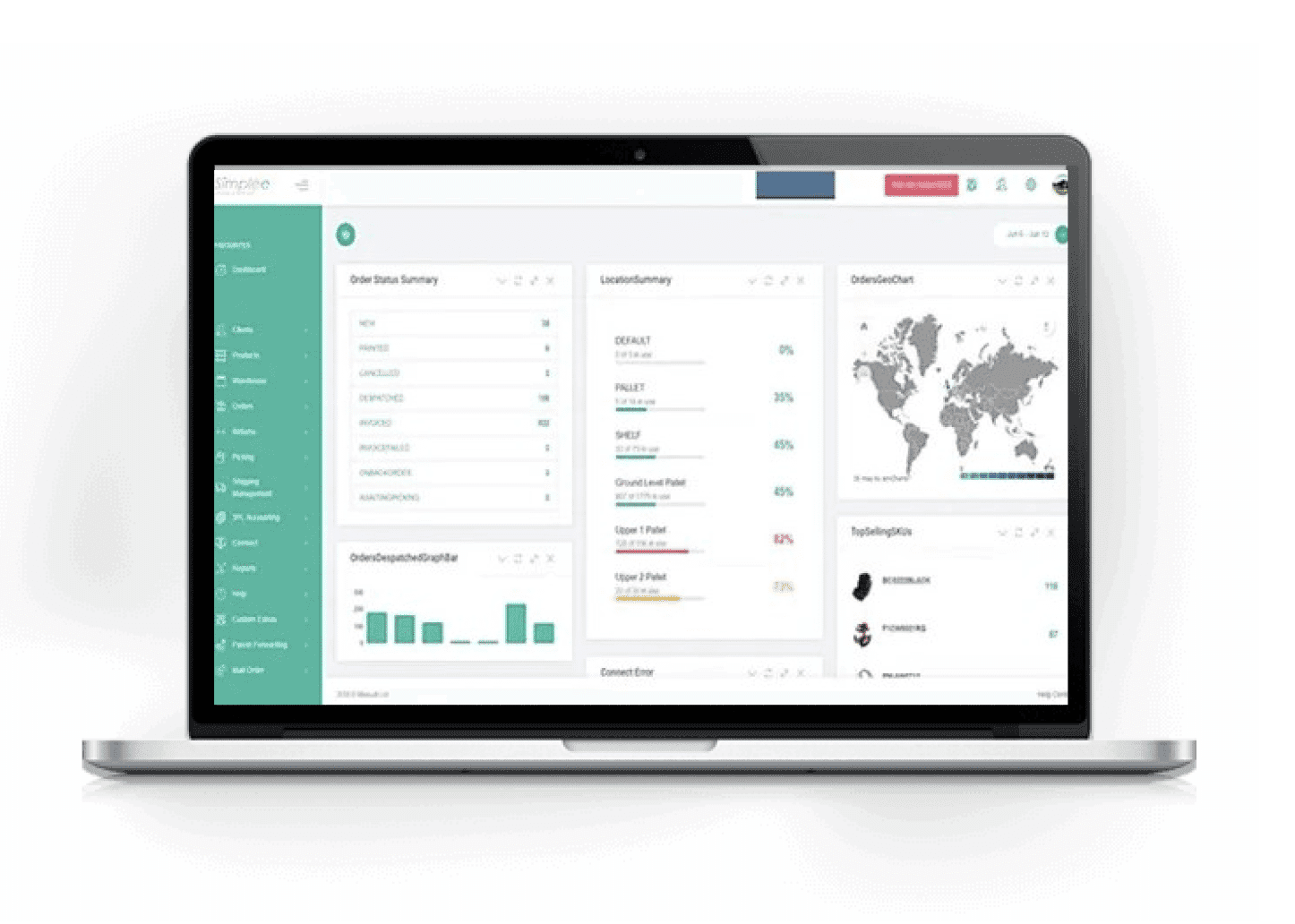
Warehouse technology — stock visibility & reporting
Warehouse visibility, reporting, order status, stock management, and courier integrations through Team Simplee.
- Team Simplee portal access
- Real-time order and stock visibility
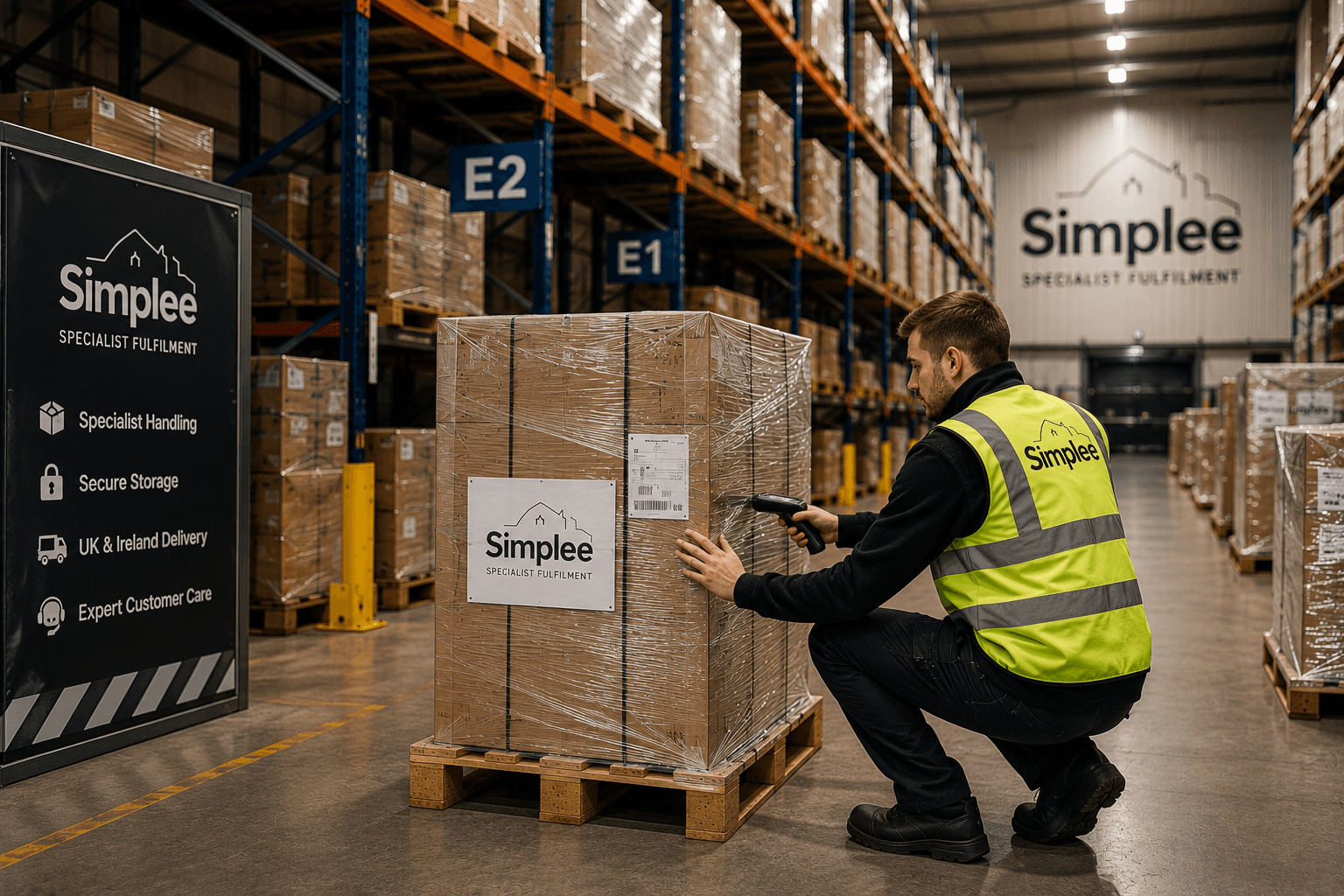
Warehouse fulfilment for bulky & out-of-gauge goods
Inbound shipping, receiving, picking, packing, dispatch, and two-person delivery support for furniture, garden goods, and other awkward stock.
- Inward shipping coordination
- Inventory checks and discrepancy reporting

Outsourced customer service for e-commerce brands
Outsourced customer care combining personal UK-based support with software-driven query handling and fulfilment visibility.
- Telephone customer support
- Query tracking and KPI reporting
Related posts
Courier and sales channel integrations for furniture brands
Why integration is harder for bulky goods than for parcels, what to ask a 3PL about it, and what a working setup actually looks like.
Read article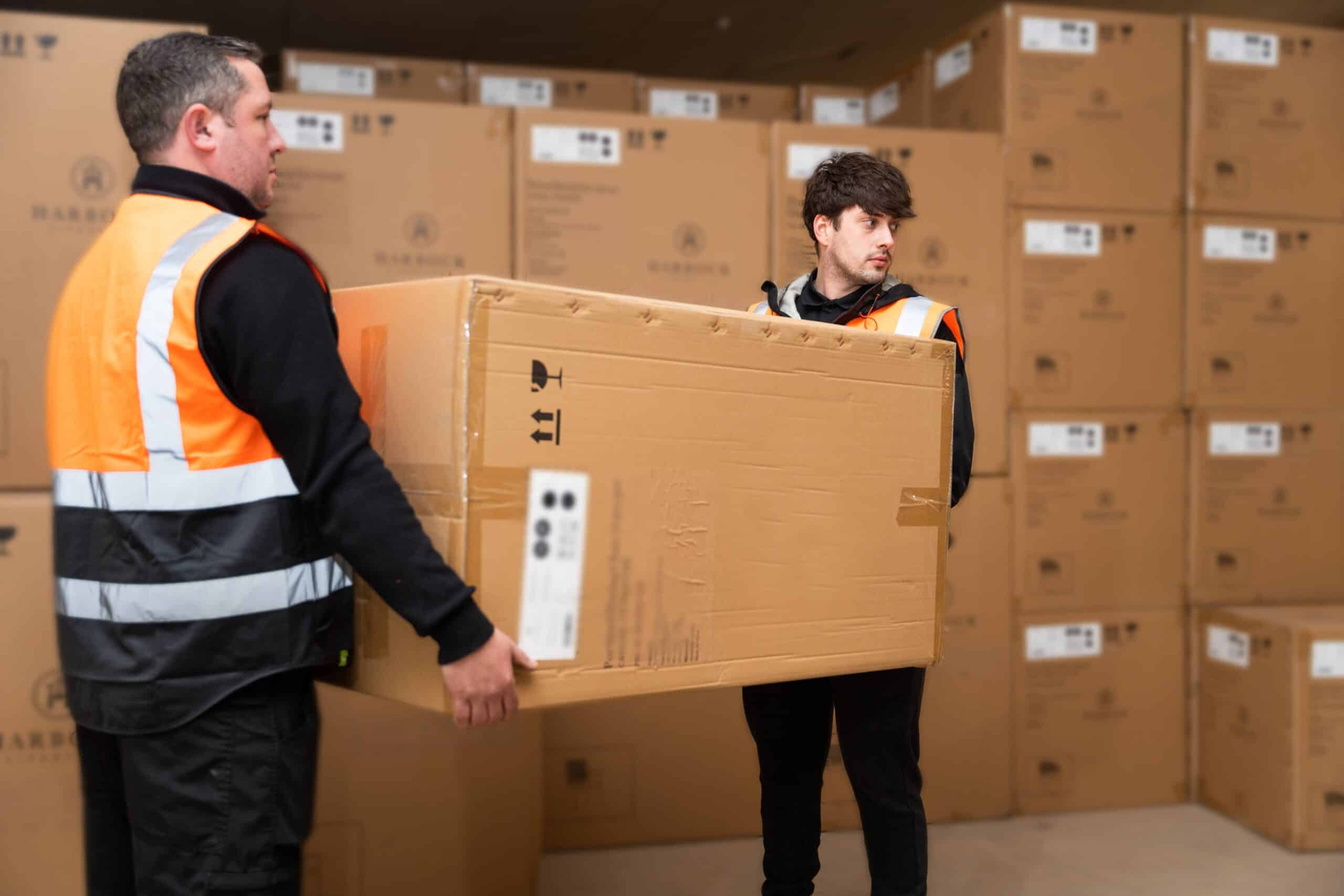
When to move from self storage to a 3PL
Self storage is a fine place to start and a bad place to scale. The practical signals that tell you it is time to move, and what actually changes when you do.
Read article