
Returns handling for oversized goods
Oversized returns are not big parcel returns. Why collection, inspection, and the resell decision drive the whole cost — and how to build a process that recovers value.
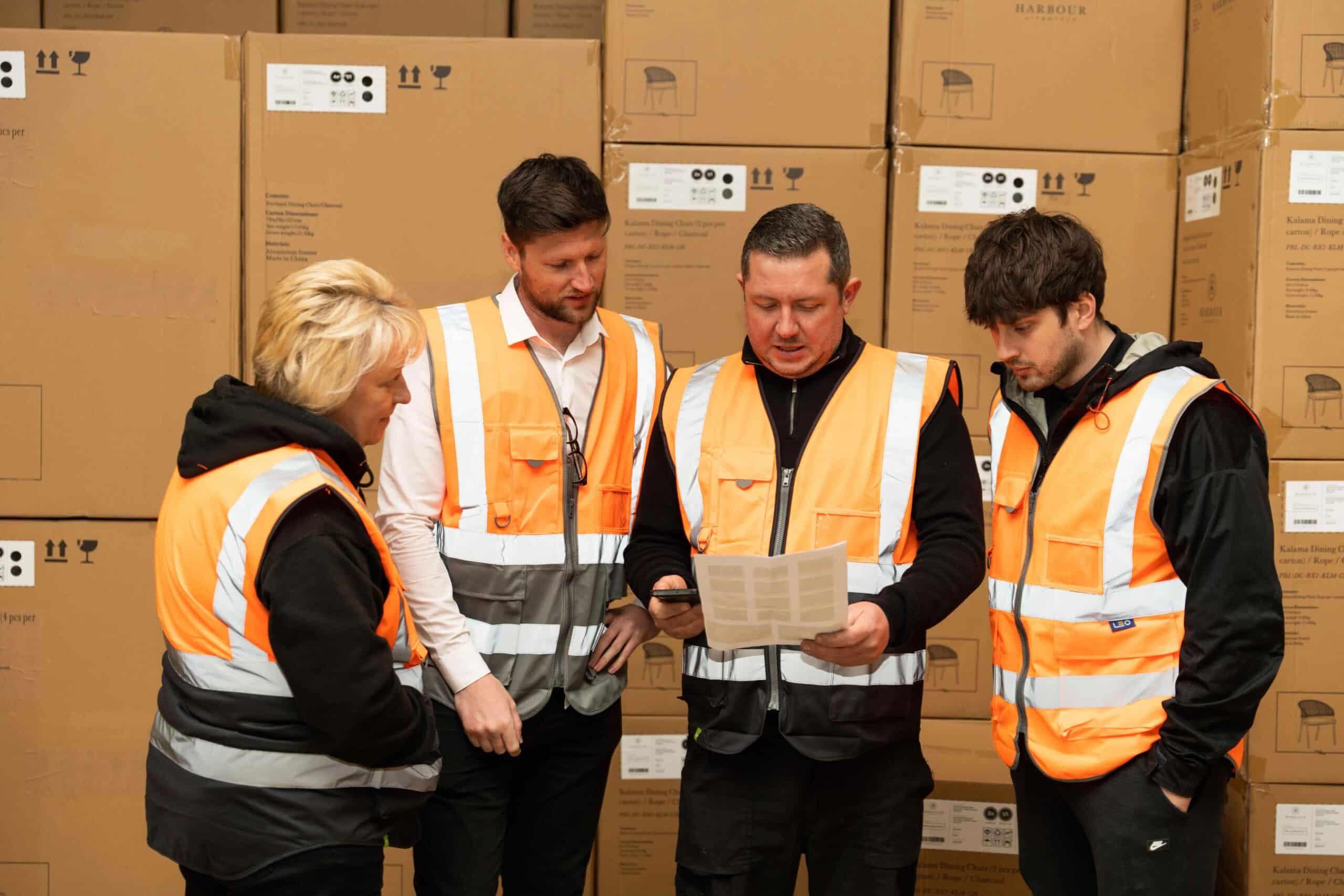
An oversized return is a delivery running backwards
A small-parcel return is a label and a drop-off. The customer prints something, walks to a shop, and the item enters a network that will handle it automatically. The cost is a few pounds and the process needs no thought.
An oversized return has none of those properties. There is no drop-off, because the customer cannot carry a corner sofa anywhere. There is no automatic network, because two-person collections have to be booked against crew availability. The item is often partially assembled, and its packaging is in a bin. Its value is high enough that writing it off is a real financial event rather than a rounding error.
So an oversized return is not a returns process. It is a delivery running backwards, with worse information, worse packaging, and an unhappy customer at the origin. Treat it as such and the design decisions become much clearer.
Where the money goes
Notice that the two biggest levers — condition and disposition — are decided before and during arrival, not by negotiating carrier rates. Brands that try to fix oversized returns by shopping for cheaper collections are optimising the smallest of the four.
- Collection. A booked two-person collection is a scheduled resource on a specific day. If nobody is home, you pay for it and you have not got the item.
- Condition on arrival. An item returned without its original packaging arrives worse than it left. Its condition on arrival, not its condition when the customer decided to send it back, determines what you can do with it.
- The disposition decision. Whether the unit can be resold as new, resold as a second, repaired, broken for spares, or scrapped. This one decision swings the recovery value more than anything else in the chain.
- Handling and space. The item has to be inspected, possibly repacked, and stored somewhere while all that is decided. Floor space held by unresolved returns is space not earning anything.
The first decision: should it come back at all?
For bulky goods, this is a genuine commercial question rather than a rhetorical one. Bringing an item back costs collection, inspection, handling, and storage. If the outcome is likely to be a scrap or a heavily discounted second, the return can cost more than the item recovers.
That does not mean refusing returns. It means the customer service team needs to be able to diagnose the problem before defaulting to a collection. A large proportion of bulky-goods return requests are not really returns. They are a missing fixings bag, a damaged panel in a multi-carton set, an assembly step that was not clear, or a part that arrived marked.
Every one of those is better solved by dispatching a spare part. The customer keeps the product they wanted, gets it fixed in days rather than weeks, and you avoid a collection, an inspection, and a write-down. This is why we run spares dispatch inside the same customer service workflow as returns rather than as a separate function — the person taking the call needs to be able to reach for the spare part instead of the collection booking.
The rule is simple: diagnose before you collect. A return should be the answer when the customer genuinely does not want the product, not the default response to any problem with it.
Collection: the part that goes wrong
If the item genuinely has to come back, the collection is where the process most often fails, and the failure is nearly always about expectations rather than logistics.
The customer needs to know what condition the item must be in, whether it needs to be dismantled, whether it needs to be packaged and how, where it needs to be for collection, and who is bringing it out of the house. If nobody tells them, they will guess, and their guess will be wrong. A crew arriving to find a fully assembled wardrobe upstairs with no packaging is a wasted booking and a second unhappy conversation.
It also needs a booking process the customer can rely on — a confirmed date, a confirmation they actively accept, and a notification when the crew is on the way. That is the same discipline that makes outbound two-person delivery work, and there is no reason to abandon it just because the item is travelling the other way.
Finally, the crew should document the item at the point of collection. Photos taken at the customer's door settle almost every dispute that would otherwise arise later about whether damage happened in the home or in transit back.
Inspection: capture evidence, then decide
When the item lands back in the warehouse, the sequence matters. Inspect and document first, decide second. Doing it the other way round means the decision drives the evidence, which is exactly backwards and useless in a warranty conversation with a supplier.
At SIMPLEE UK, returns are received, inspected, photo-documented, and reported back to the brand for warranty or restock decisions. Damaged stock can be quarantined with photo evidence captured for warranty claims rather than being absorbed into general stock where the trail disappears.
The reason to be rigid about this is that photo evidence at inspection is what lets you push a genuine manufacturing fault back to your supplier, distinguish a transit failure from a customer-caused one, and spot the pattern where the same SKU keeps failing at the same point. Without it, every return is an isolated cost and you never learn anything from the season.
The disposition decision
The most expensive category is none of these. It is the unit with no decision — sitting on the floor, in nobody's stock figure, occupying space and holding capital, because the disposition needs a judgement nobody has been asked to make. Returns space fills with these. The fix is a named owner and a defined window, agreed in advance, so that every returned unit gets a decision rather than a location.
- Restock as new. Only where the item is genuinely unused and can be properly repackaged. Do not stretch this category — a customer receiving a visibly returned item as new generates a second return and a worse review.
- Repack and restock. The item is fine but its packaging is not. Repackaging is a real cost and needs to be priced honestly against the unit value.
- Resell as a second. Sound but marked. Needs a channel to exist before you need it, which is the part most brands leave too late.
- Repair. Viable for high-value pieces, particularly where the fault is a single component and you hold spares.
- Break for spares. A damaged unit whose intact components feed the spares pool that stops other returns happening.
- Scrap. The honest answer sometimes. The cost is real either way; the mistake is paying to store the decision for six months first.
What good looks like in the data
Returns are the most honest feedback your business gets, and the most commonly wasted. Reported properly, they tell you which SKU fails, at what stage, and why.
A return coded as "damaged" tells you nothing. A return coded to a reason, a SKU, a stage, and a photo tells you that one product's left arm keeps arriving crushed — which is a packaging specification problem you can fix at the factory for pennies, ending the cost for good. Reason codes are worth arguing over precisely because they are what convert individual losses into a change you can make.
This is also where the loop back to packaging closes. Most repeated oversized returns are not customer whim. They are a carton that does not protect a specific face, a set whose boxes get separated, or an assembly step that is not clear enough. All three are fixable upstream, and none of them get fixed if the returns data is a spreadsheet of costs with no causes attached.
Running it under your brand
One practical point about who does this. The returns conversation is the most sensitive one your brand has with a customer — they already have a problem, and how it is handled decides whether they come back.
We run outsourced customer service under our clients' brands from our Suffolk site, with branded email templates, scripts, and phone greetings, and the team is our own staff rather than an overseas outsourcer. The reason that matters for returns specifically is proximity: the person taking the call can reach the returns workflow, the spares, and the stock in the same building. The question "is my replacement panel actually in stock" gets a real answer during the call rather than an undertaking to find out.
Everything runs through Team Simplee, so returns, spares, and customer service queries sit alongside your stock and dispatch data in one operational view rather than in three systems that disagree.
Where to start
If your oversized returns feel expensive and shapeless, start with two questions rather than a redesign. First: what proportion of your return requests could have been resolved with a spare part and better instructions? Second: how long does a returned unit sit before someone decides what happens to it?
Those two numbers usually explain most of the cost, and both are fixable without touching your carrier rates. If you want to talk through how a returns and spares workflow would look for your range, call +44 1787 378154 or email sales@simpleeuk.com.
Related SIMPLEE UK services

Outsourced customer service for e-commerce brands
Outsourced customer care combining personal UK-based support with software-driven query handling and fulfilment visibility.
- Telephone customer support
- Query tracking and KPI reporting
Warehouse fulfilment for bulky & out-of-gauge goods
Inbound shipping, receiving, picking, packing, dispatch, and two-person delivery support for furniture, garden goods, and other awkward stock.
- Inward shipping coordination
- Inventory checks and discrepancy reporting

Indoor furniture e-commerce fulfilment
E-commerce fulfilment designed for indoor furniture ranges, from compact decor to oversized pieces needing white-glove support.
- Storage for mixed furniture SKUs
- Warehouse management system support
Related posts

Packaging standards for flat-pack and assembled furniture
What good furniture packaging actually specifies — board grade, corner protection, carton marking, and how flat-pack and assembled goods need completely different answers.
Read articleOutsourced customer service for furniture brands
Outsourced customer service for ecommerce fails when the team cannot see the stock. For furniture brands, that connection is the whole point.
Read article